




Ready to Embark on an Exciting Journey with WIN?
Take the first step toward personal and financial freedom by filling out the interest form. One of our franchise advocates will be in touch with you soon!


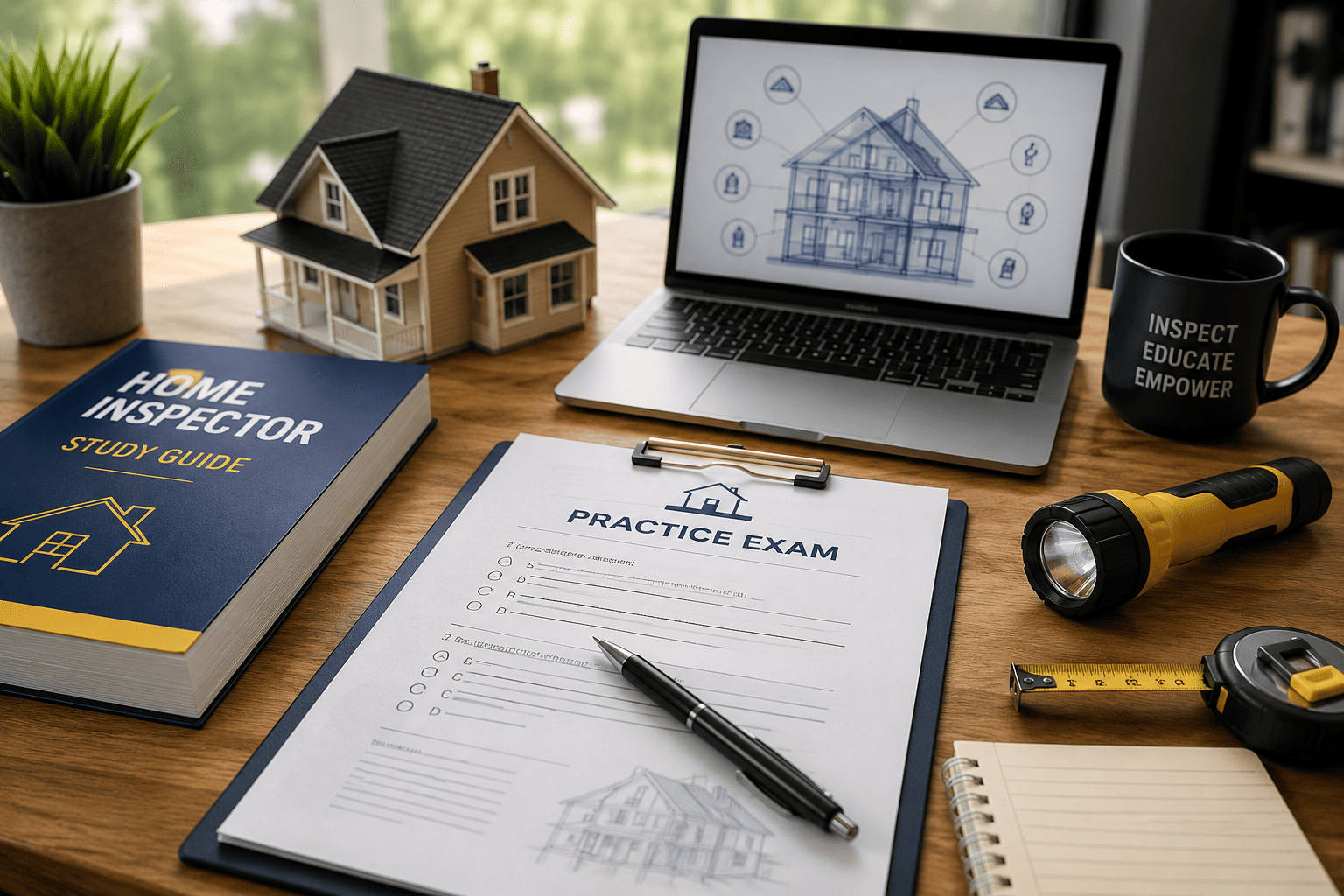
If you’ve already decided to start a career in home inspection, taking the National Home Inspector Examination (NHIE) is an important step toward entering the profession. The NHIE is a great way to demonstrate your skills, knowledge, and abilities to yourself and future clients.
The exam is a comprehensive test that evaluates your technical skills and your ability to apply that knowledge in real-world scenarios. It covers a broad range of topics, including structural components, home inspection procedures, and ethical practices. By passing the exam, you’re not only fulfilling the regulatory requirements but also verifying your competence in the field.
The good thing is that passing the NHIE isn’t about trying to trick your way through difficult questions or memorizing endless facts. It is about how well you can put the concepts you’ve learned to work. By having a structured study plan, you can approach the exam with confidence and increase your chances of passing.
In this guide, we’ll break down the major knowledge areas covered on the NHIE, the type and format of questions you can expect, and national home inspectors exam practice strategies that can help you pass. By following the tips and guidance outlined in this article, you can walk into the testing center feeling prepared and ready to ace the test.
Becoming familiar with the topics covered is an important step in exam preparation. The National Home Inspector Examination evaluates three major domains: Property and building inspection, reporting, and professional responsibilities.
The questions are designed to evaluate your competency in the real world, so you cannot solely focus on definitions. You need to master how building systems operate and interact because the exam presents realistic scenarios that require analysis and decision-making rather than simple recall.

The NHIE consists of 200 multiple-choice questions that you must complete within 4 hours. Each question has four answer options, and there’s only one correct answer. While all the questions are multiple-choice, they are framed in several different ways.
These questions describe a condition or situation observed during an inspection and ask you to determine the cause or recommend the next steps. They require you to evaluate the situation using the knowledge and concepts learned.
The focus of these questions is on conducting inspections, communication, and professional responsibilities. They assess how well you can carry out an inspection while adhering to the profession’s best practices.
These questions evaluate your ability to recognize structural defects, installation issues, and safety hazards. For example, they can describe a physical condition observed during an inspection and ask you to identify its cause.
You can also encounter questions about safety. These questions measure your understanding of safety standards and your ability to identify conditions that may pose risks to occupants or to yourself as the inspector.
Using a combination of several study methods can help in your NHIE exam prep. Start by creating a structured study plan. A study schedule helps you break the learning material into manageable parts, allowing you to focus on one area at a time while allowing time for reviewing what you’ve already learned.
Using multiple resources during your learning and training can also help you gain different perspectives. These include online courses, textbooks, videos, and study guides. Combining them helps you fill knowledge gaps and reinforce the concepts you’ve already learned.
Another effective strategy is to focus on understanding concepts rather than memorizing everything. Try to understand how building systems work, interact, and fail. NHIE mostly features application questions that require you to apply your knowledge to real-world defects.
You can benefit by taking NHIE practice test questions, as they help you become familiar with exam language and the structure of questions. Practice questions can also help you identify weak areas and improve on them before the actual exam.

Preparing for the exam involves evaluating your progress and performance continuously. Ensure you know what to expect before entering the NHIE testing room. It is the only way to identify your weak areas and build the energy needed to complete the 200 National Home Inspector Exam questions within 4 hours. There are several ways to assess your readiness for the NHIE.
Taking full mock exams and practice tests can help you understand the exam format and question style. Mock exams simulate the testing environment, ensuring you get comfortable with the questions. Recording strong scores consistently indicates you’re ready for the actual exam.
You should also regularly assess yourself to help you identify areas where you’re less confident. You can then adjust your study plan to focus more on these areas to ensure that you thoroughly understand all the topics.
Practicing under timed conditions can also help you improve your speed for the actual exam. Timing yourself on practice tests can help you pace yourself, ensuring that you do not spend too much time on the difficult questions on the NHIE.
Sometimes, even well-prepared candidates fall into study traps. Certain preparation habits can cause you to fail the NHIE even if you devote significant time to studying.
One common mistake to avoid is relying on rote memorization rather than understanding the concepts and their practical application. While memorizing can help you answer a few questions, passing the NHIE requires a deep understanding of how building systems operate.
Another mistake is focusing on your strong areas and failing to spend enough time on the weaker ones. It’s easy to spend time studying your favorite topics. You should ensure you devote extra attention to your weak areas, as the exam covers a broad range of subjects.
Avoid delaying studying until the final days before the examination. Waiting until the last minute can rarely produce good results. Start studying early, be consistent, and take enough practice exams so that you’re fully prepared for the actual exam.
It’s important to develop good test habits as the exam day approaches. As part of the final preparation, confirm your testing location and schedule, and gather the required materials and identification in advance.
Get enough rest the night before the exam and arrive early on the test day. While doing the exam, read each question and answer choices carefully before selecting an answer. Avoid rushing through difficult questions by selecting the best possible answer and continuing with the rest of the questions.
Success in the NHIE is often the result of preparation rather than luck. Passing the exam requires you to understand the key concepts, track your progress, and complete practice questions.
The NHIE focuses on the practical application of the knowledge you’ve acquired throughout the study period. You can improve your chances of passing on the first attempt by focusing on internalizing the concepts and how to apply them in the real world. Having access to study materials and quality training programs can also help you prepare better.
Preparing for the National Home Inspector Examination is just one step toward building a successful career. With a WIN Home Inspection franchise, you’ll receive expert training, business guidance, marketing support, and proven systems that help you earn your certification and confidently launch and grow your own home inspection business. Talk to one of our experts to learn more.