

Ready to Embark on an Exciting Journey with WIN?
Take the first step toward personal and financial freedom by filling out the interest form. One of our franchise advocates will be in touch with you soon!


A low-cost franchise is a business model that will allow you to buy into an established brand with minimal upfront capital. However, there is always a bigger picture concerning total investment and the likelihood of a strong ROI. If you’re seeking an affordable franchise, here’s what to consider.
Generally, a low-cost franchise is defined as one with an initial investment under $50,000, though some industries may be closer to $100,000.
| Business model | Typical total investment |
| Home inspection services | $30,000 – $100,000 |
| Residential/commercial cleaning | $40,000 – $90,000 |
| Home services and repairs | $30,000 – $80,000 |
| Fitness and wellness (mobile or pop-up) | $50,000 – $100,000 |
| Digital services | $15,000 – $40,000 |
When evaluating a low-cost franchise, the initial franchise fee is only one part of the bigger picture. You will also need to budget for:
Discuss total and ongoing fees with the franchisor and always refer to the Franchise Disclosure Document (FDD).
| Cost category | What to look for |
| Royalty fees | Is it a flat monthly fee or a percentage of gross sales? |
| Technology and software fees | Are there mandatory monthly fees for reporting software, CRM tools, or proprietary inspection apps? |
| Training expenses | Check if classroom, online, and local field training are included or cost extra; check if you must spend a mandatory minimum on local digital ads. |
| Marketing funds | Look for mandatory contributions to a “National Advertising Fund” |
| Renewal fees | Are there fees to renew the franchise agreement after 5–10 years? |

When looking into a low-cost franchise, examine the complete financial and operational picture, and not just the initial franchise fee.
When buying a franchise, don’t base its worth (and cost) on its low franchise fee alone. Be sure to review Item 7 in the Franchise Disclosure Document to calculate total working capital, equipment, insurance, and marketing costs.
Verify whether ongoing royalties are a flat monthly fee or a percentage (typically 5% to 15%) and whether you think these fees will negatively impact profits. Are there brand and advertising fees? If so, what do you get out of it? Is it worth the ongoing investment?
Look for low-overhead business models that eliminate commercial real estate leases, rent, and high utility build-outs.
Check if the franchisor supplies initial client accounts, software platforms, and hands-on operational training rather than just handing over a manual. Will you receive classroom training, field training, or both? Will you have training support for technology and any necessary proprietary tools?
Prioritize service models with repeat or contract-based income (such as commercial cleaning, pet care, or lawn maintenance) over one-time transactional sales. You can also shift away from a purely one-time, transaction-based model by building predictable, recurring income streams through homeowner services and professional partnerships, including home-based franchises such as home inspection services.
Buying a franchise is an excellent way to hit the ground running. However, do not confuse the initial franchise fee with the total working capital that is required to run the business until it turns a profit. You must account for additional costs, such as insurance, vehicle maintenance, and personal living expenses for the first 6 to 12 months.
Low-barrier, hyper-cheap service businesses can sometimes be hard to sell later if they rely 100% on your personal physical labor rather than transferable systems and customer lists. So be sure the existing franchise has brand recognition and high resale value. The stipulations of this process will be outlined in your franchise agreement, as franchisor approval is typically required before you transfer or sell the business to an unaffiliated buyer.
A cheap franchise in a saturated or declining market is a bad investment. Research whether the service or product has steady, repeat demand in your specific region. You should also consider whether it is a recession-resistant business model.
Learn more by reading “A Consumer’s Guide to Buying a Franchise.”
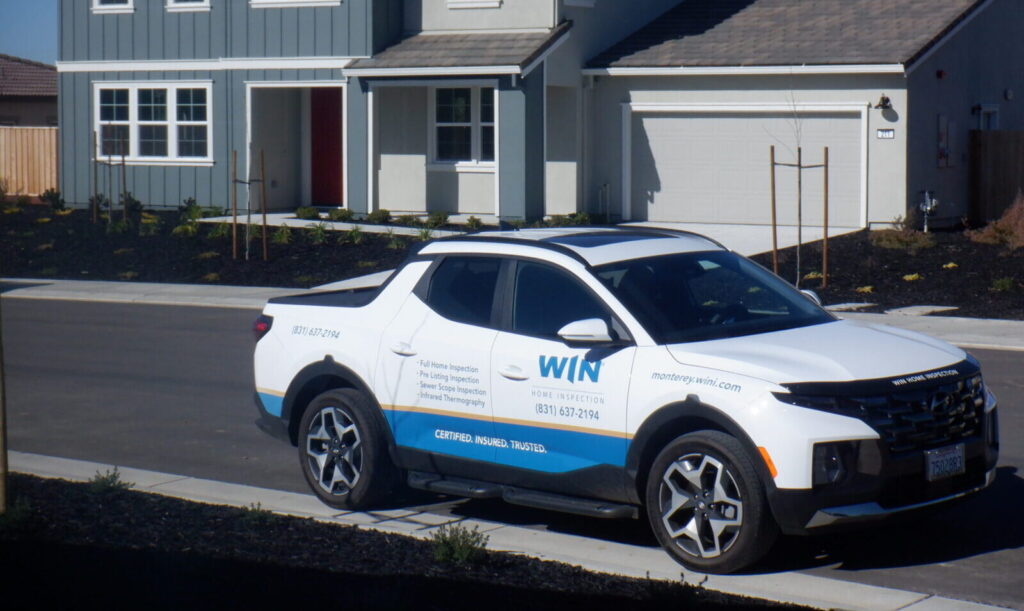
Here is a look at how WIN Home Inspection compares.
When discussing affordable franchise opportunities, many companies will avoid mentioning their actual pricing. This isn’t done at WIN Home Inspection, because we’re proud of the combined affordability and earning potential of our franchise owners.
While your experience as a franchisee will depend heavily upon you, the average gross revenue of our established partners is $219,930 as reported in our 2019 Franchise Disclosure Document (FDD). This comes after an initial investment that ranges from $35,875 to $49,800 per the 2019 FDD. This is one of the lowest startup costs you’ll encounter in a high-earning industry. With 65 percent of businesses failing due to financial reasons, choosing a low-cost franchise with high earning potential is vital.
Some individuals’ motivations for owning a business extend beyond money. As a franchise owner of a WIN Home Inspection Franchise, you get to help others, make a difference in your community, while also having the opportunity to build a thriving business in a highly attractive industry.
One of the key points of becoming a franchisee is that you can garner the name recognition of an established brand. Unfortunately, many low-investment franchises that offer these opportunities aren’t as well-known. This could leave you struggling to establish a local brand identity.
This isn’t a concern with WIN Home Inspection given the firm’s national identity and solid reputation. Our franchise owners have done work for over 1 million customers, and hundreds of thousands of Realtors® across the country consider us their ‘go-to home inspection company.’
WIN Home Inspection is a national brand with a presence in 32 states and more than 25 years of continued service, thereby establishing ourselves in consumers’ minds as the brand they can trust to bring them peace of mind during a highly stressful time in their lives as they contemplate making the largest financial decision. When you invest in this low-cost franchise with WIN, you’re buying into a business that’s already considered a national leader in the industry.
Don’t be fooled by low entry prices and get trapped in a franchise that isn’t viable. Look for these red flags before you buy:
Financing a low-cost franchise involves combining personal equity with specialized small business loans, government-backed programs, or alternative funding sources.
Since low-cost franchises, like home-based, mobile, or service-oriented businesses, typically require less initial capital ($50,000 or less), the path to funding is more accessible than for brick-and-mortar storefronts.
Depending on the franchise, special financing options with preferred lending partners may be available for eligible candidates. There may also be discounts for certain individuals, such as veterans.
The most profitable low-cost franchises combine a low initial investment (typically up to $50,000) with high percentage returns or strong recurring revenue and recession-resistant models.
The top-ranked and most profitable franchises for 2026 span high-demand sectors like food service, senior care, and home services. You can then research sectors to find the top-ranked franchises.
The cost of starting a franchise varies depending on the brand, industry, and location, ranging from $10,000 to over $5 million. Most traditional brick-and-mortar franchises require an upfront investment of at least $100,000 to $300,000, whereas service-based businesses typically have a lower barrier to entry.
Personal savings and cash are the most direct method to avoid debt or interest payments. However, there are loan and sometimes grant opportunities, as well as franchisor financing options. Ask the parent company whether they offer internal financing programs, equipment leasing, or discounted initial franchise fees for qualified buyers.
Certain sectors and top-ranked brands consistently demonstrate long-term viability and franchisee satisfaction, including those in senior services, residential cleaning, and home services. Overall, established brands with strong operational support have significantly higher survival rates than independent startups.
One of the most commonly overlooked costs of running a business is marketing. Budding entrepreneurs who opt to build a company from scratch can expect to spend upward of 20% of their revenue on marketing. However, the expenditure does not guarantee success. There is no way to know whether the substantial marketing expenditure will help build your local brand. Seek a franchise that offers built-in marketing support.
The home inspection industry is projected to grow 10 percent between 2016 and 2026. This is a promising statistic for those considering any type of career in the field. It means that demand for skilled assessors is going to increase, and this can result in both higher income and less need for direct competition against others in the area.
This is why WIN Home Inspection is ideal for anyone seeking a low-cost franchise. If you’re going to invest, shouldn’t it be within a growing field? This simple truth means you’ll have plenty of work going forward, especially since projected growth far exceeds the industry average.
Working with our professionals will ensure you’re at the forefront of a booming industry.
If you’re ready to become a franchise owner and are seeking a low-cost opportunity to buy into an established brand that offers long-term support, WIN is here to assist you.
Request WIN’s Franchise Disclosure Document (FDD) or book a consultation today.