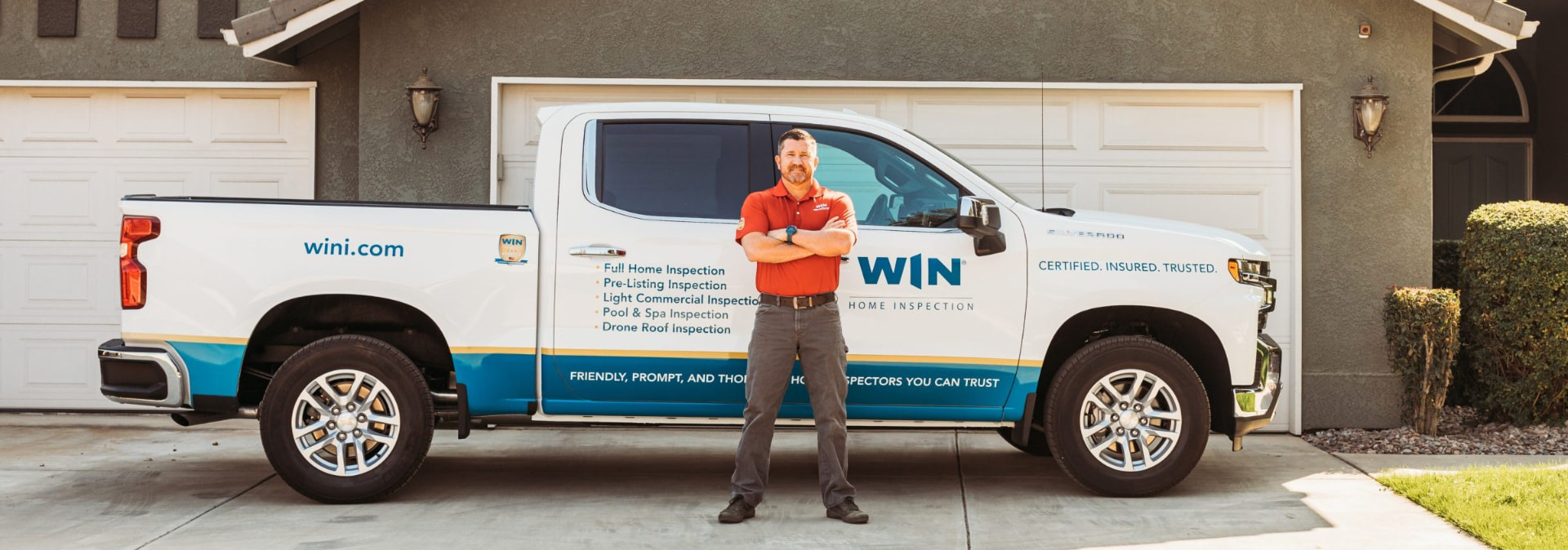




Ready to Embark on an Exciting Journey with WIN?
Take the first step toward personal and financial freedom by filling out the interest form. One of our franchise advocates will be in touch with you soon!



Have you ever thought of owning a profitable business without getting involved with a full-time commitment? If so, you should consider a semi-absentee franchise model, which has become popular among many aspiring entrepreneurs.
With a semi-absentee model, you have the space to set up a team and assign them daily operational tasks. That way, you can invest valuable time on more critical areas of your business like leadership and financial growth performance.
While semi-absentee models may seem like passive income streams, they really aren’t. Think of them as a franchise option that offers scalability while mainly outsourcing the operational routines of running a business. Before going ahead with a semi-absentee model, as with any franchise business, you should always consider the following factors:
You might be wondering at this point, “Can I own a franchise semi-absentee?” and whether it is accessible or not. We unpack the model in detail to help you make your decision.
A semi-absentee franchise enables owners to assign routine operational responsibilities to employees while they focus on critical business decisions.
This frees the owner of much time-consuming routine work across frontline operations while they maintain control and management over hiring and growth strategies. As such, semi-absentee owners determine their work hours and commit themselves to a business according to its franchise’s structure, staffing plan, and long-term goals.
For clarity, here is how the semi-absentee model compares with two other categories of ownership structures:
| Model | Owner Involvement | Team Breakdown | Who it is for |
| Owner-Operator | High | Owner usually directly provides the work on site. | Owners seeking hands-on control over their business. |
| Semi-Absentee | Moderate | Employees and managers are hired to oversee most of the daily activities while owners have minimal involvement on site. | Owners seeking to create and lead a team. |
| Absentee | Lower | The hired management team (led by the general manager) runs most, if not all, of the operations while owners invest in the business. | Owners who focus mostly or entirely on investing in a business idea without personally involving themselves in the business processes. |
It’s easy to see the rising appeal of semi-absentee franchises since franchise owners are not exactly seeking a job. Rather, most business owners would rather monetize their investments in the most cost-effective way. Semi-absentee franchises achieve this by building an asset and sourcing a team to run the routine work without requiring business owners to manually perform each task.
Here are some advantages of a semi-absentee franchise:
While business owners may need to put in extra effort during early-stage growth (e.g., launch and team recruitment), the business becomes mostly automated in due time.
Recruiting, retaining, and developing the right people become one of the owner’s most important responsibilities.
The owner should understand revenue, expenses, payroll, customer experience, conversion, capacity, and other key metrics.
Delegating daily operations does not eliminate accountability. Someone must set expectations and evaluate performance.
Owners may still play an important role in networking, local relationships, strategic partnerships, and market development.
Franchisees remain responsible for following the operating standards and requirements of the franchise system.
The startup fees of a semi-absentee structure could outweigh those of an owner-operator model in the early stages since the model requires the hiring of a general manager who will be in charge of handling operational duties. Your semi-absentee startup may also include the following:
Although a low-overhead business offers more room for capital management, semi-absentee franchise businesses provide the precious time needed to drive long-term growth while keeping the business running.
If your goal is to build a business that can eventually operate with less day-to-day owner involvement, you should prioritize the systems that make delegation possible. Here are 5 important questions to consider before settling on a semi-absentee franchise opportunity.
Service franchises can appeal to entrepreneurs because many do not carry the same real-estate, inventory and build-out requirements as retail or restaurant concepts.
That does not automatically make them semi-absentee.
But a service business with strong systems, mobile delivery, repeatable training, and the ability to add qualified team members can create a clearer path from “doing the work” to “leading the business.” For a prospective owner, that distinction matters. The goal is not simply to work fewer hours. The goal is to build a business that is less dependent on one person’s individual capacity.
Potentially. A home inspection business can become more team-driven as the owner adds qualified inspectors and shifts more time toward leadership, relationships, marketing, and business development.
However, the answer depends on the franchise system, the owner’s operating plan, and state licensing requirements. Some states license or regulate the individuals performing inspections, so staffing decisions must comply with local rules.
A home inspection franchise should therefore be evaluated as a scalable service business rather than assumed to be a passive investment.
For state-by-state requirements, review How to Become a Home Inspector.

WIN Home Inspection has remained a trusted partner among franchise entrepreneurs. The
WIN’s franchise model has low overhead. You essentially eliminate the need for a storefront, inventory, and upfront staff requirements. As such, you can go lean from the early stages and only invest in staffing once the business picks up the pace.
WIN supports sole inspectors with leading industry training and certification while also offering the industry knowledge for those who wish to build a team of home inspection specialists. WIN essentially prepares franchise business owners with long-term flexibility, equipping them with the resources and training for scaling a business.
Business partners of WIN have access to 35+ residential inspection and testing services that go far beyond traditional home inspection offerings. As such, your business can fulfill a broader range of customer demands and drive a resilient, recession-resistant business model throughout the seasons.
A semi-absentee or team-based owner still needs demand. WIN’s franchise system includes in-house marketing support spanning grassroots relationship building, digital marketing programs, customized collateral, and email and social media resources.
WIN invests in proprietary technology and operational systems, including its digital report-writing platform and other tools designed to streamline the inspection process and client experience. Strong technology can reduce administrative friction as a team grows.
WIN’s franchise materials emphasize an in-house support organization covering training, marketing, business operations, technology, human resources, and customer service, along with a peer mentorship network of franchise owners and realtor connections.
| Why this matters for a growth-minded owner The more of the operating system, training, marketing, and technology that already exist, the less a new owner has to invent independently. That can be especially valuable for someone whose long-term goal is to build a team and spend more time leading the business. |
According to WIN’s current 2026 franchise materials, the estimated initial investment to own a WIN Home Inspection franchise typically ranges from $41,200 to $49,800. The fees include items such as the franchise fee, equipment, marketing and training costs, insurance, and additional startup funds.
Actual startup needs can vary by owner, location, licensing requirements, and operating plan. A candidate planning to hire employees early should separately model payroll and working capital for that strategy.
See the current WIN Home Inspection franchise cost and investment information for additional details and the applicable Franchise Disclosure Document.
Although WIN doesn’t exactly promote passive income, there are a great deal of opportunities for business owners to grow their investments into semi-absentee models. The answer lies in WIN’s proven model of comprehensive inspector training that guides owners toward business leadership positions.
By partnering with WIN, you can learn the ins and outs of the home inspection business, foster strong local relationships built on trust, and fulfill the latest certification and safety standards. As such, you’ll soon have the expertise, resources, and network to exceed a one-person operation.
A semi-absentee franchise may fit your goals if you want to build a team, are comfortable managing people and have enough capital to support the ownership structure you choose.
It may be worth exploring if you:
If your main goal is passive income with minimal involvement, a franchise may not be the right fit. If your goal is to build a scalable business with an established brand and support system behind you, the conversation becomes much more interesting.
| Ready to compare the model to your goals? Talk with WIN’s Franchise Development team about the business model, investment, training, territory structure, licensing path and what building a multi-inspector team can look like in your market. |
Essentially, a semi-absentee franchise is a franchise that you can run even when you have a full-time job or commitment. The business model usually requires significantly fewer hours of operational involvement than a standard owner-operator model.
Although there are no fixed hours, semi-absentee business owners usually invest 10 to 20 hours per week on their business. The timing might stretch as more responsibilities emerge as the business matures.
Essentially, owners of absentee franchises take themselves entirely out of operational management. Unlike semi-absentee franchises, where owners still manage the business with some hours of their time, absentee franchise owners don’t report on site and are purely investors.
Yes, you’ll definitely need managers and employees for your semi-absentee franchise. Managers are vital hires since they’re trusted from the get-go to oversee key business operations like payroll and finances. And yes, you’ll also need employees to work closely with the general manager to handle daily tasks and responsibilities.
Yes, home inspection franchise owners can certainly operate semi-absentee businesses. It all depends on franchise model regulations and customer demand. Franchise owners should also expand their team with a network of qualified home inspectors.
Yes, WIN Home Inspection offers semi-absentee franchise opportunities as owners grow from sole-inspector operations into a network of trusted experts. Owners can gradually reduce their level of direct involvement with strategic staffing managed through franchise and state licensing requirements.
WIN’s initial franchise investments range from $41,200 to $49,800. You should also review the current franchise disclosure document (FDD) and consider payroll or working capital required for staffing plans.
WIN offers franchise owners comprehensive support that accelerates them on the path toward semi-absentee flexibility. These include:
Technical and business training
Dedicated in-house marketing support
Proprietary home inspection technology (that enables home inspectors to efficiently manage more specialized sessions, such as radon detection)
Ongoing coaching and operational resources, including expert training across 35+ residential inspection and testing services for a competitive edge.
WIN Home Inspection has remained the #1 home inspection franchise company in the US, ever-prepared to guide your business toward success.
Our packages provide immediate access to extensive inspector training, in-house marketing, and proprietary technology. You’ll have the expert guidance and resources to achieve and scale your entrepreneurial dreams. Book a consultation with WIN home inspection today to discover how you can kickstart your franchise with home inspectors you can trust.