



Ready to Embark on an Exciting Journey with WIN?
Take the first step toward personal and financial freedom by filling out the interest form. One of our franchise advocates will be in touch with you soon!


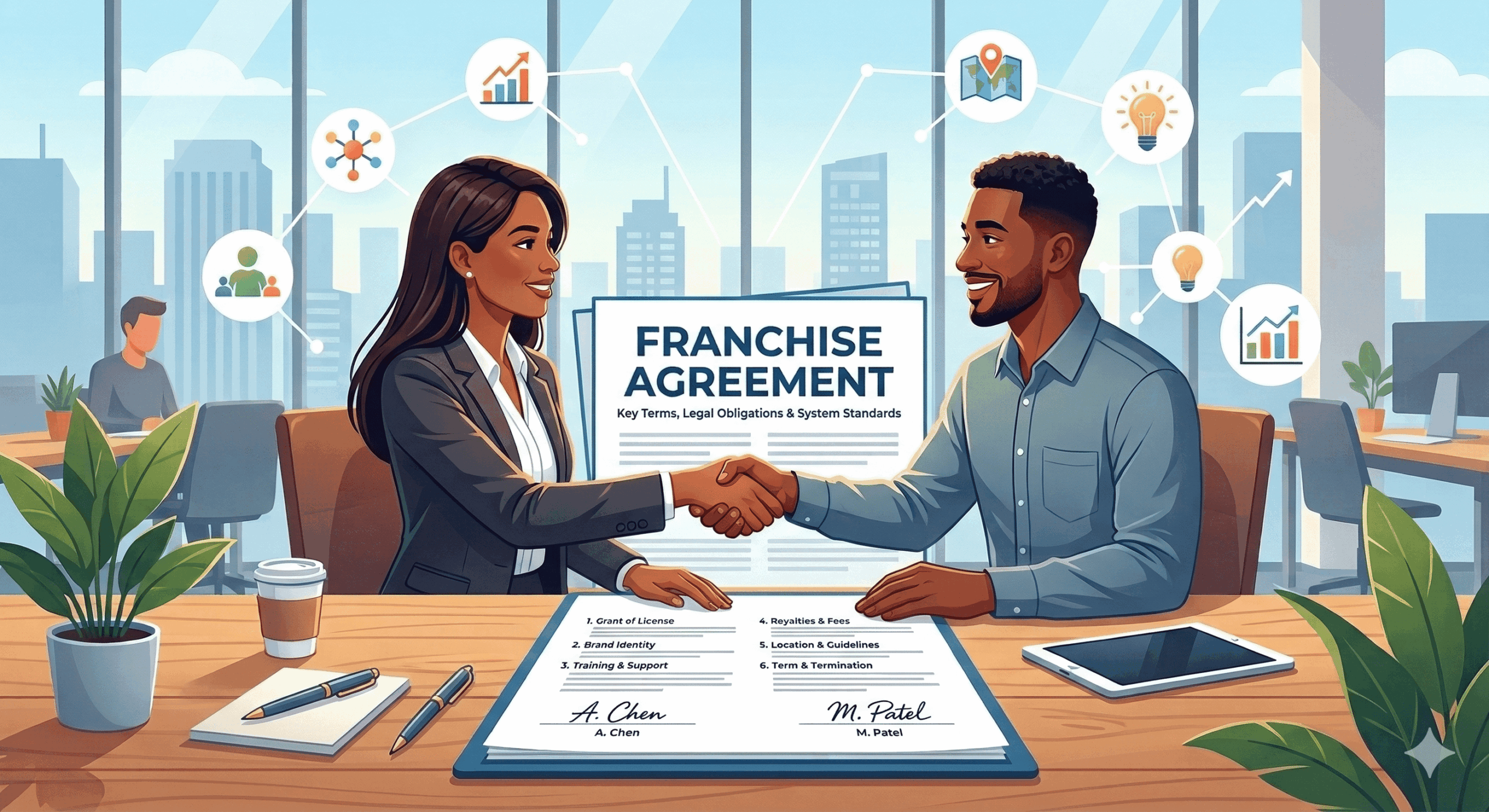
Franchising allows entrepreneurs to start a venture under a brand that’s been in the marketplace for years. Instead of creating workflows and systems from scratch, new business owners use proven processes. They can rely on a structured model refined over the years to find their footing within weeks instead of months.
At the center of franchising is a franchise agreement, a comprehensive document that outlines how the entrepreneur will work with the established brand. It defines each party’s responsibilities and describes how the partnership will work. Understanding the intricacies of the agreement allows entrepreneurs to know what to expect once they start the franchise journey.
A franchise agreement is a legally binding contract between a franchisor and a franchisee. The franchisor is an established brand that allows new business ventures to operate under its name. The franchisee is the person starting a business.
Once the two parties sign the franchise contract, the franchisee can operate a business using the brand’s name and trademarks. They can also use the franchisor’s operational processes and systems. Of course, the entrepreneur must run the business and provide superior customer service to drive profitability.
The agreement also outlines the franchisor’s responsibilities. The brand provides ongoing support and improves its systems. It also markets the brand and, in doing so, promotes the businesses that operate under the franchise.
Thinking of investing in a franchise yourself? Here’s what to know before you sign.
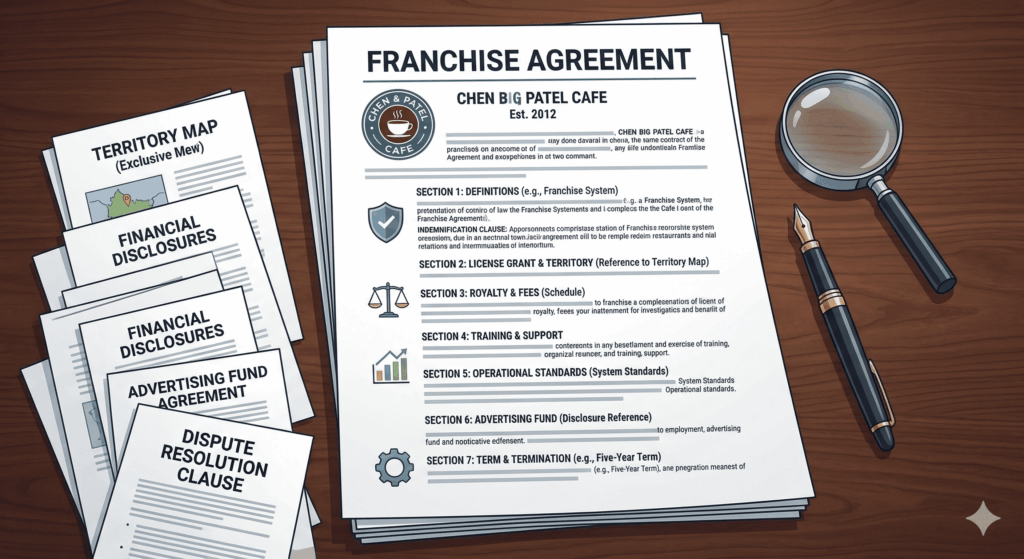
When you sign a franchise agreement, you’re agreeing to a legally binding contract that gives you, the franchisee, the right to operate a business using the brand, trademarks, and operating system of a franchisor.
The agreement is set between two primary parties:
Both parties must follow the rules, quality standards, and financial commitments outlined in the franchise agreement. When creating this agreement, there is no “standard form” or universal template. Each company can design its own unique, tailored contract based on its industry and business model. Businesses can use ready-made contract templates as a starting point before customizing them to fit their specific franchise model.
Once the two parties sign the franchise contract, the franchisee can operate a business using the brand’s name and trademarks. They can also use the franchisor’s operational processes and systems. Of course, the entrepreneur must run the business and provide superior customer service to drive profitability.
The agreement also outlines the franchisor’s responsibilities. The brand provides ongoing support and improves its systems. It also markets the brand and, in doing so, promotes businesses operating under the franchise.
| Franchise Disclosure Document (FDD) | Franchise Agreement (FA) | |
| Purpose | To educate and inform prospective buyers about the business, risks, history, and costs before any sale. | To legally formalize the operational relationship and bind both parties to specific duties after the sale. |
| Governing Rules | Regulated federally under the FTC Franchise Rule in the U.S. | |
| Timing & Review | Must be delivered to a prospective buyer at least 14 days before they sign any contract or pay money. | Signed after the mandatory 14-day review window concludes and the buyer decides to move forward. |
| Structure | A standardized disclosure manual that includes financial statements, litigation history, and fees. | The specific operational contract that is attached to the FDD. |
| Content Focus | Background, executive history, bankruptcy, litigation, fees, and 3 years of audited financials. | Royalties, exact territory boundaries, default triggers, renewal terms, and duration. |
One of the most important parts of a franchise agreement is the business owner’s right to use the franchisor’s brand. These recognizable elements help a new venture attract customers from day one.
The entrepreneur can use the brand’s:
What to check: Review outlined roles and responsibilities of both parties, as they are crucial to the agreement. Clear roles help avoid conflicts and support a smooth partnership.
Beyond giving new businesses the tools and systems they need to succeed, franchises also create predictability. Knowing how long the agreement will last helps businesses operate in a stable environment, since most contracts last several years.
To help entrepreneurs plan long-term, the agreement outlines:
What to check: Double-check the initial term length (typically 5, 10, or 20 years), the renewal conditions, renewal fees, and exit terms.
If a location limitation exists, the franchise agreement discusses it in detail. As a business owner, you will know whether your territory is exclusive or shared. The agreement should clearly outline the boundaries within which your business can operate. You can also determine whether you can set up offices in multiple locations within the allowed territory. Such information is critical for entrepreneurs who need to assess the Total Addressable Market (TAM).
What to check: In order to accurately assess the business potential, make sure the franchise contract outlines the territory you can operate in. Information on how many franchisees can operate in the same area will also help you gauge the level of competition to expect. If you plan to expand, make sure the contract aligns with your vision. Review exclusive vs. protected vs. open territory features to ensure your vision aligns with what is outlined in the agreement.
The fees and payments payable over the duration of the franchise are equally crucial information outlined in the agreement. This helps franchisees understand their financial obligations and plan accordingly.
Some of the fees explained in the contract are:
What to check: Ensure that the contract clearly outlines the payment structure. It must state the initial payment’s amount and whether it’s payable in installments. Also check and calculate recurring expenses, including marketing contributions and royalties paid to the brand.
A strong franchise agreement should clearly outline the support the brand provides throughout the partnership. There are usually initial training programs that get you and your team up and running. However, as markets change, you may need new knowledge.
What to check: Review the contract to know whether you’ll receive operational manuals and training to keep up with trends.
A franchise agreement’s intellectual property (IP), trademarks, and operations manual form the legal and operational core that grants you the right to use the brand. They also require strict adherence to the company’s proven system.
What to check: Verify that the trademark is registered and whether the franchisor can change the operations manual at will.
These obligations are typically split between system-wide marketing funds managed by the franchisor and localized promotional duties required of the individual franchise.
What to check: How fees are collected, how funds are spent, and what control the franchisor maintains.
These are the day-to-day rules, performance metrics, and compliance requirements a franchisee must follow to maintain brand uniformity. Refer to the brand guidelines, operations manual, financial statements, etc.
What to check: Take your time to understand the quality of service you need to provide and how the daily operations must run as stipulated by the agreement. The contract should also provide clear instructions on branding and general business procedure.
Franchise agreement insurance and indemnification provisions are risk-management tools that shift operational liability from the franchisor to the franchisee.
What to check: Look for one-sided risk, coverage limits, and operational liabilities.
A franchise agreement transfer, sale, and right of first refusal govern how you can sell your franchise business and give the franchisor the power to step in and buy it first.
What to check: Review all transfer and sale conditions, match terms, and associated fees.
This restriction in a business contract prevents a franchisee from sharing trade secrets or starting a competing business during or after the contract ends.
What to check: Check specific limits on time, geography, and scope to ensure non-compete and confidentiality clauses in a franchise agreement are fair and legally binding.
Dispute resolution and governing law clauses set the legal rules and procedures for handling conflicts. For example, negotiation, mediation, binding arbitration, or court litigation. Governing law names the specific regional or national laws that apply to the contract.
What to check: Review dispute resolution and governing law clauses to understand where, how, and under what rules a conflict will be handled.
Franchise agreements vary based on the number of locations permitted and the authority to sell sub-franchises.
Here are examples:
| Agreement Type | Scope and Characteristics |
| Single-unit | This is the most common model. It grants the right to open and operate a single franchise location. |
| Multi-unit | Allows ownership and operation of multiple distinct locations under separate or combined contracts. |
| Area developer | Commits the franchisee to open a set number of units within an exclusive territory over a specific timeframe. |
| Master | Grants regional rights to operate units and recruit, train, and support sub-franchisees. |
Yes, franchise agreements are legally negotiable. However, some aspects are not typically up for discussion. While you may have some wiggle room in terms of physical territory, operational timeline, and personal finances, franchisors rarely budge on core structural terms, like the following:
Don’t rely on verbal promises from a franchise development representative. Franchise agreements often include a clause stating that any verbal discussions, emails, or promises made before signing are legally null and void unless written into the final contract.
To lock in any negotiated terms, your franchise attorney must draft a custom Addendum.
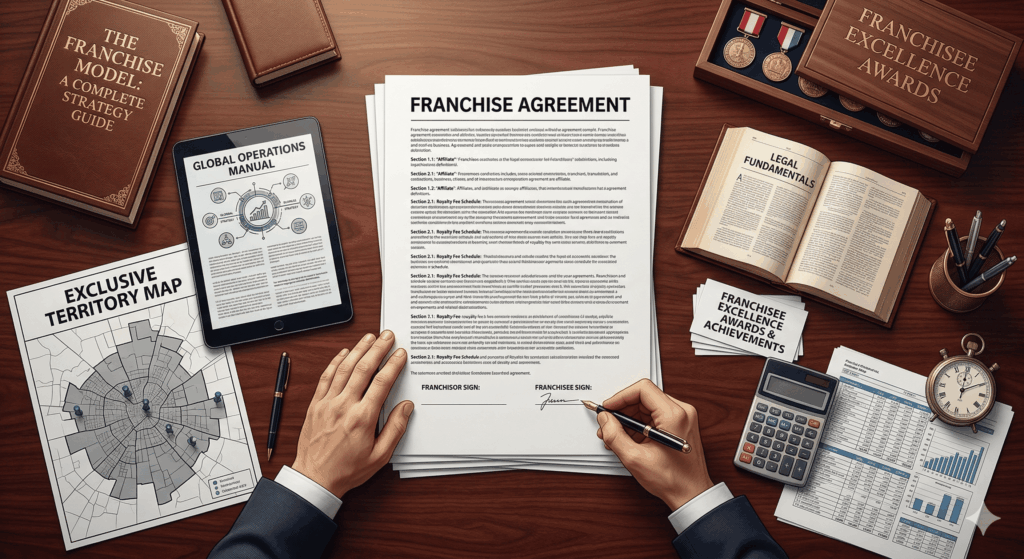
Before you sign a franchise agreement, refer to the following checklist:
A typical franchise agreement lasts an initial term of 5 to 10 years, though some industries or larger investments span up to 20 years. Always verify duration details and renewal options.
Yes, parts of a franchise agreement are legally negotiable, but most major terms remain standard. Royalties, fees, and core brand standards are generally not negotiable. However, territory size, opening deadlines, and personal guarantees may be.
Yes, you can get out of a franchise agreement, but early exits are legally complex and typically favor the franchisor. Always review the franchise agreement in full and seek advice on anything unclear.
Here are some terms to know:
Check out these FAQs to see how trusted franchises are structured and how they operate. You can also become familiar with key terms.
Franchise agreements generally fall into four main categories based on operational scope, unit counts, and territory rights: single-unit franchise, multi-unit franchise, area development agreement, and master franchise.
At the minimum, a franchise agreement should contain the legal terms, operational rules, and financial obligations that define the relationship between the franchisor and the franchisee. If anything is missing or unclear, seek clarification before signing.
Franchise contracts are the foundation of the franchise system. They grant new business owners key rights and give them tools for a fast start. The contract clearly defines the parties’ roles, enabling a smooth partnership that benefits both the franchise owner and the established brand.
Franchise systems like WIN Home Inspection provide structured training and licensing support. They also offer ongoing operational guidance. Such support is essential to starting and running a business, and inspectors can focus on growing local businesses while relying on proven systems.
Schedule a free consultation to learn more.