






Ready to Embark on an Exciting Journey with WIN?
Take the first step toward personal and financial freedom by filling out the interest form. One of our franchise advocates will be in touch with you soon!
If you’re thinking about how to become a mold inspector, the career path is quite straightforward. Generally, you’ll start with training followed by an exam that awards you certification. Then, you need to gain practical experience in the field and learn how to inspect and report your findings. Of course, the process varies by state.
National Institute for Occupational Safety and Health (NIOSH) data show that nearly 47% of households in the U.S. have visible mold. Inspectors have an important duty to spot different types of mold and write remediation plans. Remember, mold is hazardous and can cause allergies or respiratory issues.
In the next sections, we’ll look at the steps you need to take to become a certified mold inspector. We’ll also cover different career paths, including working for a company and starting a home inspection business, and how WIN Home Inspection can help.
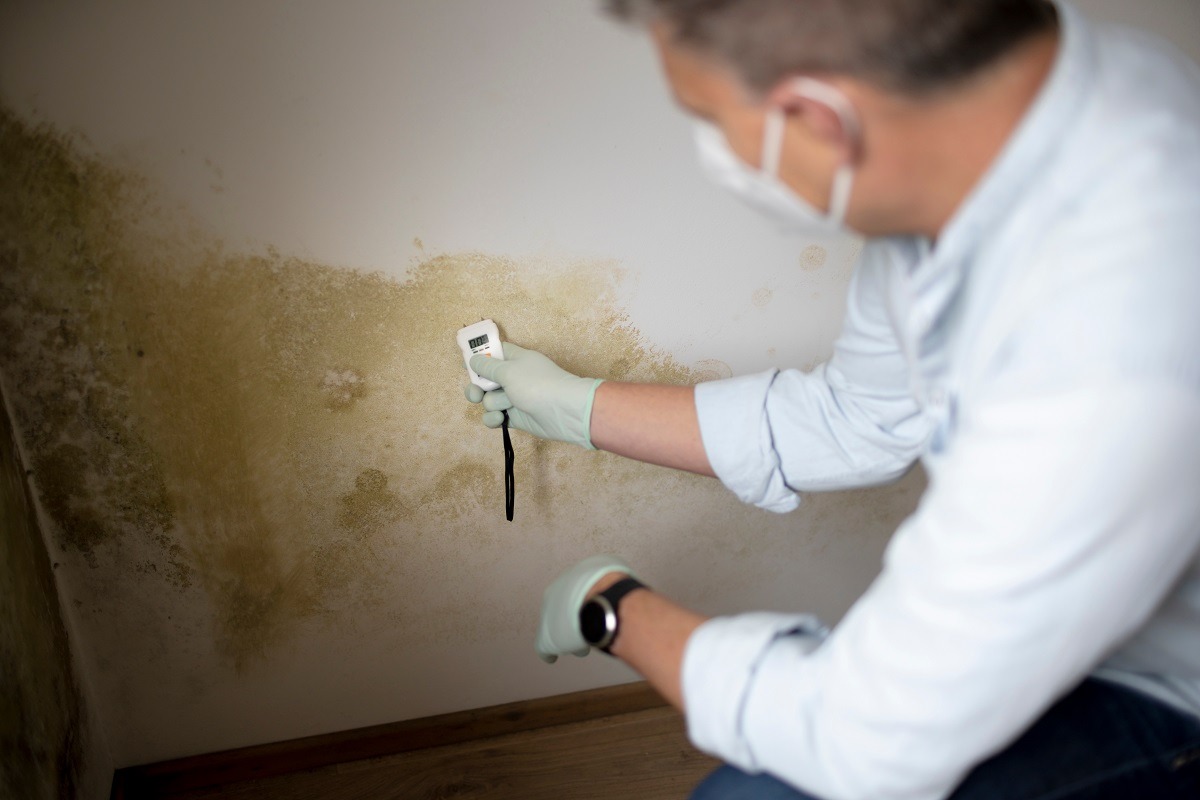
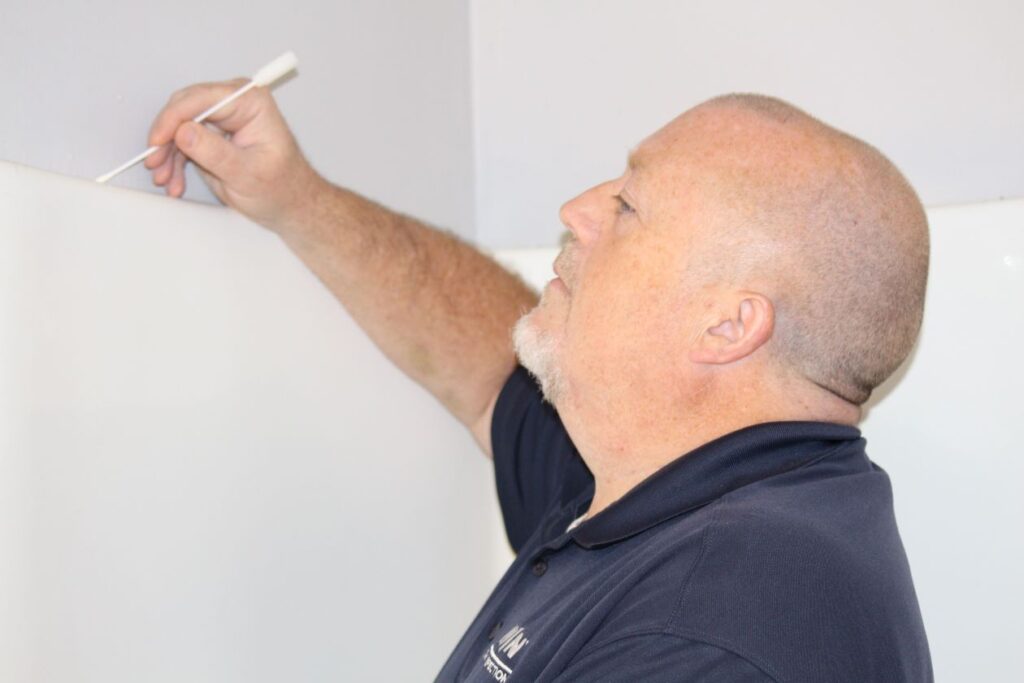
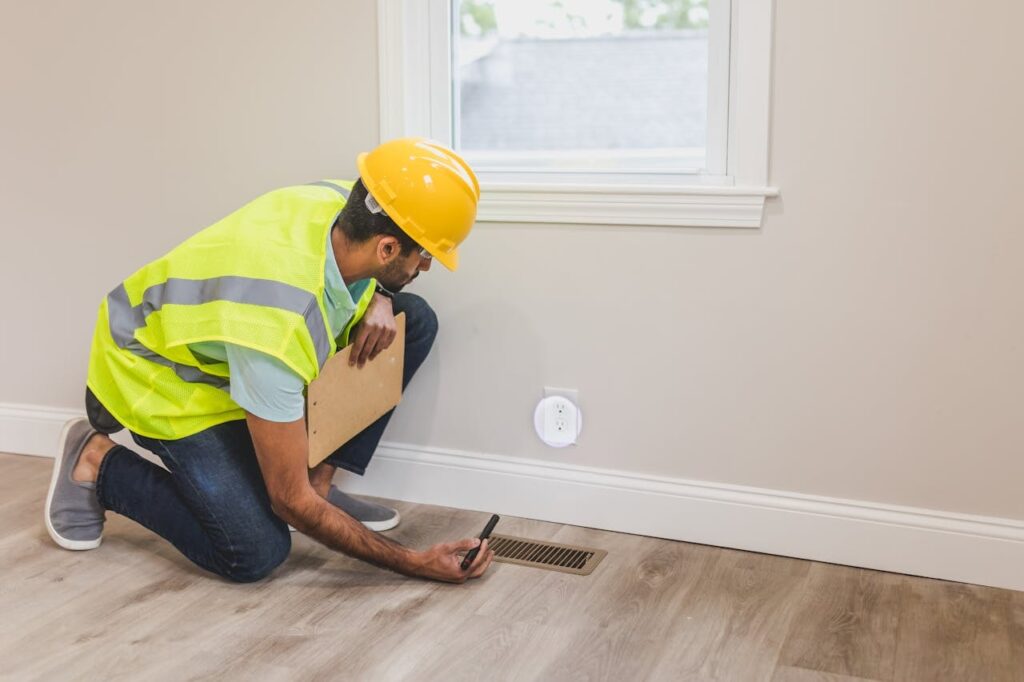
So, what is a mold inspection? Plainly, it’s a professional assessment of a property to check for visible mold. The examination goes further to identify suspected mold growth areas and conditions suitable for mold growth. Throughout the process, the inspector is busy examining basements, bathrooms, attics, crawl spaces, and around plumbing or HVAC systems.
It’s not unusual for the mold inspectors to also focus on water damage and moisture problems. These conditions are perfect for mold growth. If the situation is dire or the standards require it, the inspector may collect air and surface samples and send them to a lab for further analysis.
After the inspection, the mold inspector documents their findings in a report. They highlight where they found visible mold and outline areas of concern. If they collected samples, you’ll find lab results in the report. Inspectors may also recommend next steps, but don’t usually perform mold remediation.
While certification matters, it isn’t the only requirement to become a mold inspector. You need to get in the field to develop the right technical skills and practical experience that make you a professional. It’s also important to know how to format reports when presenting your findings. The answer to “how to become a certified mold inspector” features seven steps.
The requirements of becoming a mold inspector vary by state. Before you enroll in a training program, check what the regulatory body in your state says. That way, you can learn and obtain certification that satisfies local rules. Some states require specific training or credentials before giving you a license. For example, Florida, Texas, New York, and Louisiana have specific regulations for mold assessment.
The right training sets you up to be a competent inspector. Look for a comprehensive program that covers the fundamentals of mold inspections and aligns with your state’s requirements. For example, the WIN training program features 35+ residential inspection and testing services. Topics you may learn include mold biology, moisture assessment, inspection methods, sampling procedures, health considerations, safety practices, and reporting. It’s common to find curricula offering a mix of online and hands-on lessons.
Once your learning is complete, you can go for an appropriate mold inspection certification. Certificates like the Certified Mold Inspector (CMI) or Certified Indoor Environmentalist (CIE) show that you’ve completed the required education and understand inspection principles. Some employers or clients may require them, too. An important step is to ensure that the state you plan to work in recognizes or requires the certificate.
You have training on the fundamentals and a certificate to back it up, but there is still a piece missing. You need to gain field experience to apply what you learned to real properties. During on-the-job training, you’ll work alongside seasoned inspectors and learn how to handle inspection tools and equipment. You’ll become familiar with mold-related problems and get a grip on sampling procedures, documentation, and client communication.
Take your time to develop a consistent inspection process you’ll follow. As a mold inspector, it’s important to understand when sampling is appropriate. You also need to know how to collect, handle, and submit samples to labs. While at it, learn the process of working with AIHA-LAP-accredited labs. The last step is to interpret the results and document your observations so that your clients receive a useful and understandable report.
The right equipment lets you work more efficiently and helps you identify mold more accurately. Start with protective gear to protect you from mold exposure. These include N95 or P100 respirators, gloves, protective suits, and goggles. Then you can move on to basic equipment like a moisture meter, a hygrometer, a flashlight, and a camera. If necessary, you can add infrared cameras or air sampling equipment to your collection.
The final step of the process is launching your career as a mold inspector. You have the license, certification, technical know-how, and equipment to work diligently for a company or start a business. If you opt for the business route, consider creating a business plan outlining how you’ll price and market your services.
Starting a business requires more than just technical skills. Franchises like WIN Home Inspection provide a structured career pathway. Franchise owners have access to:
Franchises provide a practical middle ground. You can leverage proven systems and an established brand while enjoying the autonomy of owning your own company.
It’s easy to confuse certification and licenses. Usually, you’ll receive your mold inspection certification from a professional organization or a trainer. However, only the government can issue a license.
Most certifications feature an exam. The curriculum covers key areas such as mold biology, moisture and humidity assessment, inspection procedures, sampling methods, safety practices, and report writing. You’ll then answer some questions or fulfill practical requirements to verify that you understand what you learned.
Before choosing a certification program, look beyond the credential and examine the organization’s credibility. Check out the course content and the training format used. Most importantly, ensure the certificate aligns with state laws. In states where mold inspection is regulated, a private certification isn’t enough to start working.
Across the U.S., mold inspection requirements vary by state. Sure, some states don’t have a specific mold inspector license. However, others directly regulate mold assessment. Before you start working, be sure to double-check license and certification requirements so you know the education and training needed.
For example, Florida regulates mold-related services through the Department of Business and Professional Regulation. If you’ll be working in the state, you’ll need documented training in water, mold, and respiratory protection, in addition to education and field training.
Texas also features special requirements. You’ll need to complete approved training and fieldwork. Additionally, inspectors may need insurance and go through a background check.
Similar requirements are present in New York. Before you start working as a mold inspector, you must obtain a Mold Assessor License. It becomes available once you complete an approved training, and you submit an application and a fee.
As mentioned, Florida’s mold inspector requirements fall under the Department of Business and Professional Regulation. Here are the steps to follow if you’re researching how to become a mold inspector in Florida:
Additional requirements for mold inspectors include obtaining general liability and errors and omissions insurance of at least $1 million. Applicants must also undergo a background check by submitting fingerprints to a provider registered with the Florida Department of Law Enforcement (FDLE).
A bunch of factors come together to determine how much a mold inspector can make. The average salary a mold inspector takes home is about $40,932 annually. Top earners earn up to $46,417, while entry-level inspectors earn $34,218. Some of the determinants of salaries are:
Local demand ultimately determines compensation. In places like California, where competition and housing activity are a tad higher, inspectors can make more than those working in Florida. More property transactions mean greater demand for inspection services.
Training and credentials allow inspectors to demonstrate their knowledge. The added qualifications allow inspectors to negotiate better rates.
As inspectors spend time in the field, they gain enough experience to handle complex tasks and charge more. Also, a seasoned professional networks with other inspectors and may enjoy referrals. The wider customer base paves the way for more earnings.
Beyond mold, inspectors can also examine moisture and indoor environments. These additional services create more earning opportunities.
Choosing to partner with WIN can significantly boost your career as a mold inspector and beyond. WIN has been ranked as the #1 franchise in the industry year after year. This consistent recognition highlights the franchise’s commitment to excellence and industry leadership.
With the largest in-house support team in the industry, WIN provides you with the support and resources you need to succeed, from technical assistance to business advice. WIN offers extensive training, equipping franchise owners with the skills needed to offer a wide range of inspection services, thereby increasing their marketability and income potential.
Marketing can be a daunting task for new business owners, but WIN makes it easy by offering end-to-end marketing services. This ensures that you can effectively reach and attract clients without the stress of handling marketing efforts on your own. If you are interested in starting a franchise with WIN, please fill out the interest form, and we will contact you as soon as possible.
A home inspection career is a great fit for people interested in properties and hands-on work. You have the choice to work for an inspection company, start your own venture, or buy a franchise with partners like WIN Home Inspection.
A home inspector examines the major systems of a property. They evaluate roofing, electrical systems, plumbing, HVAC, and structure. Depending on their training, inspectors can also look at moisture-related conditions. Afterward, they document their findings in a report.
A good first step is to look at your state’s licensing requirements. Then you can complete the training and educational requirements alongside field training. Once you have the required credentials, you can work for a home inspection company or start your own.
Timelines vary depending on state requirements and your situation. Some people complete education and training within a few months. Others may need a few years of field experience, especially if they need to work as mold inspectors.
While the average annual salary for a home inspector is $60,867, earnings vary with location, experience, and services offered. Inspectors who end up running successful companies make significantly more money.
One of the must-have skills is attention to detail. You also need to be well organized and be good at communication so you can explain your findings clearly. Some of the requisite technical skills include a good understanding of building systems and the ability to write well-formatted reports.
Yes, home inspectors can start and operate their own businesses after meeting state requirements. With a franchise such as WIN Home Inspection, business owners can use an established brand, proven operating systems, training, technology, and marketing support while maintaining ownership and day-to-day control of their business.