You fixed the bathroom… but what about those small closets you forgot about?
Did you know how much mold could be hiding in your basement?
Last week, we covered how to tame bathroom mold. We learned where and why mold shows up in your bathroom, how it can affect your health, and a simple 3-step process for getting it under control.
This week, we’re tackling the mold that hides in the small, closed-off, often damp spaces in your home, especially the basement and closets above it.
From your basement to the corners of your closet, we’ll make sure mold gets out and never comes back.
Why small, closed off spaces are mold magnets
If you’ve already read Part 1 of this series, you know mold in your home comes from one main thing: moisture.
Mold needs moisture.
But there’s another piece most homeowners miss: the way air and mold particles move through your house.
You don’t just have “a moldy room.” You have:
- The space where the mold is actively growing (often a basement, crawl space, or utility area).
- The other rooms are quietly being affected by what’s happening down below.
When mold is growing in a crawl space or basement, the particles don’t politely stay down there. Warm air rises, and with it, mold spores and other particles float up into the living spaces above—into your closets, bedrooms, and even that hallway storage you rarely open.
Now layer on the usual mold-friendly conditions:
- Cool, dimly lit spaces.
- Still air that doesn’t move much.
- Surfaces that stay a little damp or never really dry out.
That’s why basements, lower closet corners, and tight utility rooms are prime breeding grounds. In my work as a home inspector in the Philadelphia area, I’ve seen plenty of homes—especially estate sale properties—where the basement and crawl space sat for months or years without proper ventilation. The upstairs might look fine, but below the surface, mold has been growing and spreading the whole time.
A lot of people think that if you can’t smell it, it isn’t there. Not true.
Some homeowners barely ever go into their basement and then ask me, “Do you think there’s mold?”
- You don’t even have to think. YES, there’s probably mold.
Your best bet is to go down and check for yourself. Even in flipped homes, I’ve seen situations where the visible mold was painted over or covered, but the underlying moisture and ventilation issues were never addressed.
On top of the health issues (worsened allergies, chronic respiratory problems, and that musty smell you can’t quite pin down), OSHA notes that unchecked mold can gradually damage building materials and weaken floors and walls in wood-framed buildings by feeding on moist structural components. (OSHA, 2003)
I’m assuming you don’t want your ceiling falling while you’re under it.
So before it gets any worse, let’s quickly learn how to spot mold in these spaces, deal with it, and set up your home so it’s much harder for mold to come back.
Oh, mold… where are you…?
Closet corners and bedroom storage
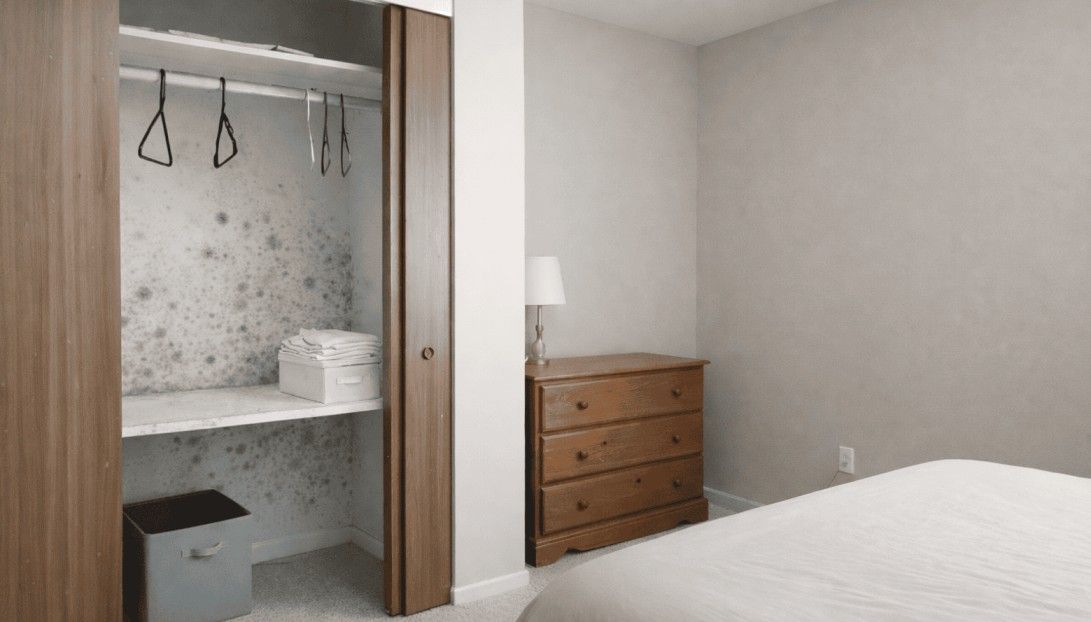
You know that weird, grey-black splotch on the wall? The one that smells musty the second you open the hall closet? The one you keep meaning to deal with but never quite get around to?
Yeah, that’s probably mold.
Finding it doesn’t have to be a full-day project. You can do a basic closet check in about five minutes.
Here’s what to look for:
- Open doors and drawers that usually stay shut.
- Check back walls, baseboards, and ceilings, especially in closets over or near the basement or crawl space.
- Notice any musty odor that hits you right when you open the door.
Then, do a quick test using a cotton swab + diluted bleach:
- Dab the spot lightly. If it lightens quickly or keeps coming back after basic cleaning, treat it as mold, not just dirt.
No hazmat suit needed. Just a quick look with fresh eyes and a simple test to confirm what you’re dealing with.
Basements and storage rooms
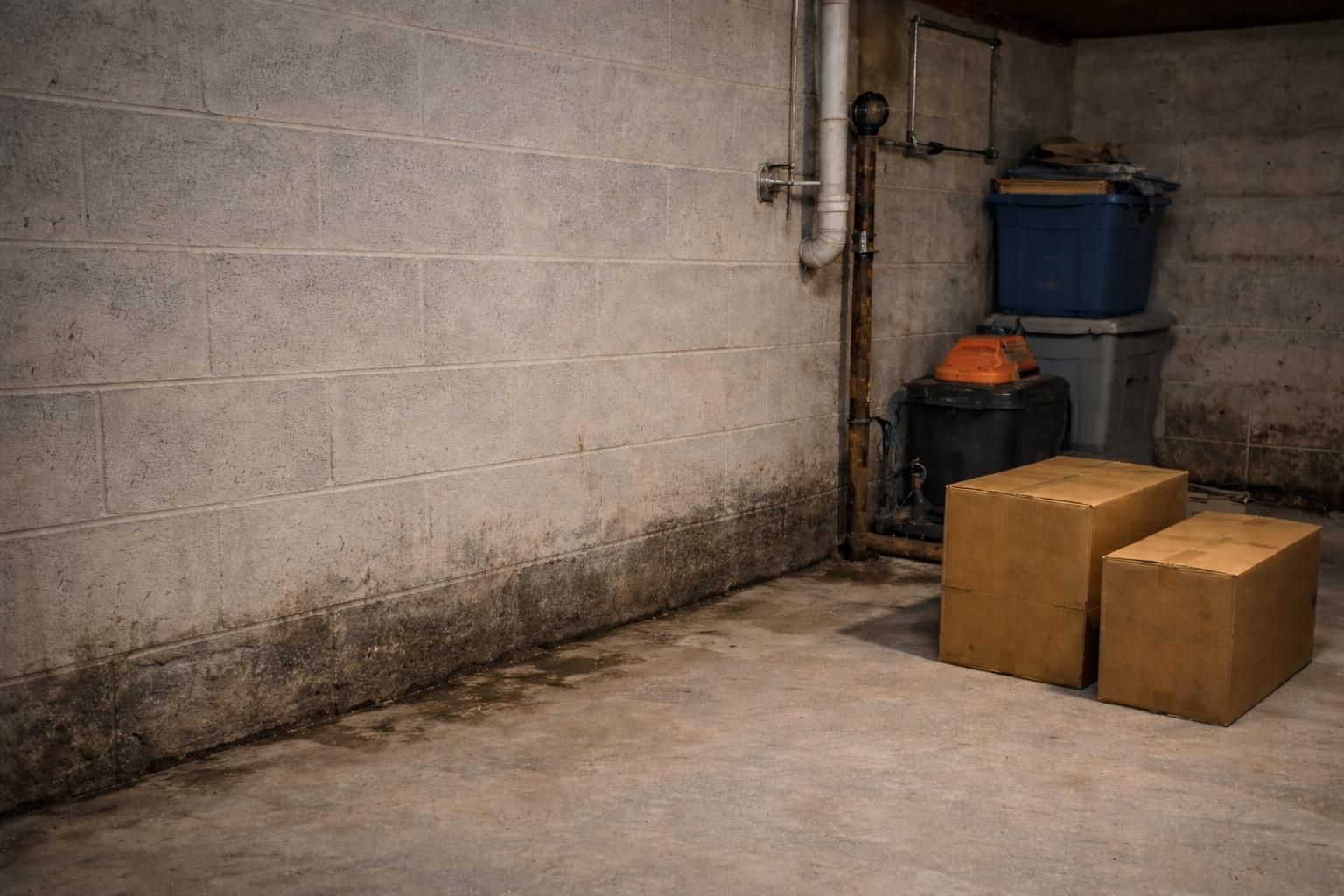
The basement isn’t anyone’s favorite place to hang out. It feels like one more chore, and there’s always that worry in the back of your mind: What if I find something really bad down there?
But avoiding it is exactly how small problems grow into big ones.
Here’s the simple version: grab a flashlight and spend 10 minutes walking the perimeter of your basement or storage room.
Look and feel for:
- Water coming in from the walls, floor, or foundation.
- Plumbing or appliance leaks (water heaters, washers, utility sinks).
- Condensation where warm, moist air hits cool concrete or metal.
Then scan for early signs of mold:
- Dark streaks, fuzzy patches, or discoloration on lower walls.
- Warped baseboards or trim.
- Cardboard boxes or fabric items that look damp or smell musty.
If you see something off, you may have just saved yourself weeks of worry and potentially thousands in repairs. Many early-stage mold problems in these areas can be handled with smart cleaning, better ventilation, and small changes in how you store your stuff—before it turns into a major remediation job.
Solving and preventing mold in these spaces
What you can wipe… and what needs more
Thankfully, this is not a Chernobyl cleanup. Most small mold issues in closets and basements are handled with a cleaner, a sponge, and about 10 minutes.
First, pay attention to what the surface is made of.
- Smooth, non-porous surfaces like metal, stainless steel, and hard plastic are usually the easiest. If they’ve picked up mold, you can often clean, disinfect, and keep using them.
- Porous or fibrous materials (cardboard, fabric, unfinished wood) are much friendlier to mold. If they’ve been wet for a while and smell aggressively musty, they’re often not worth saving.
For non-porous surfaces:
- Mix your cleaner: 3 parts water, 1 part bleach in a bucket or spray bottle.
- Scrub stained spots with a sponge or cloth—corners, baseboards, shelves, storage bins.
- If the stain lightens but returns, keep treating it as mold, not just a scuff mark. The first win is killing the mold, not making it look like brand new drywall.
Basic safety still applies: wear gloves, use eye protection if you’re working overhead, and crack a window or run a fan so you’re not breathing in bleach fumes.
Down in the basement or storage room, scan what’s sitting directly on the floor. Cardboard boxes and fabrics on concrete are basically “all you can eat” buffets for mold. Move them onto plastic or metal shelving and give the concrete some breathing room.
Anything that’s clearly been wet and smells strongly musty? As much as it hurts to say it, that’s probably not a family heirloom anymore. Toss it.
Ventilation, humidity, and filtration: the parts most people skip
Most homeowners know to keep things dry and fix leaks. Fewer people think about how air is actually moving through the house.
Moisture, humidity, and water leaks matter—but so do ventilation and filtering.
Here’s what that looks like in real life:
In your basement and crawl space, you want enough air movement that the space doesn’t stay cool, damp, and stagnant. Fans, properly installed vents, and avoiding piled-up clutter against walls all help.
Throughout the house, your HVAC system is constantly pulling air in and pushing it back out. If you rarely or never change the air filters, you’re asking that system to recirculate dust, spores, and particles.
Replacing your HVAC filters on a regular schedule is one of the simplest, lowest-effort ways to cut down on what’s floating through your air and settling in those closed-off corners.
Then add in humidity control:
If the basement feels like a light sauna or always smells damp, run a dehumidifier and either empty the basin regularly or set up a proper drain.
In closets and tight storage areas, small, nontoxic chemical dehumidifiers (like DampRid tubs) can quietly pull excess moisture out of the air.
Airflow is your low effort hero. Leave closet doors open more often instead of sealing them up for weeks. If possible, swap to louvered doors so air moves even when everything “looks” closed.
Finally, whenever you get several days of heavy rain or a big thaw, do a quick 2 minute perimeter walk: sniff for new musty pockets, look for fresh damp spots, and feel for cool, clammy areas on walls. Catching it here is the difference between “wipe it down” and “we might have a structural problem.”
Your Next Move
After what you’ve learned today, you’re ready to handle the kind of everyday mold that quietly builds up in basements, closets, and storage spaces—especially when a crawl space or basement is feeding particles into the rooms above.
You now know:
- How to check the “hidden” rooms and storage areas that ride along with a moldy basement or crawl space.
- Which surfaces you can confidently wipe down and keep (metal, stainless steel, hard plastic), and which items are better off in the trash.
- How ventilation, humidity control, and regular HVAC filter changes all work together to keep mold from settling back in.
But there are times when even solid DIY habits aren’t enough. Sometimes the problem goes deeper than a little mold on the surface.
In some homes, especially older ones or properties that sat vacant, mold doesn’t just sit on top of the wall—it moves into the building materials themselves. Certain surfaces, like drywall, are made of organic material that mold can grow on. When that happens, you’re not just wiping it off anymore. Those sections may need to be cut out and replaced. That’s a bigger project than what we’ve covered here, and it needs a different plan.
There’s also a bigger question behind all of this:
Is the mold there because of a clear moisture issue (leaks, flooding, humidity)… or is it building up because of poor hygiene and dust that never really gets cleaned? The answer changes what you do next.
To really understand what’s going on, you need the right kind of testing. The goal isn’t just to find “some mold,” but to get a clear picture of the mold and bacteria situation in your home so you can decide on the right next steps. A professional evaluation can help you see whether you’re dealing with a simple moisture fix, a deeper contamination in building materials, or a pattern that means your home should be checked on a regular basis.
This is Part 2 of a 3-part series on mold in your home. Next week, we’ll look at those bigger, behind-the-wall problems—what happens when mold is growing inside surfaces like drywall, how to tell when it’s gone beyond a simple clean up, and how professional testing and evaluation can give you a real, data-backed picture of what’s living in your home.
If you’re buying a home or worried about what might be lurking behind the walls, hiring a professional inspector with a mold scan and lab test could be the right move. Click here to get in touch with a WIN home inspector today.
— Andrei, with WIN Home Inspection
References:
Occupational Safety and Health Administration (OSHA). "A Brief Guide to Mold in the Workplace (Safety and Health Information Bulletin SHIB 03 10 10)." Mold Basics section. U.S. Department of Labor. Published October 10, 2003. Accessed January 12, 2026.