At first glance, the condo vs coop decision can feel like a matter of preference. One building has a doorman. Another has a rooftop. Maybe both units have similar layouts, similar square footage, and even similar asking prices. Yet what you are actually buying can be completely different.
That difference starts to matter long before move-in day. It can affect how you finance the purchase, what you pay each month, whether you can renovate the kitchen, how easily you can rent the unit later, and even what happens when you eventually decide to sell. So before comparing countertops and floor plans, it helps to understand what separates a condo from a co-op in the first place.
How Is a Condo Different From a Co-op?
A condo and a co-op can look almost identical during a showing, but what you are buying is not the same. With a condo, or condominium, the unit belongs to you as real estate and the ownership is recorded through a deed.. The lobby, hallways and other shared parts of the property are handled collectively through the building’s association.
A co-op, short for housing cooperative, takes a less direct route. The building is owned by a corporation, and your purchase is for shares connected to the apartment you will live in. That difference tends to show up later, especially when it comes to financing, board approval, making changes to the unit, renting it out or selling your interest.
Key Differences Between Condos and Co-ops
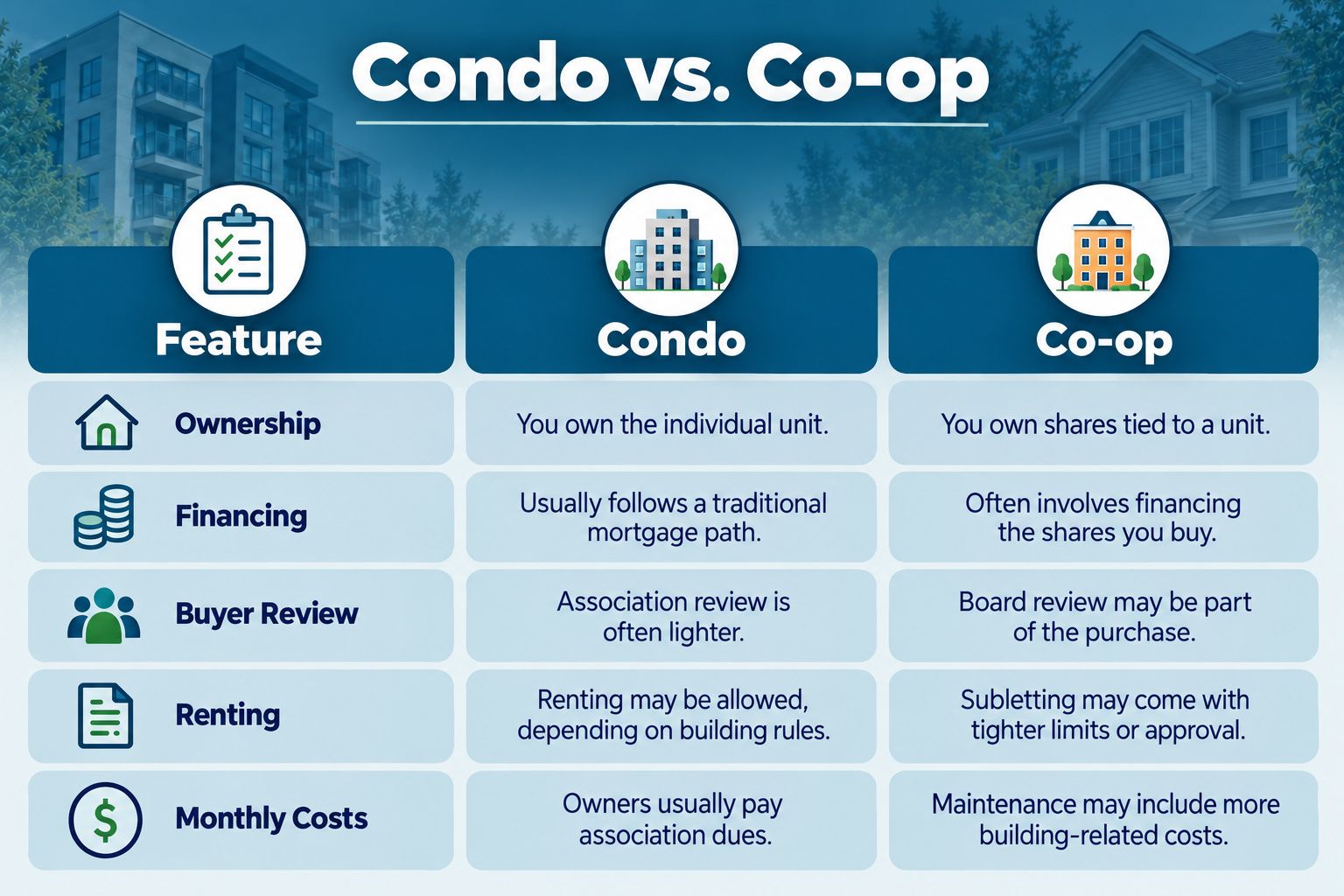
The difference goes well beyond who holds the deed. Financing, monthly payments, building rules and the approval process can all work differently depending on what you buy. Condo buyers usually deal with a mortgage on the unit and pay association dues for shared expenses. In a co-op, financing is tied to the shares being purchased, while monthly maintenance may cover a broader mix of building costs.
The day-to-day experience can differ too. A condo association may set rules around pets, rentals or renovations, but co-op boards often have a bigger role in those decisions. Some may review buyers before a sale goes through or require approval before an apartment is rented or significantly changed. Those details vary from one building to another, which is why the documents for the property matter more than assumptions about how condos or co-ops usually work.
How Does Financing Differ for a Condo and a Co-op?
Financing a condo usually feels closer to buying a traditional home. The loan is tied to the unit itself, although the lender may also review the building before moving forward. That review can include things such as the association’s finances, insurance, or other requirements connected with the property, so approval may depend on more than the buyer’s personal finances.
A co-op takes a different route because there is no individually deeded apartment securing the loan. Buyers commonly finance the shares they are purchasing instead, which means working with a lender that handles co-op loans. The building may also have its own financial requirements for buyers. If a co-op is on your shortlist, it can help to talk with a lender familiar with this type of purchase early rather than waiting until you are ready to make an offer.
Pros and Cons of Buying a Condo
A condo can feel more familiar to buyers because the unit is owned directly, but that does not mean every building works the same way. The benefits usually come down to ownership, financing, and flexibility, while the drawbacks tend to sit with association rules and shared building costs.
Pros:
- Condo ownership: A condo gives you ownership of the individual property, with that ownership recorded through a deed.
- Condo financing: Financing is usually easier to find for condos than for co-ops, though lenders can still look at the building before approving the loan.
- Rental flexibility: Depending on the association, owners may have more freedom when it comes to renting the unit, making changes, or selling later.
- Shared maintenance: Things outside the unit, such as shared hallways, exterior spaces, and other building features, are generally looked after through the association.
Cons:
- HOA fees: Condo owners usually pay regular association dues, and those costs can rise when the building’s expenses increase.
- Association rules: Pets, rentals, renovations, parking, and even how certain parts of the unit are used may come with restrictions set by the association.
- Special assessments: If the building needs a major repair or improvement and reserves are not enough, owners may be asked to contribute an additional amount.
- Shared decisions: Some choices about the property are made at the association level, which means owners do not always have the final say on building-wide changes.
Pros and Cons of Buying a Co-op
A co-op can work well for buyers who are comfortable with a more structured building setup. The trade-off is that you are not just buying into a home, you are also buying into the way that particular corporation is run.
Pros:
- Purchase price: In some markets, co-ops may be priced below comparable condos, which can make certain buildings or neighborhoods more accessible.
- Resident involvement: Shareholders can have a stronger voice in decisions about how the property is managed.
- Shared expenses: Monthly maintenance may bundle together several building-related costs that condo owners could otherwise see separately.
- Building oversight: Some buyers prefer a property where purchases, rentals, and major changes are reviewed more closely.
Cons:
- Board approval: Expect a closer look at the purchase. Financial documents, references, and other information may be part of the process.
- Co-op financing: Fewer lenders may handle share loans, so financing can take a little more planning than a standard condo purchase.
- Rental restrictions: Subletting may be limited, subject to approval, or restricted by the building altogether.
- Resale process: When you decide to sell, the next buyer may also need to meet the co-op’s requirements before the transfer can move forward.
Who Handles Maintenance and Repairs in a Condo or Co-op?
This is where the lines can get a little less obvious. In a condo, owners usually take care of what is inside their unit, while the association handles shared spaces and certain building systems. But something as simple as a leaking pipe or damaged window can become a question of responsibility depending on where the issue starts and how the building documents define it.
A co-op can be just as specific. The corporation owns the building, but shareholders may still be responsible for parts of the apartment they occupy. Before buying, it is worth checking who handles repairs, replacements and ongoing upkeep, especially for items that sit somewhere between the unit and the larger building.
How to Decide Between a Condo and a Co-op
Start with what you may actually want to do with the place. You might love the unit today, but what if you want to rent it out in a few years, redo the kitchen, or sell sooner than planned? A condo can leave more room for some of those choices, depending on the association. With a co-op, you will want to be comfortable with the board having a bigger role and with the rules that come with that particular building.
Price can push the decision one way or the other, but don't stop at the number on the listing. Put the monthly charges, financing, possible assessments, and rules around renting or renovations next to each other. A lower-priced co-op can still be the better buy for one home buyer, while someone else may be willing to pay more for the flexibility a condo offers. The better fit is the one that still makes sense after you look beyond the apartment itself.
Does a Condo or Co-op Need a Home Inspection?
It can be easy to assume that buying in a shared building means most property concerns fall to the association or co-op. That is not always the case. There can still be plenty happening inside the unit itself, from plumbing and electrical components to heating and cooling equipment, appliances, windows, doors, walls, and other accessible areas.
For a home buyer, an inspection offers a closer look at the space before closing. Homeowners may use one later to keep track of how systems and components are holding up, while home sellers may want a better idea of the unit’s condition before putting it on the market. At WIN Home Inspection, a condo inspection focuses on accessible areas within the unit and major systems that may not be covered by the association.
The building paperwork still matters. A roof, exterior wall, shared plumbing line, central system, or common area may be handled by the association or co-op rather than the person living in the unit. Looking at the inspection findings alongside the governing documents can make it much clearer where the unit ends and the building’s responsibility begins.
Frequently Asked Questions
Which is better, a co-op or a condo?
Neither one is automatically better. A condo may appeal more to someone who wants deeded ownership and more flexibility around renting, renovating, or selling. A co-op can work well for a buyer who is comfortable with board involvement and finds a building whose price, monthly costs, and rules fit their plans.
Why can co-ops be cheaper than condos?
Co-ops may have lower asking prices than similar condos in some markets. Tighter approval requirements, fewer financing options, restrictions on subletting, and differences in buyer demand can all play a part. The lower purchase price does not always mean lower overall costs, though, since maintenance charges and other building expenses also need to be considered.
What is the downside of buying a co-op?
For some buyers, the biggest drawback is having less flexibility. The purchase may involve a detailed board review, and the building can have rules around renovations, subletting, pets, or other changes. Co-op financing can also require a lender familiar with this type of ownership.
Can you rent out a condo or co-op?
It depends on the building. Condo associations may allow rentals but still set limits on lease terms or the number of units that can be rented. Co-ops often have tighter subletting rules and may require board approval before someone else can occupy the unit.
What is the role of the board in a co-op versus a condo?
A co-op board can have a larger role in the purchase process and may review prospective shareholders before approving a sale. Condo associations also manage common areas and enforce building rules, but they generally have less involvement in approving who purchases an individual unit.
Can you renovate a condo or co-op?
Renovations may be possible in both, but the rules can be different. Condo owners still need to follow association requirements, especially when work affects shared systems or parts of the building. In a co-op, certain changes may need approval from the board before the work begins.