







You make many financial decisions throughout life. However, few are as major as buying a house. For most, it is the largest purchase they’ll ever make.
Getting your first set of house keys is exciting, but the buying process can be overwhelming. Home ownership is not always straightforward, and first-time homeowners must be especially aware of what’s involved.
Why? Because many don’t have a plan to avoid delays and expensive mistakes.
Ask yourself: Do you know how much you can really afford? Have you started navigating loans? Are you aware of the necessary inspections to protect yourself and your home? What about the potential closing costs? Have you factored those in?
The good news? Buying a house does not have to be complicated. When you understand the process, seek expert support, and take it one step at a time, buying a home becomes easier and more enjoyable. Here’s how.
Things to Consider Before Buying a House
The first step when looking at potential homes? Assess your finances.
Buying a house is a long-term commitment that requires planning, starting with your finances.
Lenders in the United States look at your income, credit profile, and existing debts. This information is used to determine how much you can borrow. However, you must also decide what you can comfortably afford. Consider the following.
Factors Linked to Borrowing
- Your credit score matters. A score of 620 is a common minimum. Although higher scores unlock better rates. If your score is below 620, you may still qualify for a mortgage. FHA, VA, or USDA programs are designed to help those who do not qualify for conventional financing.
- Your debt-to-income (DTI) ratio is also important. Most lenders prefer this to stay below 36%. The lower your DTI ratio, the better your chances of approval. You can also get a lower interest rate.
- To be approved, a steady income and consistent work history help. Lenders review your employment history to assess whether you earn a stable income. Ideally, you will have 1-2 years of continuous employment. If you’re self-employed, be prepared to provide documentation (including tax returns).
Know What You Can Afford
Before you take possession, you’ll need to pay a down payment of 3% to 20%. There are also closing costs between of 2% and 6%. You’ll need savings as well. This fund will cover ongoing costs, including maintenance, repairs, and emergencies.
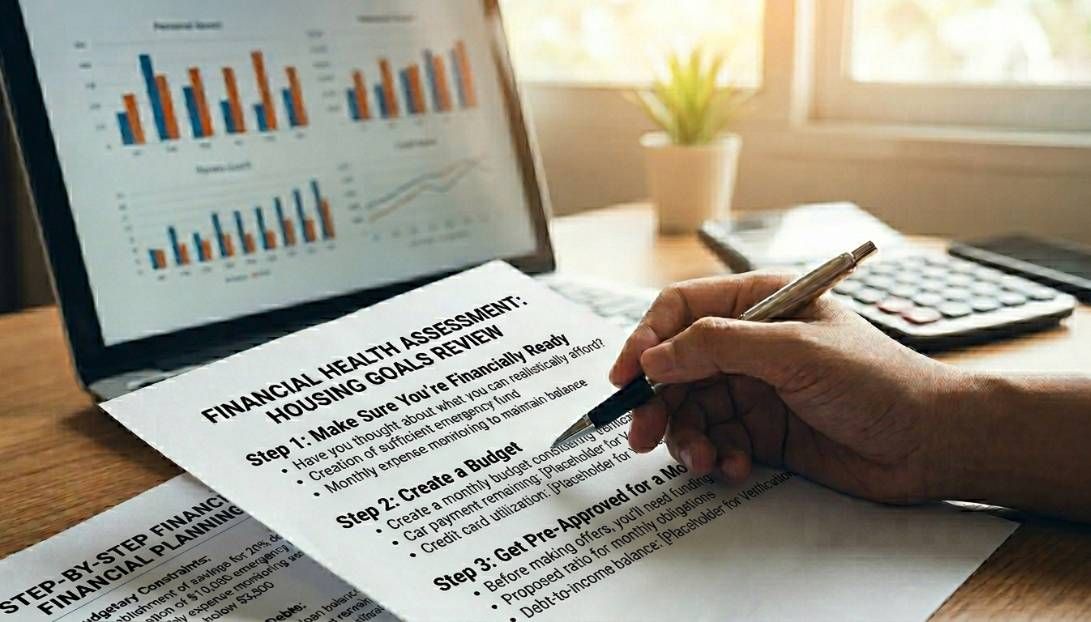
Step 1: Make Sure You’re Financially Ready
Have you thought about what you can realistically afford? That figure will help you narrow your search.
Many buyers search based on what a lender is willing to approve. However, what you borrow may not match your budget. Your income, monthly expenses, and existing debts all play a role in determining how much you can afford. You want to be able to pay your mortgage without feeling financially strained. That comfort line shifts every time rates move, so it's worth checking today's mortgage rates early in your search to see what your real monthly payment would look like at current pricing before you set a price ceiling on homes.
Step 2: Create a Budget
Create a monthly budget that considers the upfront and ongoing costs of homeownership. There are also regular expenses, such as property taxes, insurance, and maintenance. Crunching numbers early on can help you avoid stress. A simple content planner can also help you organize your budget notes, home-buying checklist, inspection reminders, and important questions for your agent in one place. When you factor in all these costs, you get a much clearer picture of what you can truly afford.
Step 3: Get Pre-Approved for a Mortgage
Before you start making offers on homes, you’ll need funding. This is where pre-qualification and pre-approval come into play.
Pre-qualification vs. Pre-approval
- Pre-qualification is usually a quick estimate. It is based on the details you share about your income, debts, and credit. It gives you a general idea, but it is not verified.
- Pre-approval is more detailed and reliable. The lender reviews your financial documents and credit history to determine how much you can borrow.
When you get pre-approved, it helps show you’re a serious buyer. It is not a final loan agreement, but it will help you compete with other buyers.
This process usually involves a few key steps:
- Step one: Submit a mortgage application with your basic financial details.
- Step two: A credit check is performed to review your credit history and score.
- Step three: Provide documents, such as pay stubs, bank statements, tax returns, and identification.
Having your pre-approval ready can help you focus your home search and quickly act when you find the right property.
Choosing the Right Mortgage
Once you know your budget and how much you can borrow, you’ll choose a mortgage. Not all home loans are the same. The right choice depends on:
- Your financial goals
- How long you plan to stay in the home
- How comfortable you are with monthly payments
Taking the time to understand your options can help you avoid paying more than necessary over the life of the loan.
There are a few common types of mortgages to consider, including:
- Fixed-rate mortgage: Your interest rate stays the same for the entire loan term. This option ensures that your monthly payments remain predictable. This is a popular choice if you plan to stay in the home for a long time.
- Adjustable-rate mortgage (ARM): The interest rate starts lower but can change over time based on market conditions. This can work if you plan to move or refinance before the rate adjusts.
- FHA loans: These are backed by the government and are often easier to qualify for, especially if you have a lower credit score. Down payments can be as low as 3.5%.
- VA loans: Available to eligible veterans and active-duty service members, these loans often require no down payment and offer competitive terms.
- Conventional loans: These are not backed by the government and usually require stronger credit and financials. They can offer more flexibility and fewer long-term costs in some cases.
Choosing the right mortgage comes down to what makes sense for you. Compare loan options, interest rates, and monthly payments to make a decision that supports your goals and budget.
Find the Right Real Estate Agent for You

Working with the right real estate agent can make a big difference. Partner with a real estate agent who understands your needs (and the market). They should provide insight into local market conditions and guide you through the buying process. An expert will help you navigate offers, negotiations, and the paperwork that comes with buying a home.
How to Search for the Right Home
What do you think about when picturing your perfect new home?
Consider location, size, layout, and nearby amenities. Knowing what you want will keep your search focused. That way, results match your priorities. Start exploring online listings to get a sense of what is available in your price range. You can then narrow down your options.
As you start visiting homes, pay close attention. How is the location? How far will your commute be? What are the noise levels like in the neighborhood? What is the overall condition of the house? Compare multiple properties instead of rushing into a decision.
Making an Offer on a House
Once you find a home that feels right, you’ll want to submit an offer.
Your offer is what you’re willing to pay and under what terms. Meaning, your offer is not just about the price. It also includes details such as the closing timeline and contingencies. In competitive markets, a well-structured offer can make a big difference in whether it gets accepted.
The strongest offers tend to include a fair price based on market value, along with a money deposit to show your commitment. This deposit is typically around 1% to 3% of the home price. You may also include contingencies to protect you if something does not go as planned during the inspection or financing.
What You Should Know About Pricing, Appraisal, and Negotiation
The next step is understanding final pricing and when you should negotiate. Remember, the listing price does not always match a home’s market value. To confirm this, your lender will arrange an appraisal. This process determines a home's value by comparing it to similar properties in the area. If the appraised value comes in lower than your offer, it can affect your loan. In this case, you may need to renegotiate the price or adjust your payment.
Negotiation is a normal part of the home-buying process. Depending on the situation, you may be able to negotiate the purchase price, request repairs, or ask the seller to cover part of the closing costs.
In a competitive market, you may need to be more flexible. In contrast, you may have more room to negotiate in a slower market. Work closely with your agent and understand all terms so you can make informed decisions.
What to Check Before You Buy
Before moving forward with the purchase, you must take a closer look at the home's condition. A property might look perfect on the surface, but there could be underlying issues. In many cases, these are not visible.
Checking key areas like the roof, foundation, plumbing, electrical systems, and overall structure. Getting a 4-point inspection allows you to see what you’re really buying. Depending on the house, you may also seek specialized services, like infrared scanning.
WIN Home Inspection plays an important role at this stage by providing a detailed evaluation of the property. A professional inspection helps identify potential issues and safety concerns. This process can help you plan for potential repairs. Completing this step will protect your investment.
Final Steps to Buying a House

The last stage usually includes finalizing your loan, reviewing all documents, and conducting a final walkthrough of the property. You can expect the following:
- Before the sale is finalized, you must ensure everything is in the agreed-upon condition.
- Your lender completes the final checks.
- You will then review the closing disclosure, which outlines your loan terms and final costs.
- On closing day, you sign the paperwork and pay the remaining costs.
- You then officially take ownership of the home.
While it may seem like a lot at once, staying organized and reviewing everything carefully will help you complete this final step.
FAQs About Buying a House
How much time does it usually take to buy a house?
The timeline will vary based on your situation. After your offer is accepted, closing typically takes 30-60 days. If you are still saving for a down payment or searching for the right home, the process can take longer.
How much money do you need before buying a house?
The amount depends on the home price and loan type. You should be prepared for a down payment, closing costs, and some extra savings for emergencies. Do some research before seeking loans.
What costs should you expect beyond the home price?
In addition to your mortgage, you will need to budget for property taxes, homeowners' insurance, maintenance, and possible repairs. These ongoing costs are an important part of homeownership.

Related Articles
View AllGet the Latest Insights!
Sign up to stay up to date with latest tips, trends and updates from WIN.