Your roof can look perfectly fine and still be letting water into your attic every time the temperature swings above and below freezing. Winter beats up on roofs, and when a leak shows up, bad flashing on roof is usually to blame. Flashing is the thin metal that seals up the gaps around your chimney, vents, and roof valleys. Snow melts a little during the afternoon and freezes solid again at night. As that ice expands, it pushes water into any tiny crack it can find. Even a small gap in your flashing can turn into a full-blown leak before spring gets here.
Below, we will answer what is roof flashing, what damage looks like, and how to check your roof before the first big snowstorm hits.
What is Roof Flashing and How Does it Work?
When homeowners ask what is roof flashing, the simplest answer is that it is a thin sheet of metal (or sometimes rubber) installed over the seams and joints on your roof. Its whole job is to cover up the weak spots where shingles stop and a wall, a skylight, or a roof edge begins. Instead of letting water sit in those joints, flashing steers it away from chimneys, pipes, and valleys where leaks usually start.
When heavy rain runs down your roof and hits a chimney or a vent pipe, the flashing catches that water and guides it back onto the shingles below or straight into the gutters. Without it, water would soak right into the wood deck underneath and eventually drip through your drywall. Because fixing flashing on roof leaks early is much cheaper than replacing rotted wood and wet drywall later, keeping an eye on these metal strips saves a lot of trouble.
What is Roof Flashing Made of?
If you are wondering what is flashing on a roof made from, roofers use a few different materials for flashing on roof depending on your budget and the part of the roof they are working on:
Galvanized steel: This is what you see on most homes. It holds up well against rust, takes a beating without denting easily, and does not cost a fortune.
Aluminum: It is lightweight, rust-free, and easy for roofers to bend by hand on the job site when they need to fit awkward roof angles.
Copper: Copper costs a lot more upfront, but it can easily outlast the roof itself. It also looks great and slowly turns that classic greenish-brown color as it ages.
Rubber and synthetic materials: Metal does not wrap tightly around round pipes, so roofers slide flexible rubber collars (usually called pipe boots) over plumbing vents to keep water from running down the pipe.
How do Roof Flashing and Shingles Work Together?
Once you understand what is roof flashing, you'll see that flashing and shingles work together by using gravity. When a roofer puts them on, they weave and layer the metal with the roof flashing shingles so the top piece always overlaps the piece below it. That way, water keeps rolling downhill and never gets a chance to sneak underneath a seam.
Shingles do a great job on flat, open slopes, but you cannot bend a shingle cleanly up the side of a brick chimney or a dormer wall. Anywhere a flat shingle butts up against a wall, a skylight, or a sharp valley, there is an open gap left behind. Flashing bridges that gap so water cannot pour inside.
Where homeowners get into trouble is when a bad installer skips the metal work and just globs on a bunch of roofing caulk instead. Caulk is fine as an extra backup, but sun and freezing weather dry it out in just a few years. Once that sealant shrinks and cracks, water goes right in. When fixing flashing on a roof, proper metal overlap matters more than relying on a tube of roofing sealant to keep water out.
Where is Flashing on a Roof Installed?
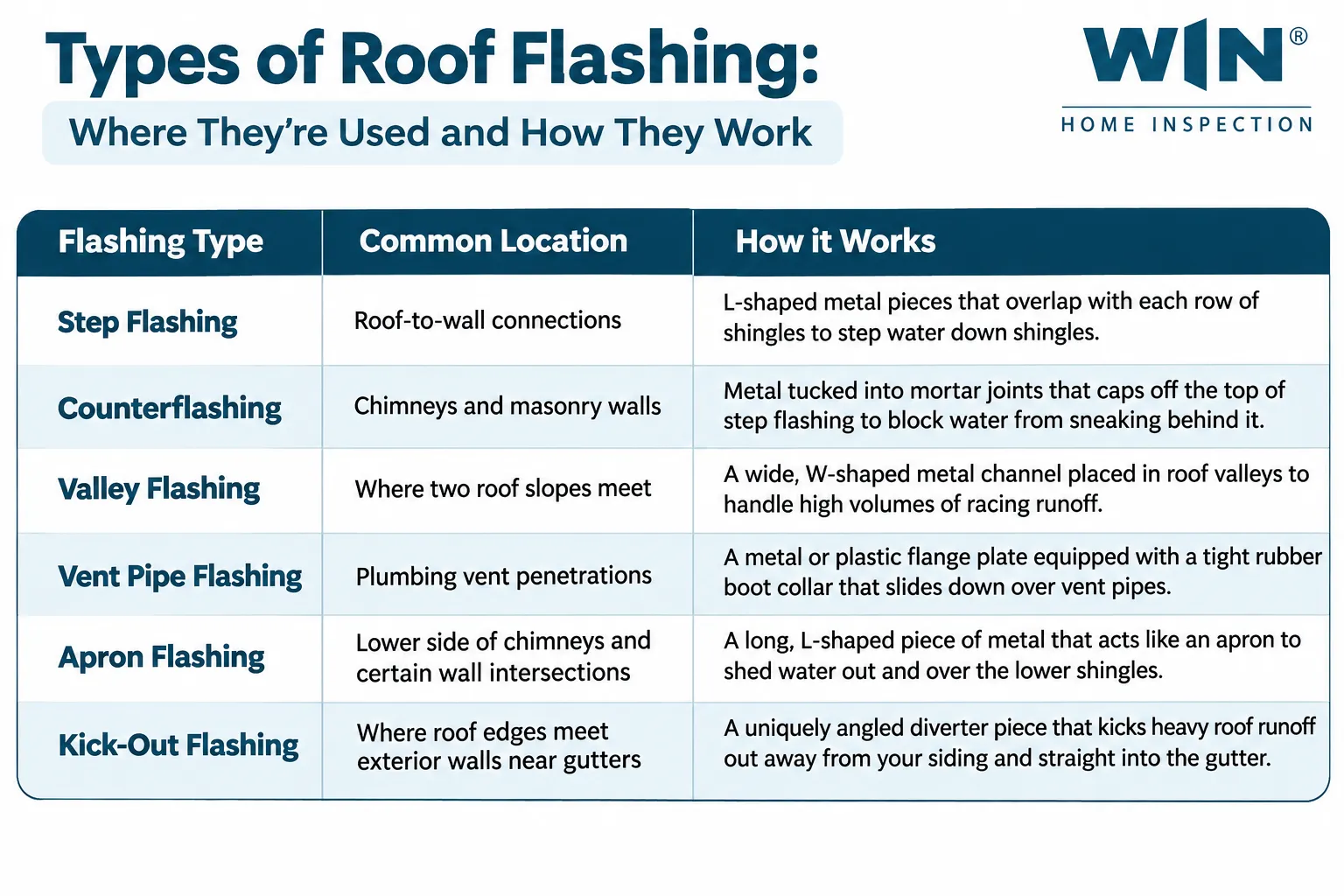
If you stand in your yard and wonder what is flashing on a roof actually covering, you'll find flashing anywhere two roof slopes meet, anywhere the roof touches a wall, and around anything that pokes through the roof deck. Since shingles can only handle the flat parts of a roof, all those corners, creases, and pipe holes are left wide open on their own. Roofers fit custom-bent metal pieces into all of those spots to keep rainwater moving toward the gutters where it belongs.
Common Flashing Locations and Profiles
What are The Warning Signs of Damaged Roof Flashing?
Here are the common visible and hidden signs that fixing flashing on a roof is necessary:
Loose, bent, or lifted flashing: Strong winds can pull the metal plates right away from your siding or chimney, creating an open gap where water can pour in.
Rust or corrosion around metal flashing: Old galvanized steel will eventually lose its protective coating. If you see orange rust or flaking metal, the barrier is no longer waterproof.
Damaged rubber boots around roof vents: Inspect the round rubber seals at the base of your plumbing pipes. The sun bakes these collars, causing them to split and crack open over time.
Water stains near chimneys, skylights, or exterior walls: Look at your interior drywall. If you see yellow, brown, or bubbling paint near these roof structures, the flashing is likely leaking.
Damp insulation or water marks in the attic: If you head into your attic with a flashlight, look for wet fiberglass batts, dark wood rot, or water tracks running down the framing boards.
Recurring leaks after heavy rainfall or snowmelt: If your roof only leaks during a driving rainstorm or when snow is actively melting on the roof, water is finding its way behind a flashing seam.
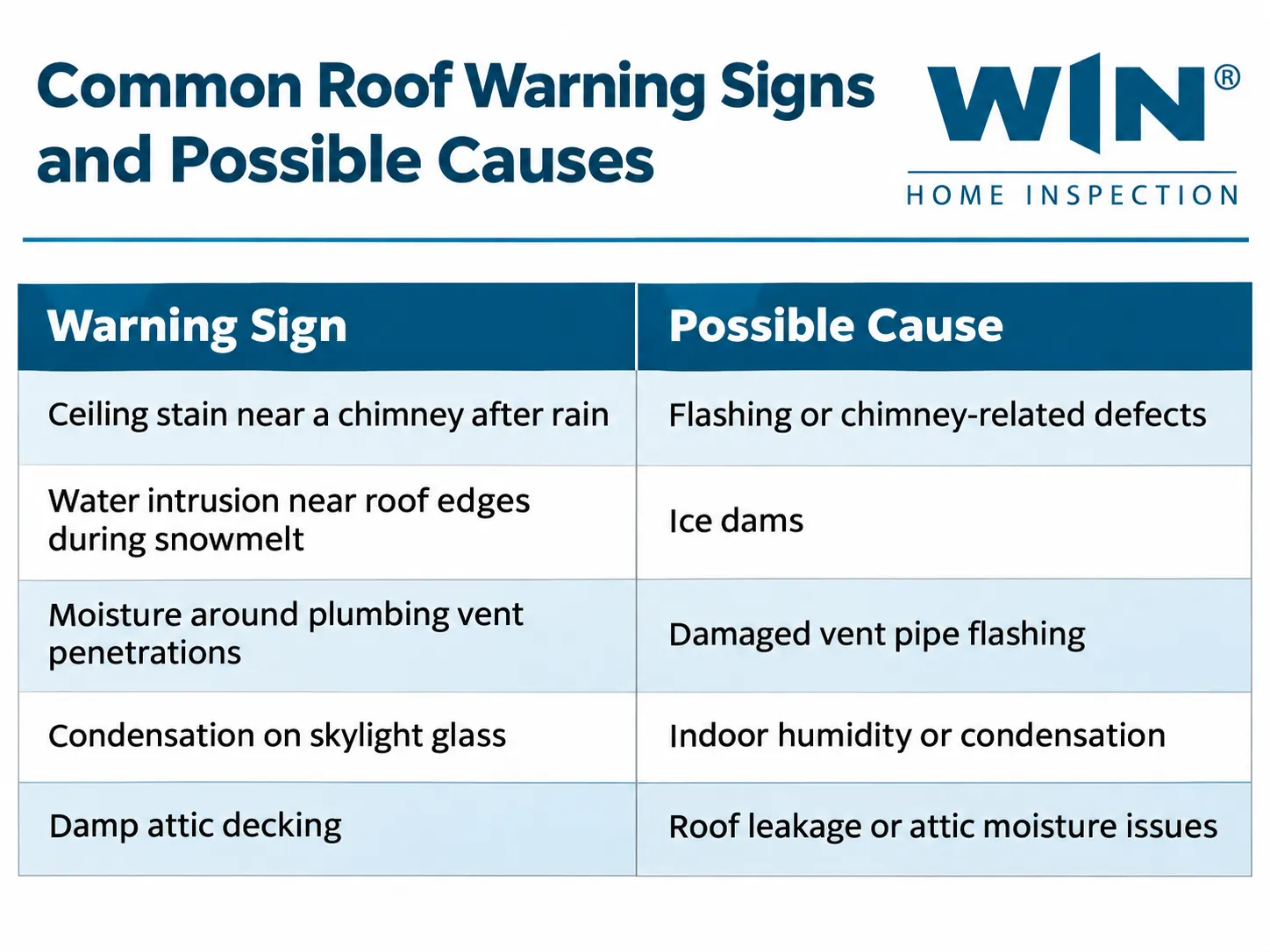
How Can You Tell if a Leak is Caused by Flashing, Ice Dams, or Condensation?
Here are a few possible causes by which you can identify that the leak is either caused by flashing, ice dams, or condensation:
How do ice dams push water under roof flashing?
An ice dam forms when heat from your attic melts the snow on your roof. The melted water runs down to the cold edge of the roof and refreezes there. Over time, the ice builds into a ridge that blocks more water from draining off.
When that happens, the trapped water backs up and looks for a way in. It often finds the seams around flashing, especially at chimneys, walls, and valleys near the roof edge. Water that slips under the metal can soak the decking and insulation, then show up as a stain on your ceiling. A poorly insulated attic and weak flashing make this much more likely, so fixing both gives you the best protection.
How can You Check for Hidden Roof Flashing Leaks Before Winter?
Winter weather brings freezing rain, heavy snow, and ice dams that put immense pressure on your home. If your flashing on the roof seems to have hidden gaps, winter physics will force moisture into those spaces and cause costly interior damage.
Zone 1- What Should You Check from the Ground?
Check the roof flashing shingles connections around your chimney, dormers, and walls look bent, loose, or completely missing.
Inspect the shingles directly surrounding your flashing, as loose shingles leave the metal edges unprotected.
Look at the round rubber collars at the base of plumbing pipes to see if the sun has cracked or split them.
See if leaves, twigs, or pine needles are building up in roof valleys and gutters, which traps water right over the flashing.
Zone 2- What Should You Check Inside Your Home?
Check the plaster or drywall directly beneath your chimney, skylights, and ceiling vents.
Search for peeling paint, bubbling plaster, or telltale yellow and brown water stains.
Examine the top section of walls where your interior rooms meet exterior rooflines.
Note down exactly when stains appear or grow larger, such as during heavy downpours or rapid snow melts, to help a pro pinpoint the issue.
Zone 3 – What Should You Look for in the Attic?
Look at the underside of the plywood roof boards for dark water stains, white mold, or active wood rot.
Check for damp, compressed, or discolored fiberglass batts, especially near walls and chimneys.
Shine your light directly where pipes and vents are cut through the roof structure to check for dampness.
Look for dark streaks running along the rafters and verticals framing boards.
See if there is any persistent damp, stale smell, showing trapped moisture inside.
Safety note: _Homeowners should only inspect easily accessible areas. Never walk on a slick roof, climb dangerous extension ladders or step off standard attic floorboards onto unsupported ceiling drywalls. If you spot trouble, call a certified roofer to handle the actual repairs safely. _
Should Damage Roof Flashing Be Repaired or Replaced?
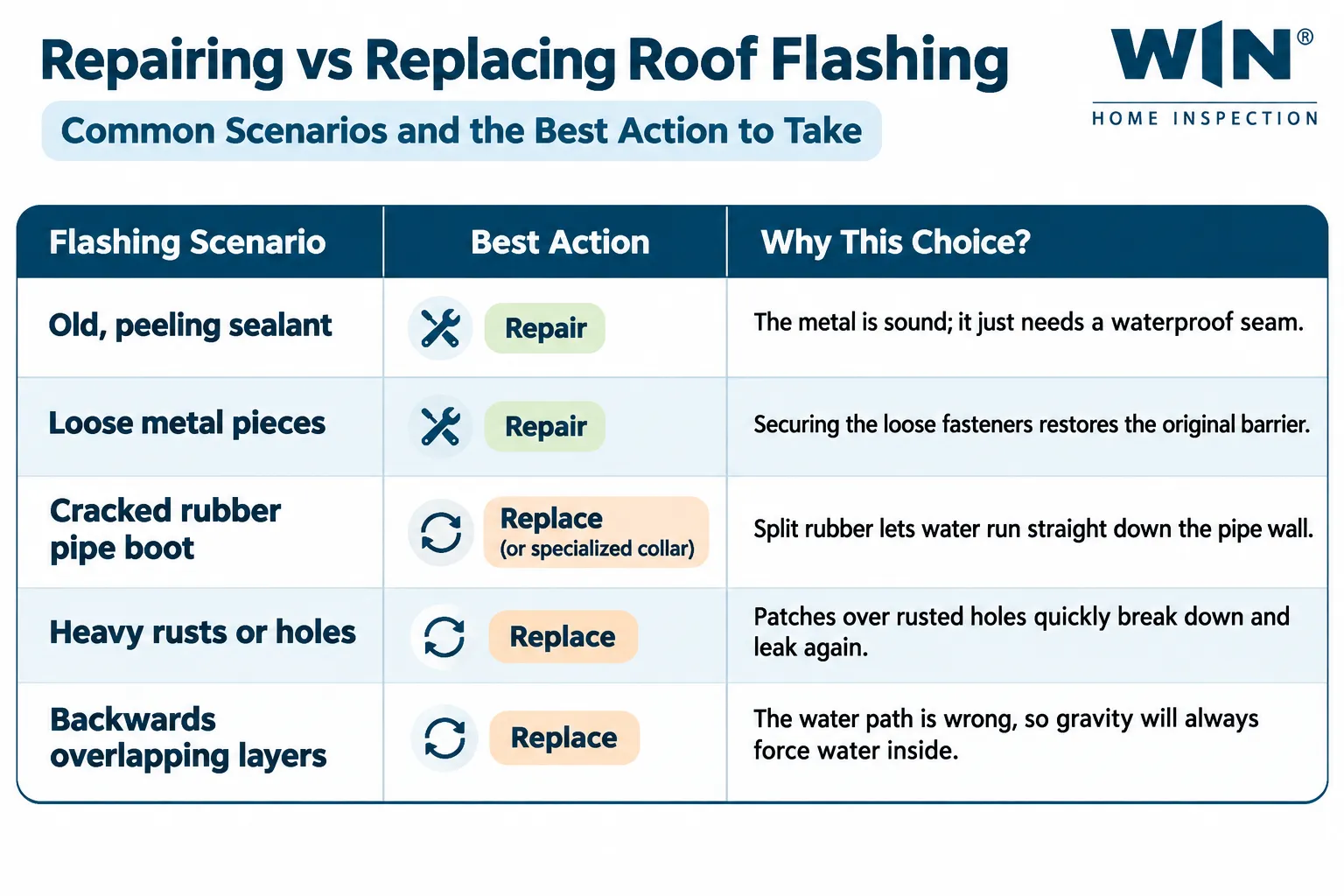
When you notice a problem with the flashing on roof, you face a big choice. Do you patch the issue or tear it all out? Knowing whether to attempt a quick fixing flashing on a roof or replace the whole section depends entirely on how bad the structural damage is.
If the metal itself is in great shape, but the old caulking is peeling away, you can usually clean up the joint and apply fresh, high-grade roofing sealant.
Wind can lift metal sections without destroying them. If the pieces aren't warped, a roofer can often pull them tight and fasten them securely down again.
The rubber collar surrounding a plumbing pipe degrades much faster than the metal base. You can often install a specialized repair collar over the old one, though replacing the entire boot is a longer lasting fix.
Rust holes or missing sections are hard to patch. Once the structural integrity goes, you should install new metal.
If the original installer layered the pieces incorrectly or skipped metal parts entirely in favor of roof tar, patching the whole thing would be hard. You need to rebuild it from scratch.
Repairing vs Replacing
Schedule a Roof Inspection with WIN
Regular roof inspection is the best way to prevent expensive water damage before winter arrives. Small gaps around chimneys, vents, and valleys quickly turn into major leaks under the pressure of snow and ice dams. While basic ground checks help you spot loose metal or cracked rubber boots early, hidden structural issues require professional judgement.
Now that you know what is roof flashing and how winter weather tests it, scheduling a professional assessment with WIN Home Inspection can help you solve your problems. Our certified inspectors look closely at accessible roof structures, attic decking, and interior of ceiling to identify flashing issues before it costs thousands of dollars.
So, do not wait for a stain to appear on your ceiling, take action now to keep your home dry, safe, and fully protected this Christmas.
FAQs
1. How long does roof flashing last?
Standard metal flashing usually lasts 20 years or more, and copper can last well over 50. The part that actually goes bad first is the rubber boot around your plumbing vents. Those usually rot out after 10 or 15 years. If you're already paying to get new shingles put on, tell your roofer to put in new flashing at the same time instead of reusing the old metal.
2. Can you fix roof flashing in winter?
You can, though, it depends on the weather that week. Most roofers won't fully fix flashing on the roof when there's ice on the roof, and roofing sealant doesn't stick right when it's freezing out. Usually, a roofer comes out and puts a temporary patch over the leak to get you through the winter, then comes back in the spring to fix it properly.
3. Does roof tar fix leaking flashing?
Roof tar will get you through a rainy season or two, but it's not a real fix. After a year in the sun, tar shrinks up and cracks, and the leak comes right back. Whenever we see black roof cement smeared all over chimney metal, there's almost always a bigger issue hiding underneath. Have a roofer pull it off and do a proper step flashing repair with new metal.
4. What does a home inspector look at on roof flashing?
We look at every spot where the roof butts up against something else, like chimneys, skylights, walls, and vent pipes. We're checking for rusted metal, loose edges, dried-up caulk, or pieces that were overlapped backward when they were installed. After we check outside, we go into the attic to look at the wood right underneath those areas to see if water has been getting in.
5. How often should you have your roof inspected?
Once a year is plenty for a normal roof. Doing it in the fall makes the most sense so you can take care of minor stuff before snow hits. You should also have someone take a look if you get hit with heavy hail or bad wind. And if you're buying or selling a house, getting the roof looked at ahead of time saves a lot of headaches during negotiations.
6. How can you tell if your chimney flashing is leaking?
You'll usually see it on the ceiling or walls near the chimney first. Look for yellowish water rings, bubbling paint, or drywall that feels damp. If you can get into your attic, take a flashlight and look at the wood framing and insulation right around the brick. If those spots get wet right after it rains or when snow melts, it's ready to be repaired.
7. Will homeowners insurance pay for flashing damage?
If a bad windstorm rips the metal off or a tree branch hits it, insurance will usually help pay for it. If it's leaking just because the roof is 20 years old and rusted through, they won't cover it. Take a few pictures of the damage and call your insurance agent before you hire a roofer to tear into it, just so you know what's covered first.
8. Can a roofer replace flashing without redoing the whole roof?
For step flashing repair, a roofer need to pry up a few rows of roof flashing shingles around the bad spot, slide the new metal in, and seal the shingles back down. The only catch is if your roof is really old. Old shingles get brittle and crack when you bend them, so the roofer might have to put in a few new shingles around the repair.
9. Should you get a roof inspection before buying a house?
When we inspect a house for a buyer, we go over the shingles, the flashing, the ceilings, and the attic space so you know what you're walking into before closing day. If we find leaky flashing, you can ask the seller to fix it or knock some money off the price. It's a pretty cheap fix if you catch it early, before it rots out the wood underneath.