After inspecting homes across Southwest Austin, we see the same pattern again and again: the homes near Barton Creek Greenbelt with the best view often need the closest look.
Southwest Austin has rolling limestone hills, dense woods, and winding creeks. Neighborhoods like Oak Hill, Travis Country, Westcreek, Circle C Ranch, and Sunset Valley offer scenic surroundings, mature shade trees, and easy access to hiking and biking.
Those same surroundings can bring problems a standard full home inspection doesn’t always catch. Sloping ground, mature trees, and nearby brush can affect a home’s drainage, foundation, roof, and upkeep. Here is what to check before you make an offer.
Understanding Barton Creek Greenbelt and Southwest Austin Geography
Before buying a home near Barton Creek greenbelt, a clear understanding of Austin’s geography goes a long way. The natural features of Texas Hill Country also bring engineering challenges that dictate long-term property maintenance.
What is a Barton Creek Greenbelt?
A Barton Creek greenbelt refers to stretches of natural or preserved land surrounded by developed neighborhoods. It is important for buyers to differentiate between public recreational green spaces, including managed trails, park amenities, and municipal oversight and privately owned or conserved areas.
Proximity to these natural buffers does not automatically guarantee public trail access, nor does it always mean permanent preservation. Many of these areas function under strict environmental buffer zones that come with rigid neighborhood usage restrictions, limiting how close you can build, fence, or clear land near the property boundary.
How Southwest Austin’s Geography Affects Homes
The rolling terrain of Southwest Austin rests on limestone formations and clay-rich soils. Natural drainage corridors, especially the Barton Creek, Williamson Creek, Slaughter Creek, and Bear Creek, have drainage channels that carry stormwater through the landscape.
Because of this rugged topography, soil thickness, lot slope, and water runoff patterns vary dramatically across neighborhoods and even individual property lines. A home built on a flat limestone shelf faces different drainage and foundation pressures than a neighboring property located on a steep drop-off.
Why a Home Near Barton Creek Greenbelt Needs a Local Inspector?
Here is why homebuyers need a local inspector before buying a home near Barton Creek Greenbelt -
1. Drainage, Runoff, and Foundation Conditions
Southwest Austin’s rolling terrain is one of the contributing factors on how heavy rains interact with the residential structure. During heavy rainfall, water can flow downhill toward the foundation instead of away from it. This condition, known as negative grading, contributes to moisture problems and soil movement.
This triggers soil erosion, causing severe issues to the foundation of the house. Thus, it is necessary to check the rear perimeter of water lines and exposed concrete footings and structural cracks. Additionally, check the condition of retaining walls, and see whether there are any blocked holes that trap hydrostatic pressure.
2. Mature Oak Trees and Roof Maintenance
The live oaks that define the Hill Country threaten a home’s exterior structure, if not managed properly. Overhanging branches near the roof can scrape away protective asphalt shingle granules and traps moisture, causing premature roof wear and wood decay on fascia boards.
Moreover, every spring live oaks undergo an extensive drop of leaves and stringy catkins, which can pack into gutter and roof valleys. Clogged gutters force rainwater to back up under shingles and leak into the soffits. Also, shallow oak roots can crack patios and driveways and clay soil under the foundation. Homebuyers should get a roof inspection and read about tree cutting laws in Texas to prevent damage to their house.
3. Termites, Wood-Destroying Insects, Other Pests
The dense vegetation and decomposing leaves litter create an ideal breeding ground for wood-eating pests. When a property has high mulch lines or direct wood-to-soil contact (such as wood siding or landscape timbers touching the earth), it creates a pathway for pests to breach the structure without being noticed.
Termites are a concern for homeowners across Austin, especially around Greenbelt Austin, who can hollow out the wall without any visible signs. Besides, there is a risk of scorpions, who tend in cool and dark spaces. Central Texas home lawns also feature fire ants who can large colonies near disturbed soils. The large, wooded structure of greenbelt enables mosquitoes and spiders to build their nests, which also presents the pathway to enter the homes. So, before finalizing the property look out for these pests, ask the owners when they had wood-destroying insect (WDI) inspection done on the property.
4. Wildfire Exposure and Vegetation Management
Some homes near wooded greenbelts in Southwest Austin face greater wildfire exposure. Buyers must check the property's location, surrounding vegetation, and nearby combustible material. Being close to dense, continuous stretches of native bush and cedar trees means wildfire can easily spread across your property.
Therefore, when looking for a home in Southwest Austin, check out the immediate surroundings. Look for excessive fuel loads, dead vegetation, and any combustible materials stacked close to the foundation. Also, ask the owners if the roof, gutters, and wood siding are vulnerable to firebrands or smoking remnants, or if the attic vents have wire mesh netting that keeps your attic protected. This will help you understand the area and property.
5. Creek Proximity and Potential Flooding
Often buyers think buying a home in greenbelt Austin is like living within a designated floodplain, meaning an area adjacent to river, stream, or waterbody. On the contrary, many greenbelt corridors have active creek beds like Williamson Creek or Slaughter Creek, whose primary purpose is to manage neighborhood stormwater drainage.
When you go through properties, ask owners about recent flash flood events, see whether there are any uphill debris line tangled in the bush, or wearing down of soil. Moreover, you can access Austin’s Floodpro Watershed Resources and FEMA flood maps to check whether the area comes under heavy floods, which will ensure whether you need to buy flood insurance.
6. Wildlife, Exterior Openings, and Property Maintenance
Besides the aesthetics of Southwest Austin is also home to several wildlife species like White-tailed deer, coyotes, bobcats, gray foxes, raccoons and so on. It includes reptiles like rat snakes, rattlesnakes, various turtle species, etc. Homeowners around the area regularly deal with these animals looking to seek shelter or water, which damages the property.
Look for unsealed gaps around exterior pipe penetrations, and compromised attic vent openings anytime rodents or reptiles can enter your home. Even a half-inch gap in damaged exterior foundations can become an entry point for rodents. Thus, ask the owner, when is the last time they did a seasonal home check and what was the outcome of that inspection?
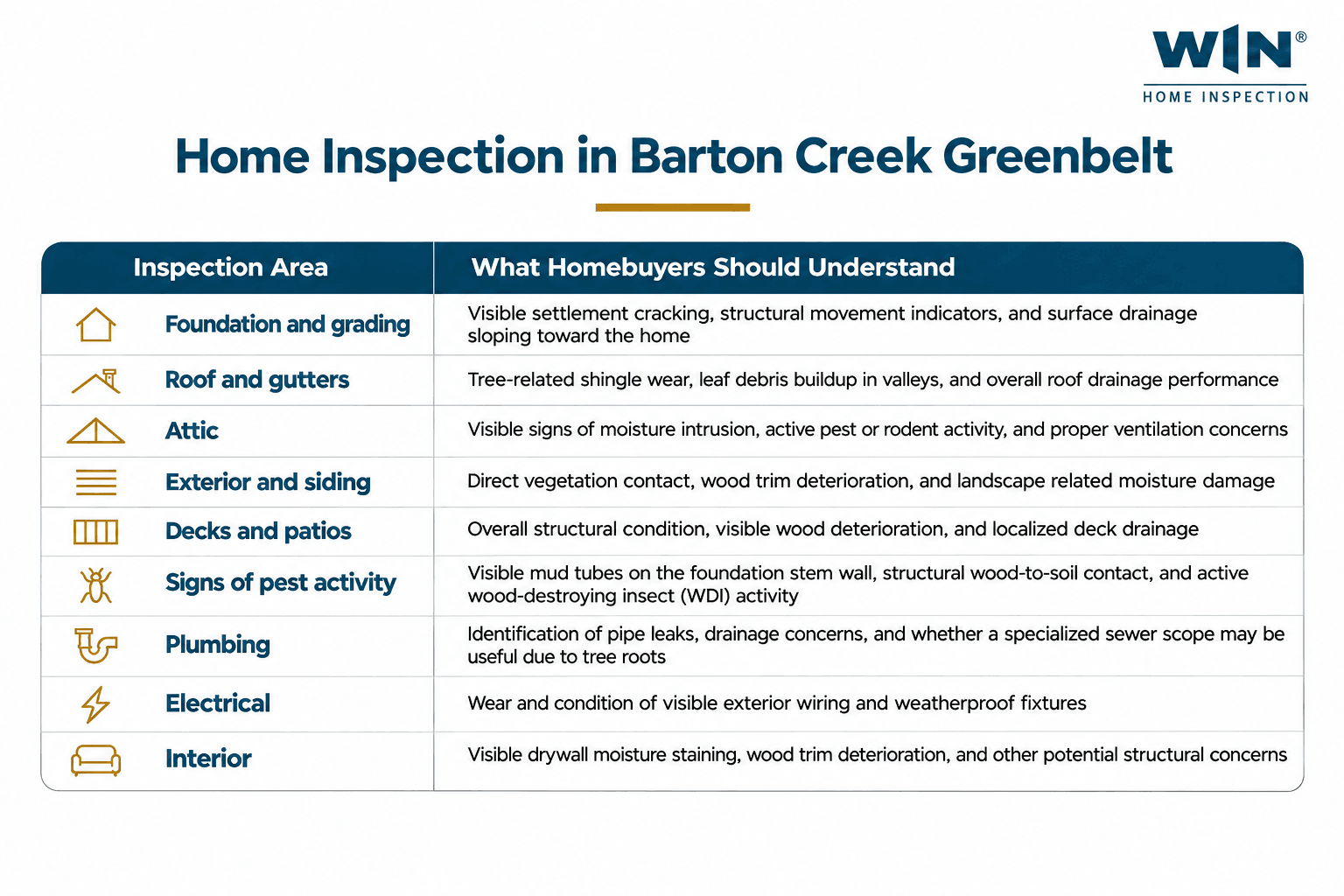
What Should a Home Inspection Cover for a Greenbelt-Adjacent Home?
Because of the unique terrain of greenbelt Austin, especially the Southwest Austin region, it is necessary to get a home inspection before you buy a house. Southwest Austin’s geography can create property specific maintenance concern; a comprehensive home inspection will provide a top-to-bottom evaluation of the property’s visible components. This will help you to identify structural defects, which may require further addressing.
Here is what a home inspection in Barton Creek greenbelt will cover -
Schedule a Home Inspection Before Buying in Southwest Austin
Living near an Austin greenbelt offers scenic views, privacy, and access to nature, but it is important to understand the property's condition before buying. From drainage concerns and foundation movement to roof damage and moisture intrusion, some issues may not be obvious during a home tour.
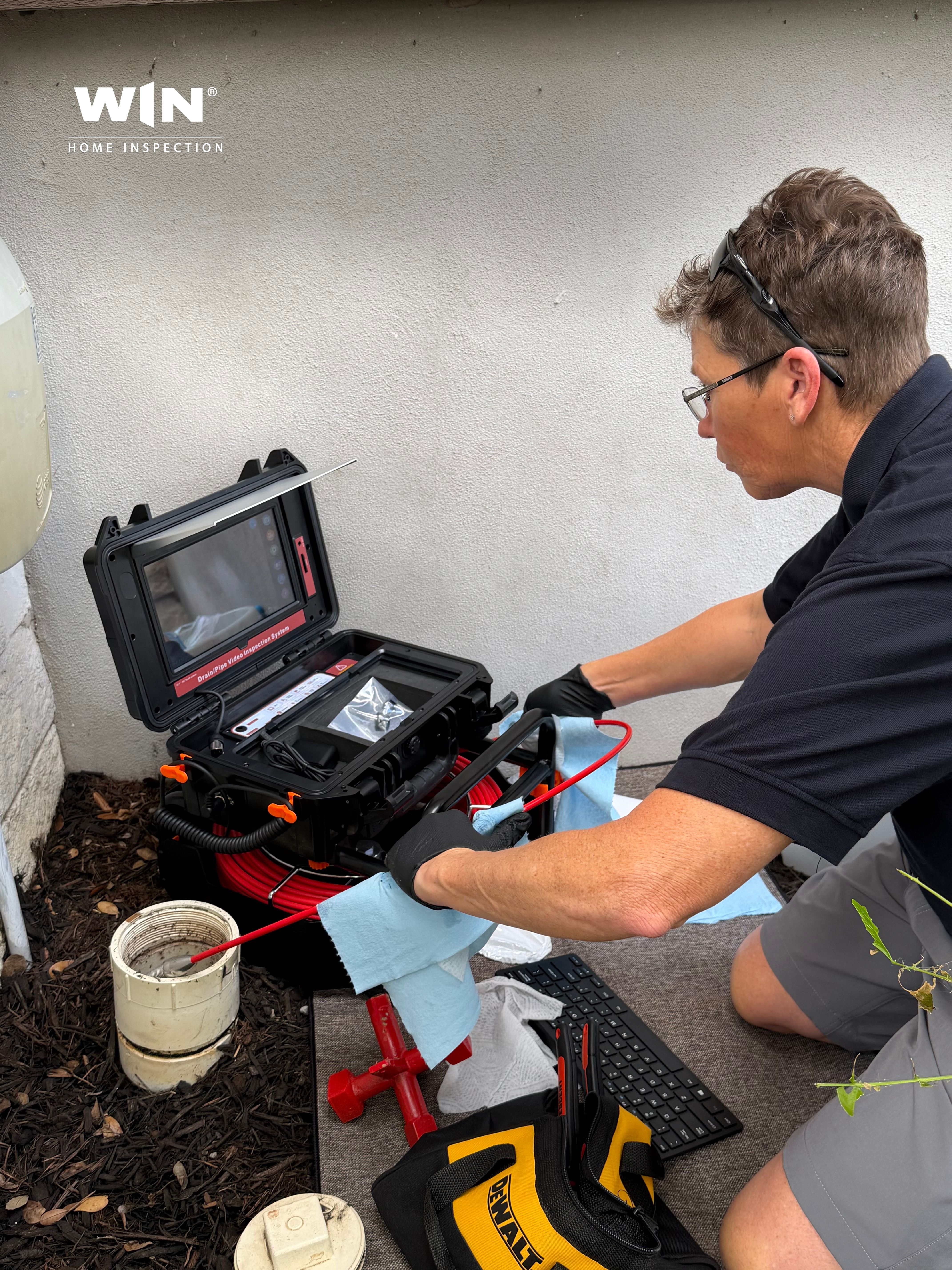
At WIN Home Inspection Southwest Austin, our professional home inspector provides comprehensive Full Home Inspections to help buyers identify potential concerns and make informed decisions. Additional services, such as sewer scope and wood-destroying insect inspections, may also be worth considering based on the property's needs and service availability.
Buying a home in Southwest Austin? Schedule your home inspection with WIN and move forward with greater confidence.
FAQs
1. Is it safe to buy a house near a greenbelt in Austin?
Yes, buying a home near an Austin greenbelt can be an excellent choice. The properties around the area offer privacy, scenic views, and access to nature. However, buyers should check for drainage problems, overgrown trees, pest activity, and foundation concerns. A professional home inspection can help identify visible issues before purchasing.
2. Are homes near Barton Creek Greenbelt more prone to termites?
Homes near greenbelts may face termite concerns, especially where moisture, decaying wood, and vegetation create favorable conditions. However, living near a greenbelt does not automatically mean a home has termites. Buyers should look for mud tubes, damaged wood, and moisture problems. Consider a separate wood-destroying insect inspection before closing.
3. Can living near a greenbelt increase flood risk?
Yes, some greenbelt-adjacent homes may face higher flood risks, particularly near creeks, drainage channels, or low-lying areas. Heavy rainfall can also cause runoff on sloped lots. However, not every greenbelt property faces flooding. Check FEMA flood maps, review property disclosures, and evaluate drainage conditions before buying.
4. What should I inspect before buying a home near a wooded area?
Check for overhanging branches, moisture stains, pest activity, and vegetation touching the house. A professional home inspector can evaluate visible concerns and recommend further assessments when needed. Consider specialized inspections based on the property's condition.
5. Does living near a greenbelt require more home maintenance?
Homes near wooded greenbelts may need more frequent gutter cleaning, tree trimming, pest prevention, and drainage maintenance. Fallen leaves, overgrown branches, and nearby vegetation can affect roofs and exterior surfaces. Regular upkeep helps homeowners manage these concerns and protect their property throughout the year.
6. How do I check if a home near Barton Creek Greenbelt is in a flood zone?
Look up the property address on the FEMA flood map first. Then read the seller’s disclosure and ask if the home has ever had water inside or a flood claim. Walk the lot after a rain to see where the water goes. If the home sits near a creek or in a low spot, ask for an elevation certificate and talk to your insurance agent.
7. Do I need a specialized inspection for a home near Barton Creek Greenbelt?
A standard inspection covers what the inspector can see, but extra inspections show more. You can add a foundation evaluation, a wood-destroying insect inspection, a sewer line scope, or a tree assessment from an arborist. Your inspector can tell you which ones make sense for the house.
8. Is it safe to live near the Barton Creek Greenbelt?
Most people find it quiet and comfortable, but a few things deserve a look. Trail users can walk close to some backyards, and wildlife can wander onto the property. Check the fence, the outdoor lighting, and how easily a person could reach the yard from the trail. Neighbors can also tell you what daily life is really like.
9. Are there strict environmental rules for repairs or expansions near Greenbelt?
Austin limits building near creeks, and it protects large trees. Additions, pools, and decks face more rules than simple repairs. Ask the seller for the survey and permits, then confirm the rules for that lot with the City of Austin.