Colorado has one of the highest radon potentials in the United States. Nearly half of homes tested across the state have radon levels above the EPA action level of 4 picocuries per liter (pCi/L).
The reason is Colorado’s natural geology. Some rock and soil formations contain uranium that breaks down over time and releases radon gas. This gas can move through the ground and enter homes through foundation cracks, crawl spaces, sump pits, floor drains, and openings around pipes.
Radon in Colorado can affect any property, regardless of its age, location, or price. A home may look safe during a walkthrough and still have elevated radon levels that cannot be detected without testing.
For homeowners and buyers, radon testing in Colorado provides valuable information about indoor air quality and helps identify whether additional steps, such as mitigation, may be needed. Whether you are purchasing a home, selling a property, or checking your current home, testing can help you better understand your home’s radon risk.
How Common Is Radon in Colorado?
Radon is common throughout Colorado, and elevated levels can be found in homes across the state. According to Colorado health officials, about half of Colorado homes have radon levels above the EPA action level of 4 picocuries per liter (pCi/L).
Colorado’s geology contributes to this risk, with naturally occurring uranium in certain rock and soil formations releasing radon gas over time. The EPA classifies 53 of Colorado’s 64 counties as Zone 1 areas, meaning they have a high potential for elevated radon levels.
Radon concerns can be found across many Colorado communities, including Denver, Colorado Springs, Aurora, Fort Collins, Boulder, Lakewood, and Centennial. However, radon levels can vary significantly between properties, even within the same neighborhood.
Communities along Colorado’s Front Range, including areas near Denver, Boulder, and Colorado Springs, may have higher radon potential due to local geology. However, individual home results can vary based on factors such as foundation design, soil conditions, and construction details.
What Is Radon and Why Is It Common in Colorado?
Radon is a naturally occurring, invisible radioactive gas created when uranium found in certain rocks and soils breaks down over time. Colorado’s geology contains areas with naturally occurring uranium deposits, which can release radon gas as part of this natural process. The gas can move through the soil and enter homes through small openings in the foundation.
Common entry points for radon in Colorado homes include:
The important thing to understand about radon in Colorado is that any home can have elevated levels. A home's age, location, price, or appearance cannot determine its radon risk.
What Are the Symptoms of Radon Exposure?
Radon exposure does not usually cause noticeable symptoms. Unlike some environmental hazards, you cannot tell if a home has elevated radon levels based on how you feel. A person can feel completely healthy while living in a home with higher radon levels.
Symptoms such as headaches, nausea, or dizziness are not reliable indicators of radon exposure. The primary health concern comes from long-term exposure, which can increase the risk of developing lung cancer over time.
How Does Radon Testing Work in Colorado?
Radon testing measures the amount of radon in the air inside a home over a specific period. Since radon levels can change based on weather, ventilation, and home conditions, testing helps determine the actual concentration inside a property.
The length of a radon test depends on the type of test being performed. Short-term radon tests typically run for at least 48 hours, while long-term tests run for more than 90 days and provide a better estimate of a home's average radon levels throughout the year.
The testing process typically involves:
Placing an approved radon testing device
A licensed radon measurement professional places an approved testing device in an appropriate area of the home, usually at the lowest lived-in level where people spend time.
Maintaining proper testing conditions
Doors and windows should remain closed as much as possible during the testing period to help capture accurate indoor radon conditions.
Allowing the device to collect readings
The device remains in place while measuring radon levels inside the home.
Completing the test and reviewing results
After testing is complete, results are analyzed to determine the home's radon level.
Understanding results and next steps
Results help homeowners and buyers decide whether additional action, such as mitigation, may be recommended.
For buyers, the inspection process can provide more information about a home's indoor environment before completing a purchase. A Home Inspection offers professional radon testing as part of its inspection services to help buyers and homeowners better understand potential concerns and make informed decisions.
How Do Radon Levels in Colorado Compare to Other States in the US?
The average indoor radon level in Colorado is approximately 6.4 picocuries per liter (pCi/L), which is higher than the average radon levels in the US, estimated at about 1.3 pCi/L.
Nearly half of Colorado homes have radon levels above the EPA action level, and radon exposure is linked to more than 500 lung cancer deaths in the state each year. Colorado’s average indoor radon level has been compared to receiving approximately 200 chest X-rays annually, and the state ranks 45th for the percentage of radon tests exceeding the EPA action level.
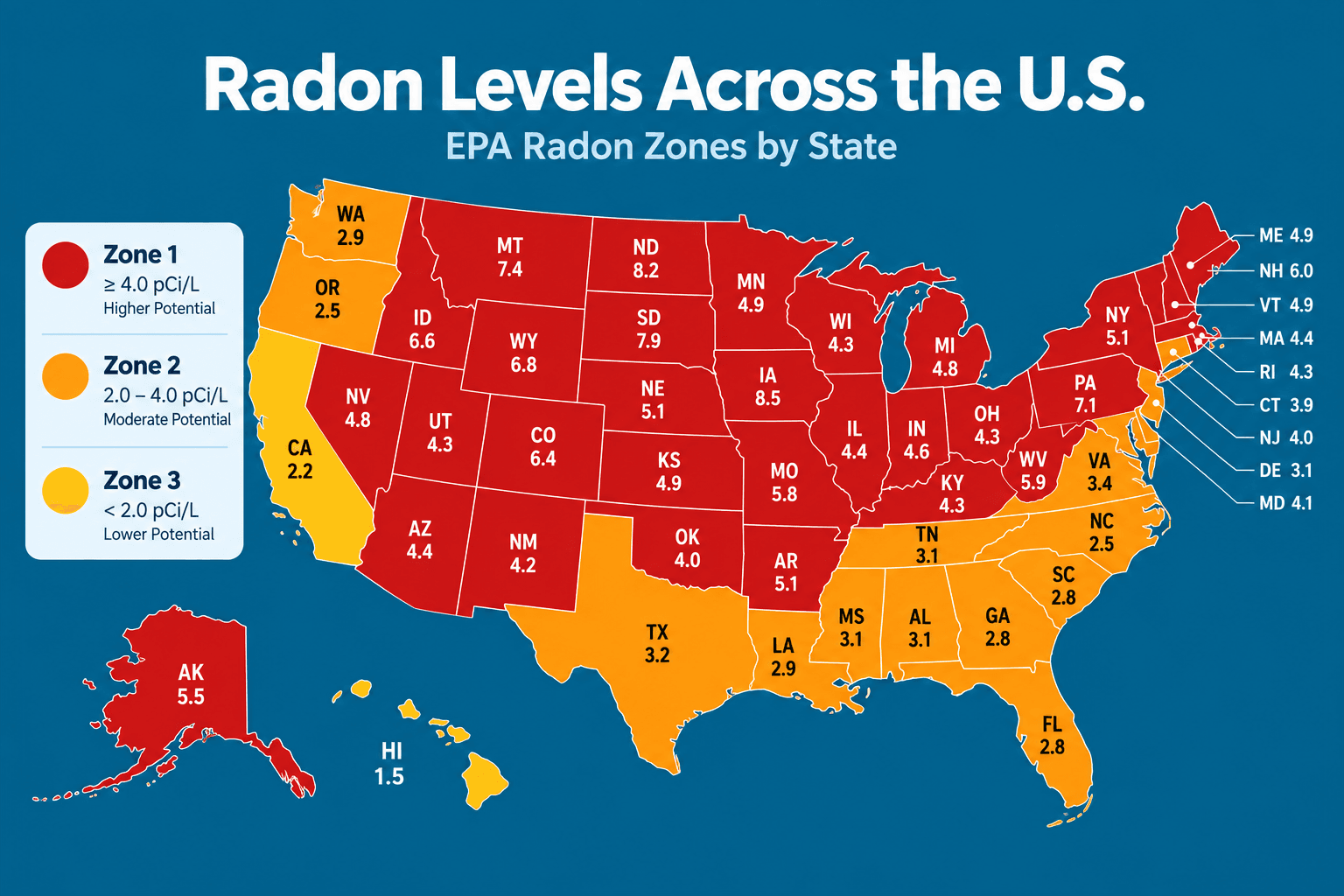
State-by-state comparison of average indoor radon levels, showing why testing is important even in areas with known radon potential.
Can Radon Cause Cancer?
Yes. Long-term exposure to elevated radon levels can increase the risk of lung cancer. Radon breaks down into radioactive particles called radon decay products, which can become trapped in the lungs when inhaled. Over time, these particles can damage lung tissue and increase the chance of developing lung cancer.
The EPA shows radon as the second-leading cause of lung cancer in the United States after smoking and estimates that radon causes approximately 21,000 lung cancer deaths each year nationwide. People who smoke or have smoked face a higher risk because smoking and radon exposure can have a combined effect on lung health.
What Should You Do After a High Radon Result?
A high radon test result does not automatically mean you need to walk away from a home. Instead, it gives you important information that can help you decide what to do next.
Start by reviewing:
Whether additional testing is needed
If elevated radon levels are confirmed, the next steps may include:
Reviewing the results and understanding the findings.
Contacting a qualified radon professional.
Discussing available mitigation options.
Completing mitigation work if needed.
Testing again after installation to confirm the system is working properly.
High radon levels can often be reduced with the right mitigation approach.
For homebuyers, a high radon result becomes another factor to consider during the inspection period. It does not always mean a deal should end, but it does give buyers the information they need to make a more informed decision.
What Should Home Buyers Know About Radon?
Buying a home involves more than just checking the things you can see. A property may look great during a walkthrough and still have hidden concerns that are not visible without testing.
Homebuyers should consider:
Asking about any previous radon tests
Reviewing available test results and reports
Checking whether the home has a radon mitigation system
Requesting records about any past mitigation work
Considering radon testing during the inspection period
Testing for radon in Colorado gives buyers a clearer understanding of the home's indoor air quality and helps them make a more informed decision before closing.
What Can the Colorado Radon Map Tell You?
A Colorado radon map shows the EPA’s estimated radon potential across different counties in the state. The map classifies counties into three radon potential zones, with Zone 1 representing the highest predicted potential for elevated indoor radon levels, Zone 2 indicating moderate potential, and Zone 3 representing lower potential.
Colorado has many areas classified as Zone 1 because of geological conditions that can contribute to higher radon potential. However, a radon map only shows general risk patterns and cannot predict the radon level inside a specific home.
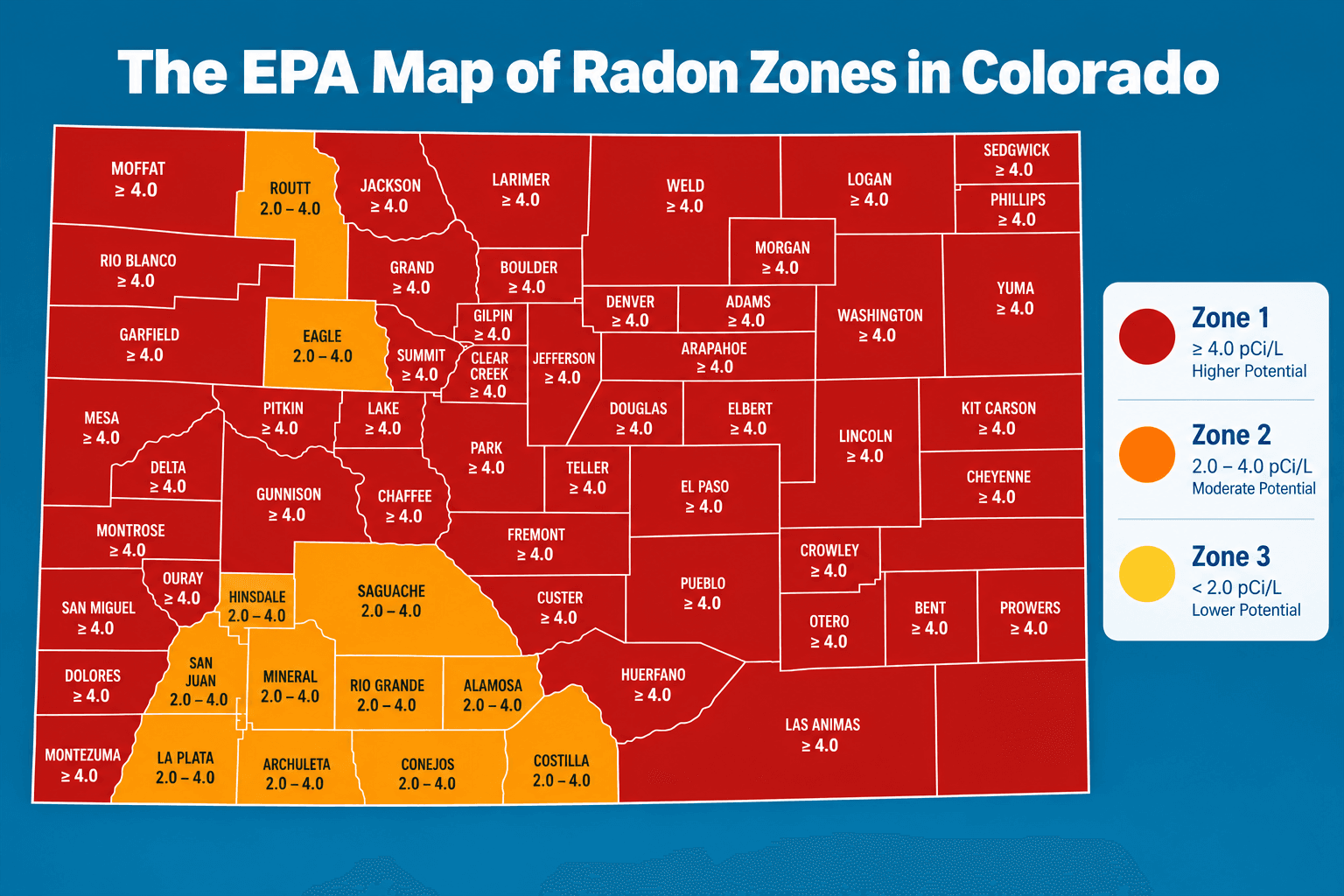
Colorado radon map showing estimated risk zones across counties.
Radon in Colorado can vary significantly between properties, even among homes located in the same neighborhood. The only way to understand a home’s actual radon level is through testing.
What Should Homeowners Do About Radon?
Radon can be present in any type of home, including properties with no basement or newly built houses.
A few common assumptions to avoid:
A home without a basement cannot have radon
Newer homes do not have radon concerns
Nearby homes with low results mean your home will have low levels
It is also a good idea to keep your radon test results for future reference. Consider testing again after major changes to your home, such as:
If your home has a radon mitigation system, regular testing is still recommended. The EPA recommends retesting homes with mitigation systems every two years to confirm the system continues to work effectively.
What Happens If Radon Mitigation Is Needed?
If a home has elevated radon levels, mitigation can help reduce the amount of radon entering the property.
Most radon mitigation systems use a pipe and fan to collect radon from beneath the foundation and safely vent it outside. Homes with crawl spaces may need additional solutions, such as sealed barriers or membranes, depending on design.
Sealing cracks and openings can help limit radon entry, but it is usually not enough on its own to fully address elevated levels.
A qualified radon professional can recommend the right mitigation approach based on the home's construction, foundation type, and test results.
After a mitigation system is installed, a follow-up radon test helps confirm that radon levels have been reduced and the system is working as expected.
What Should You Remember About Radon in Colorado?
Radon can affect any home in Colorado. While the state’s geology creates conditions where elevated levels are common, every property is different and requires testing to understand its actual radon level.
However, radon levels can vary significantly from one home to another. A home’s neighborhood, price, or construction date cannot determine its radon risk.
Understanding radon in Colorado is about recognizing that every property is unique and using accurate information to make informed decisions about your home and indoor air quality.
Frequently Asked Questions About Radon in Colorado
Is radon common in Colorado?
Yes. Radon in Colorado is a common concern because elevated levels have been found throughout the state. About half of Colorado homes have radon levels above the EPA action level of 4 pCi/L.
What radon level is considered high?
The EPA recommends taking action when radon levels reach 4.0 pCi/L or higher. Homeowners may also consider steps to reduce long-term exposure when levels are between 2.0 and 4.0 pCi/L.
Can a home have radon without a basement?
Yes. A home does not need a basement to have elevated radon levels. Radon can enter properties through cracks, foundation openings, crawl spaces, and gaps around pipes or utilities.
How often should you test your home for radon?
Regular testing can help you understand changes in your home's radon levels over time. Consider testing again after major renovations, foundation work, HVAC changes, or the installation of a radon mitigation system.
Can high radon levels be reduced?
Yes. Elevated radon levels can often be reduced with a properly designed and installed mitigation system. These systems help redirect radon gas from beneath the home and vent it safely outside.
Do new homes in Colorado have radon?
Yes. Newer homes can have elevated radon levels because radon can enter through foundation openings, cracks, and utility penetrations. Home age alone does not determine whether a property has radon.
Is radon testing required when buying a home in Colorado?
Colorado does not require every home purchase to include a radon test. However, state law requires residential sellers to provide a radon warning and disclosure information during the sale process. This includes information about any known radon test results, mitigation systems, and related records, along with the current Colorado Department of Public Health and Environment (CDPHE) radon brochure.
Many buyers still choose to complete professional radon testing during the inspection period because disclosure information may not reflect the home's current radon levels.
How long does a radon test take in Colorado?
A short-term radon test typically takes at least 48 hours to complete. Long-term tests run for more than 90 days and provide a better picture of average radon levels over time. The right testing method depends on whether you are buying a home, monitoring an existing property, or checking the effectiveness of a mitigation system.