That big live oak in your front yard keeps your house shaded all summer, but it may also be clogging your gutters, dropping branches on your roof, and sending water toward your foundation.
Texas live oaks are all over Oak Hill, Circle C Ranch, Shady Hollow, and Travis Country, and many have branches that reach right over the roof. They shed most of their old leaves in early spring while the new ones come in, so a gutter that looked fine last week can be full by the weekend. Branches resting on the roof can also rub the granules off your shingles, and wet leaves stacked in the valleys keep moisture sitting on the roof.
A little regular upkeep keeps these problems from getting bigger. This guide walks through home maintenance for houses with mature oaks, including pruning, checking your gutters and drainage, and what to watch for around your foundation and roof in Southwest Austin.
Can Texas Live Oak Tree Roots Damage Your Home's Foundation?
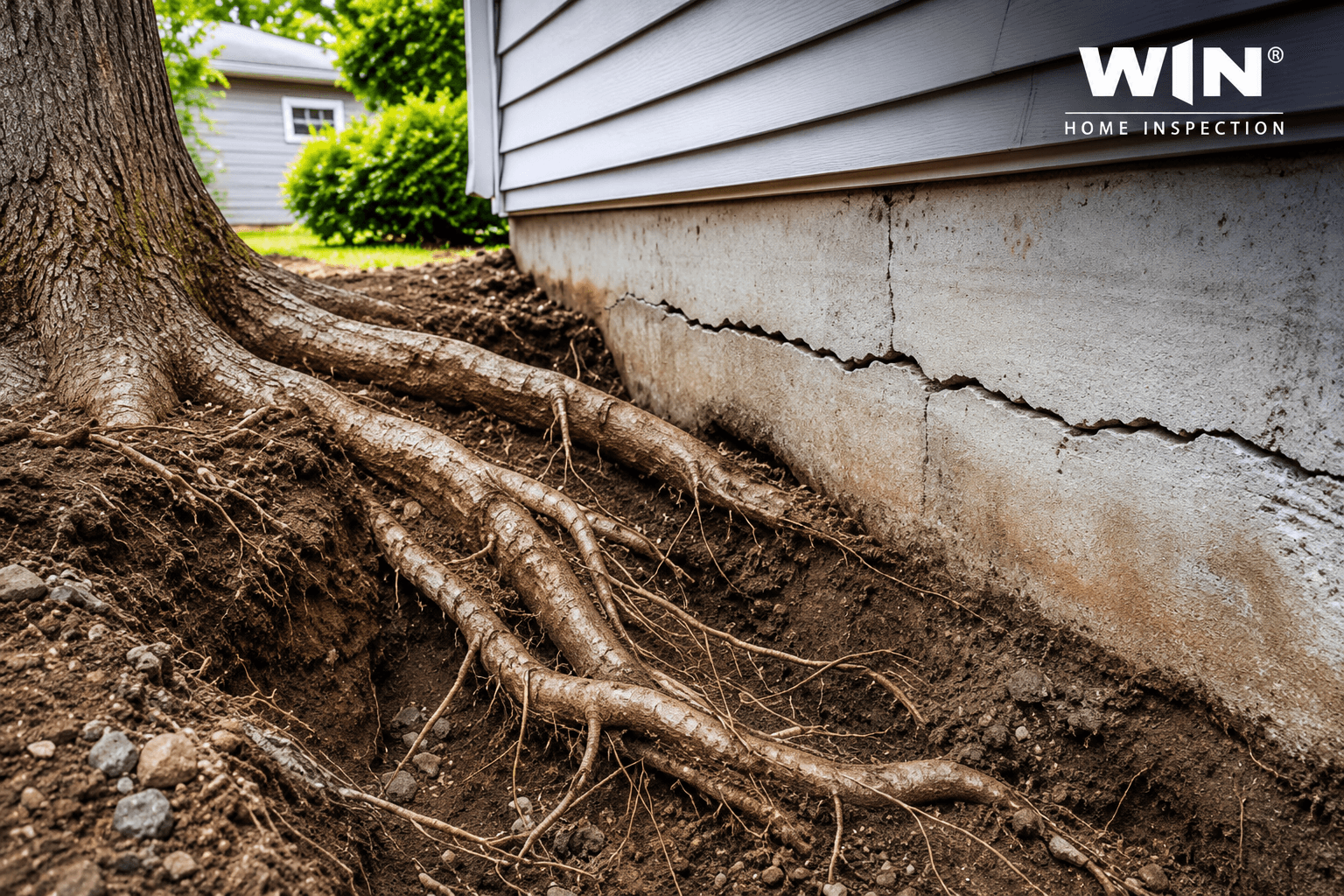
The roots of mature live oak trees can sometimes influence soil conditions around a home, especially when they grow close to the house's foundation. However, foundation problems in Texas homes aren't caused by trees alone. Several factors also contribute, including local soil characteristics, seasonal moisture changes, drainage patterns, and foundation design.
1. How Live Oak Roots Grow Around Foundations
To properly manage your property, it is necessary to understand how a Texas live oak tree grows underground. Roots naturally spread laterally in search of nutrients, oxygen, and moisture, often extending well past the tree’s drip line.
Seeking Moisture: Live oak roots sometimes spread outward through soil where moisture and oxygen are available. Depending on soil and moisture conditions, roots can extend toward foundation, or underground utilities.
Proximity Risks: When mature trees grow close to a house, their large lateral roots require regular monitoring to ensure they do not crowd underground structural footings.
The Myth of Root Strength: It is important to distinguish natural root growth from direct structural damage. They take advantage of existing cracks to spread their lateral roots or alter the environment supporting the structure.
2. Signs of Potential Foundation Problems
Often damage from the roots of Texas Live Oak trees and shifting soil happens gradually, homeowners should regularly inspect their property for the following signs:
New or widening cracks in the concrete slab, exterior brickwork, or interior drywall.
Uneven walkways, patios, or driveways that look tilted or unlevel.
Doors and windows that suddenly begin sticking or no longer latch correctly.
Soil pulling away from the foundation line during prolonged dry periods.
Visible root-related displacement or lifting of paving stones and sidewalks.
How Texas Live Oak Trees Affect Drainage Around Your Home
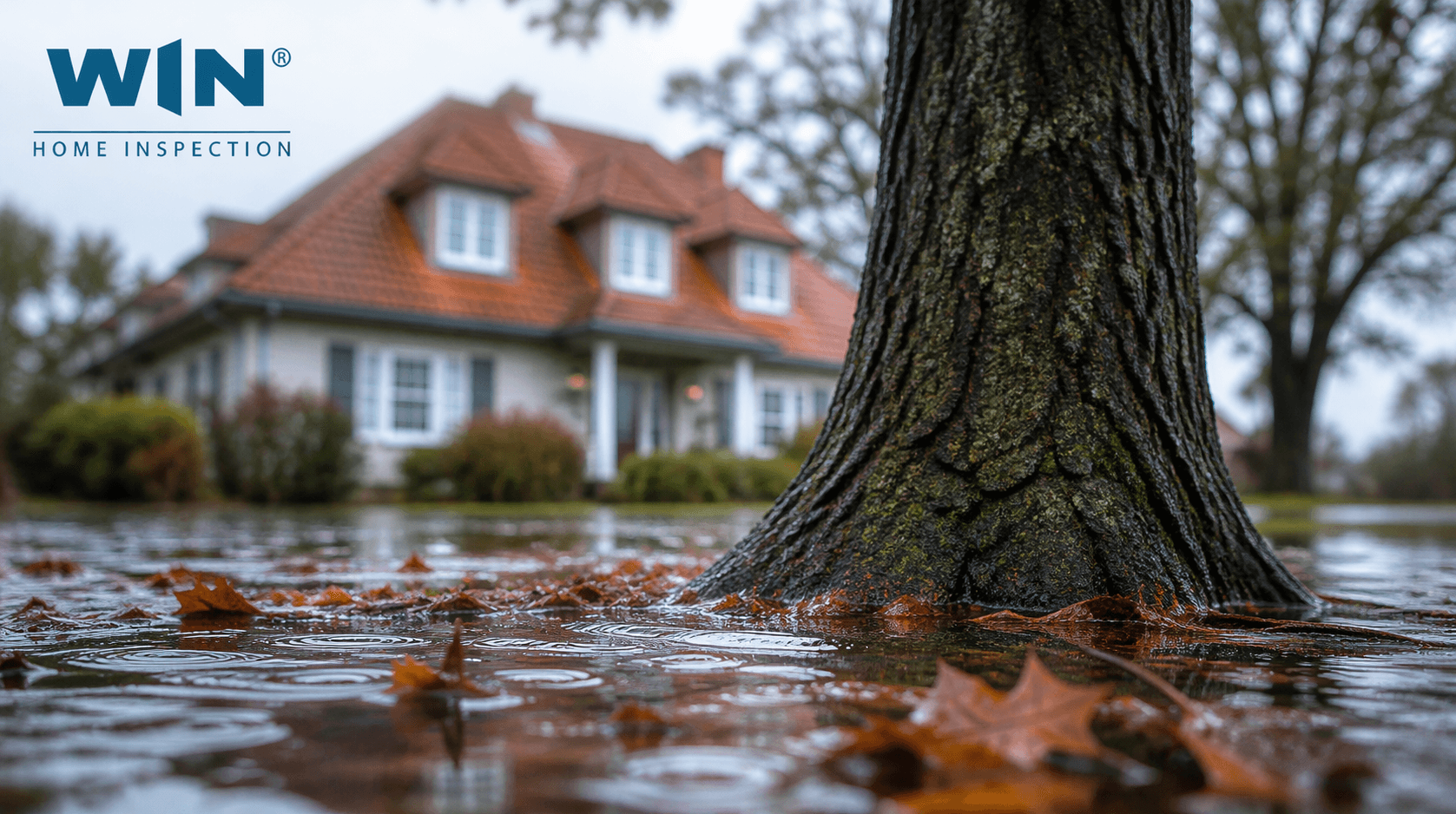
Managing Austin drainage across Southwest Austin homes requires balancing healthy landscaping with proper waterflow. The extensive roots of Texas live oaks, paired with your property’s grading and local soil can influence how water moves across your yard. Also, the fallen leaves and debris during the spring can quickly clog gutters, allowing water to overflow near the home’s exterior.
1. Common Drainage Problems in Southwest Austin
Here are a few drainage problems homeowners in established Southwest Austin neighborhoods like Oak Hill and Travis Country face -
With time, shifting soil or expanding surface roots can create depressions right against the house, enabling water to collect next to the slab.
The dense canopy of a live oak can make it difficult for grass to grow underneath, leaving bare soil vulnerable to severe erosion and muddy runoff during heavy Central Texas rains.
Acorns, twigs, and live oak leaves can accumulate in gutters, causing rainwater to back up and overflow near the foundation or run-down exterior walls.
Landscaping changes or root expansion can accidentally alter the slope of the yard, directing surface water toward the house rather than out to the street or a designated drainage easement.
2. How to Improve Drainage Without Damaging Oak Tree Roots
Here are the steps to improve your Austin drainage without damaging Oak Tree Roots -
Always clean your drains twice a year, especially during early spring when the live oak leaf starts to shed. Install high-quality covers over your drain to keep downspouts clear.
Keep your lawns, swales, and French drain clean from leaf litter to prevent water from collecting near your foundation.
Fill minor low spots with a thin layer of topsoil or a compost mix rather than burying tree roots deeply, as it can choke them.
When addressing drainage problems, protect the roots of live oaks by hand-digging, or air-spading.
Oak Tree Trimming and Maintenance Tips for Southwest Austin Homeowners
To keep Texas live oaks thriving and safe, you need the right timing and the right techniques. Routine pruning prevents property damage from weak or failing branches while actively fostering the tree's health and natural growth for years to come.
1. What is The Best Time to Prune Live Oak Trees in Texas?
Routine oak tree pruning is vital for keeping a clean tree structure, removing deadwood from the surface, and ensuring safe roofs and driveways.
The safest times to prune are during late fall and winter, when the fungal activity is low.
As per Texas A&M Forest Service guidance, you must apply wound dressing or latex paint to every single cut within minutes. This creates an immediate physical barrier against disease-carrying beetles.
2. Protecting Live Oak Roots During Landscaping
The root system of a Texas live oak tree generally spreads widely and relatively close to the surface.
Minimize digging and trenching within the tree’s critical root zone to prevent cutting vital structural roots.
Restrict heavy machinery, construction vehicles, and excessive foot traffic near the root zones, as compacted soil can restrict oxygen and water entry to the roots.
Be extremely cautious when changing yard grading, building decks, or installing drainage systems. Map out root layouts beforehand to prevent accidental root damage.
3. Managing Overhanging Branches and Falling Debris
Mature oaks require full home inspection to ensure heavy limbs and seasonal debris do not cause accidental home damage.
Regularly check for limbs hanging over or touching your roofline. Heavy winds can scrape branches against shingles, potentially damaging shingles.
Clean out gutters often to remove the heavy drops of acorns, twigs, and leaves, which can trap water and cause moisture damage to roof edges, fascia, or soffits.
After severe thunderstorms or ice events in Central Texas, check your trees for cracked, hanging or damaged limbs.
If you notice large, dead branches or deep cracks in major trunks, contact a professional arborist to assess at once.
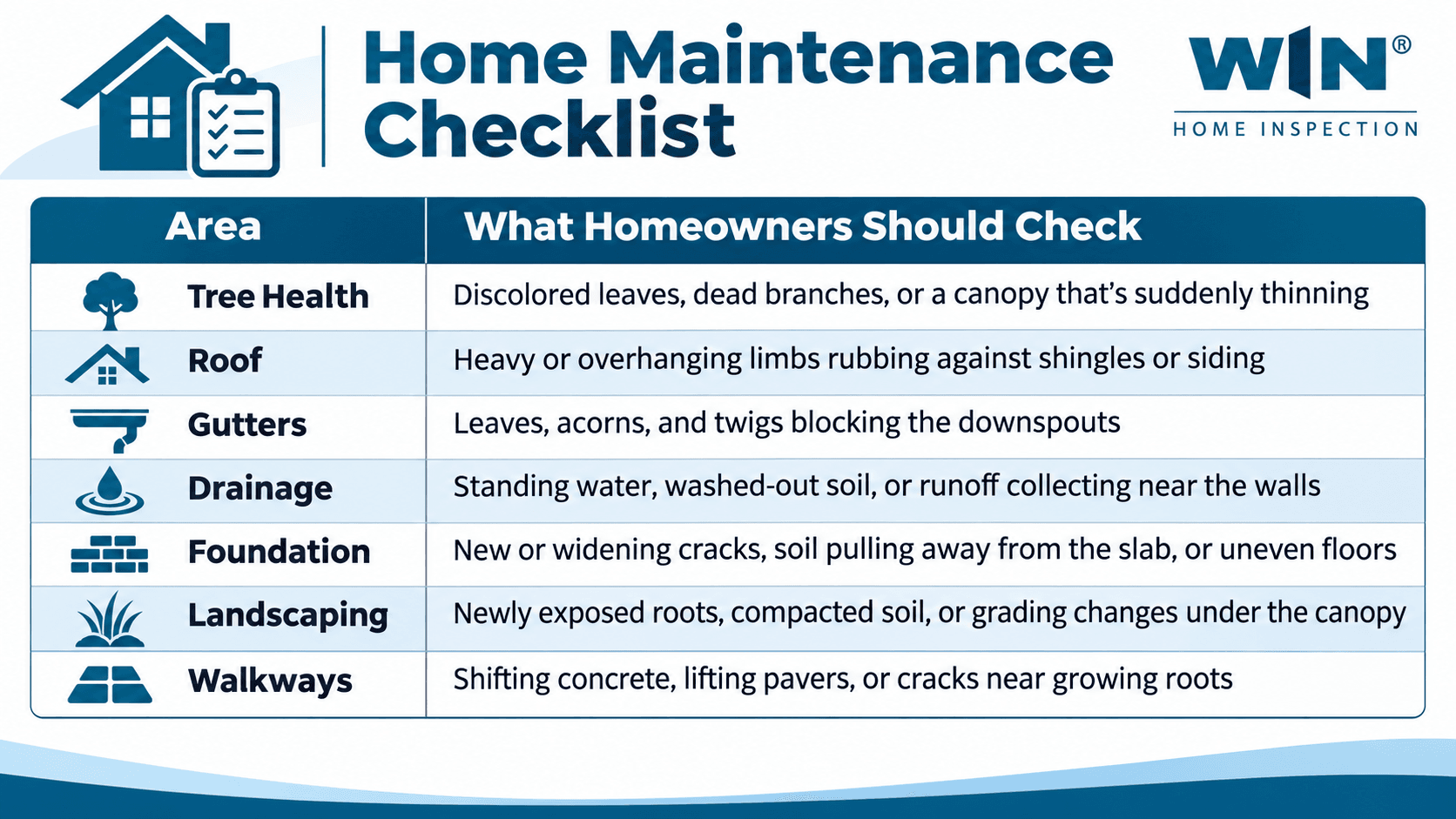
Home Maintenance Checklist for Properties with Mature Oak Trees
Here’s a quick checklist for keeping an eye on both the trees and the property around them:
Schedule a Home Inspection in Southwest Austin
Thinking about buying a home with mature oaks? The shade and curb appeal are real perks, but it’s just as important to know what’s going on with the rest of the property.
A professional home inspection can point out visible concerns like foundation cracks, grading, drainage problems, roof wear, and exterior surfaces. It won’t evaluate the health of the trees themselves, but it can tell you about maintenance and repair needs before they become expensive surprises.
To get a clear picture of your property’s condition, schedule an inspection with WIN Home Inspection Austin Southwest.
FAQs
1. Can mature live oak roots damage a home’s foundation?
Oak roots rarely push through a solid concrete slab. A live oak has a wide, shallow root network that pulls a lot of moisture out of the clay soil around your house, especially during hot Texas summers. When the clay dries out, it shrinks and pulls away. The slab can then settle or crack in spots.
2. How do home inspectors check trees during a standard inspection?
We look at oaks for how they affect the property: risk, safety, and drainage. We check for limbs that rub against the roof shingles, dead branches that hang over a driveway, and roots that lift walkways or driveways. We also note visible warning signs, like a thinning canopy or rotting trunk wood.
3. What should I look for when buying a house with big oaks in the yard?
Check out three things: the soil grade, the roof clearance, and the foundation. Look at the base of each tree. If a past owner piled dirt or built a retaining wall over the root flare to level the yard, that fill may be smothering the roots. Then check the gutters. Acorns and leaves from overhanging branches can block the downspouts. That blockage can rot the fascia and leave water pooling next to the foundation.
4. Can I add drainage or change the yard layout after I buy the home?
Yes, but plan the work around the tree’s critical root zone. Heavy trenching machines cut through the roots that hold the tree up. That weakens the tree and raises the risk of failing. If you need a French drain or a grading change, use low-impact methods. Dig by hand, use an air spade, or run the pipe outside the tree’s drip line.
5. Does the city protect mature oaks during renovations?
A tree with a trunk diameter of 19 inches or more is a Protected Tree. An oak that measures 24 inches or more is a Heritage Tree. If your project touches the critical root zone of one of these trees, such as a deck, an addition, or a drainage change, you need a city permit before any work or digging starts.
6. How close can a live oak be to a house?
A coastal live oak can reach 40 to 80 feet tall and just as wide. If you plant one too close, its branches will end up on your roof and its roots will spread under your slab and walkways. If you already have an oak that touches the roof or stands right next to the foundation, ask a certified arborist how to manage it.
7. Does a live oak raise the risk of storm damage to my roof?
A limb that hangs over your roof can break off in a storm or high wind, and a heavy limb can wreck shingles, flashing, and gutters. The risk grows with dead limbs, branches that fork in a tight V, and heavy limbs that reach far out over the house. We can spot many of these from the ground during an inspection. If you see any of them, ask a certified arborist to check the tree before storm season.
8. Is my live oak dead if the branches look bare in spring?
Live oaks shed most of their old leaves in early spring while the new ones grow in, so the tree can look thin for a few weeks. The leaves of an infected live oak often show yellow and brown veins, and the signs show up on every leaf, not just the old ones. If you see that, or the tree keeps thinning, call a certified arborist.
9. Can tree branches touching the roof cause problems?
A branch that rests on your roof rubs the shingles every time the wind blows, and that wears off the granules that protect them. Insects, squirrels, and raccoons use branches that touch a house to get close to the roof and the attic. During an inspection, we check for branches that touch or hang over the roof, and we suggest having an arborist trim them back.
10. How often should I clean my gutters if I have live oaks?
Clean them at least twice a year and check them again after the main leaves drop in early spring. Oaks drop leaves, flowers, and small bits all at once, so a gutter that looked fine last week can be full by the weekend. When a gutter clogs, water spills over the edge and soaks the soil next to your foundation. If many branches hang over your house, plan to clean the gutters more often.