Think about the things that make a house smell fresh: candles, air fresheners, and a new coat of paint. Odd as it sounds, they can make your indoor air worse. The EPA says levels of some pollutants are often two to five times higher indoors than outdoors, and a lot of that comes from gases called volatile organic compounds, or VOCs.
The easiest way to get rid of them is something people figured out long ago: open a window. Feng Shui says outdoor air should move through a home, and Traditional Chinese Medicine says fresh air is good for the lungs and keeps damp, stale air from settling in.
Then we started building tight, energy-efficient houses. That saves money on bills, but it also traps whatever comes off your furniture (formaldehyde, a colorless, flammable, strong-smelling gas), paint, cleaners, and air fresheners. A sealed house isn't a problem on its own. It just needs a way to let fresh air in.
This guide covers where VOCs come from, how to air out your home without burning through your heating bill, what to look for in a purifier, and when it makes sense to call for an air quality test.
What is VOC?
VOCs are chemicals that turn into invisible gas at room temperature. They are carbon-based chemicals that easily evaporate into the air at room temperature. Some smell strong and some have no smell at all. You'll find them in paint, varnish, cleaning sprays, scented candles, plug-in air fresheners, new carpet, mattresses, and furniture made from pressed wood. Formaldehyde is one of the most common, and it comes from the glue that holds pressed wood together.
Breathing VOCs can give you headaches and irritate your eyes, nose, and throat. Some of them, formaldehyde included, are linked to more serious health problems like cancer, organ damage and severe neurological and respiratory disorders after years of exposure.

5 Effective Methods on How to Eliminate VOCs from Your Home
Now that you know what is VOC. Here is how to remove VOCs from your home -
1. Remove the Source First
It's much easier to stop VOCs at the source than to clear them out of the air later. Walk through your kitchen cabinets, garage, and laundry room and look for solvent-based paints, aerosol sprays, strong cleaners, and scented products, because all of them give off VOCs. Toss what you don't use. Old paint and solvents keep releasing fumes even with the lid on, so take them to your local hazardous waste drop-off. For anything you still need, use tightly sealed containers and store them in a detached shed or a well-ventilated garage.
2. Ventilate Without Wasting Energy
Fresh air dilutes the chemicals inside and pushes the stale air out. If the air outside is clean, open windows on opposite sides of the house so a breeze can move through. That clears the air a lot faster than a single open window does.
Your kitchen range hood and bathroom fans help too, but only when they vent outdoors. A hood that recirculates air just pushes the same fumes around the kitchen. When you're painting, deep cleaning, or renovating, set a box fan in a window facing out so it carries the fumes outside.
In very hot or cold weather, a short burst with the windows wide open beats a long time with them cracked. Five to ten minutes swaps out the air before your walls and furniture lose much heat, so your bill barely moves.
If your home is sealed tight, an HRV (Heat Recovery Ventilator) or ERV (Energy Recovery Ventilator), home mechanical ventilation systems that can bring in fresh air and pass heat between the outgoing and incoming air, which lets you ventilate all day without throwing away much energy. They often cost a few thousand dollars installed, so consult with an HVAC professional first.
3. Use an Activated Carbon Air Purifier
Sometimes you can't open a window, like at night, during a cold snap, or when the air outside is smoky. A purifier can help in those moments, as long as it has the right filter.
A HEPA filter catches dust, pollen, and pet dander, but gas molecules slip right through it. To catch VOCs you need activated carbon, which has millions of tiny pores that trap gas molecules on its surface. The thin, carbon-coated sheets in many budget purifiers fill up within days and don't do much, so look for a unit with several pounds of granular carbon.
Many carbon filters need replacing every three to twelve months, depending on the model and how many VOCs are in your home. Once the pores are full, the filter stops working and can even release the odors it caught back into the room, so follow the maker's schedule.
A basic VOC monitor is a nice add-on; it shows when levels spike, so you know when to open a window or turn the purifier up.
4. Keep Temperature and Humidity in Check
Heat and moisture make materials release gases faster, so a cool, dry house gives off less. Try to keep humidity between 30% and 50% with air conditioning or a dehumidifier.
Some people crank up the heat to "bake out" the fumes from a new room. That tends to backfire, because it can warp wood and flooring and raise emissions without ending them.
5. Manage Off-Gassing from New Furniture and Paint
New items give off the most VOCs right after you unwrap or install them. When you can, buy zero-VOC or low-VOC paint, fragrance-free cleaners, and solid wood furniture instead of particleboard. Unpack mattresses, rugs, and flat-pack furniture in the garage, on a covered patio, or in a spare room with a window open, and give them several days before they go into a bedroom or living room.
The strong smell usually fades in a few days to a few weeks, but the glues in pressed wood (formaldehyde) and some sealants can keep releasing small amounts for months or even years. After a renovation, keep the windows open, run your purifier, and spend less time in freshly painted rooms. That matters most if children, pregnant women, or people with asthma live in your home.

How to Get Rid of VOCs Through the Year
Here’s how to approach VOC removal from air during each season:
Winter
Open your windows for a few minutes during the warmest part of the afternoon, then close them tight. Run the kitchen and bathroom fans, and think about an HRV or ERV if your house is sealed up.
Spring
During spring, you can easily paint walls, redo floors, and unbox new furniture with the windows wide open. Strong fumes blow outside without compromising indoor heat or AC.
Summer
Open the windows in the cool early morning or late evening. Heat and humidity make new items release more gas, so run the AC to keep things cool and dry. Check your local air report before you open windows on a smoky or smoggy day.
Fall
Fall is a good time to finish painting, remodeling, or bringing in new furniture, because you can let it all air out before winter shuts the windows for months.
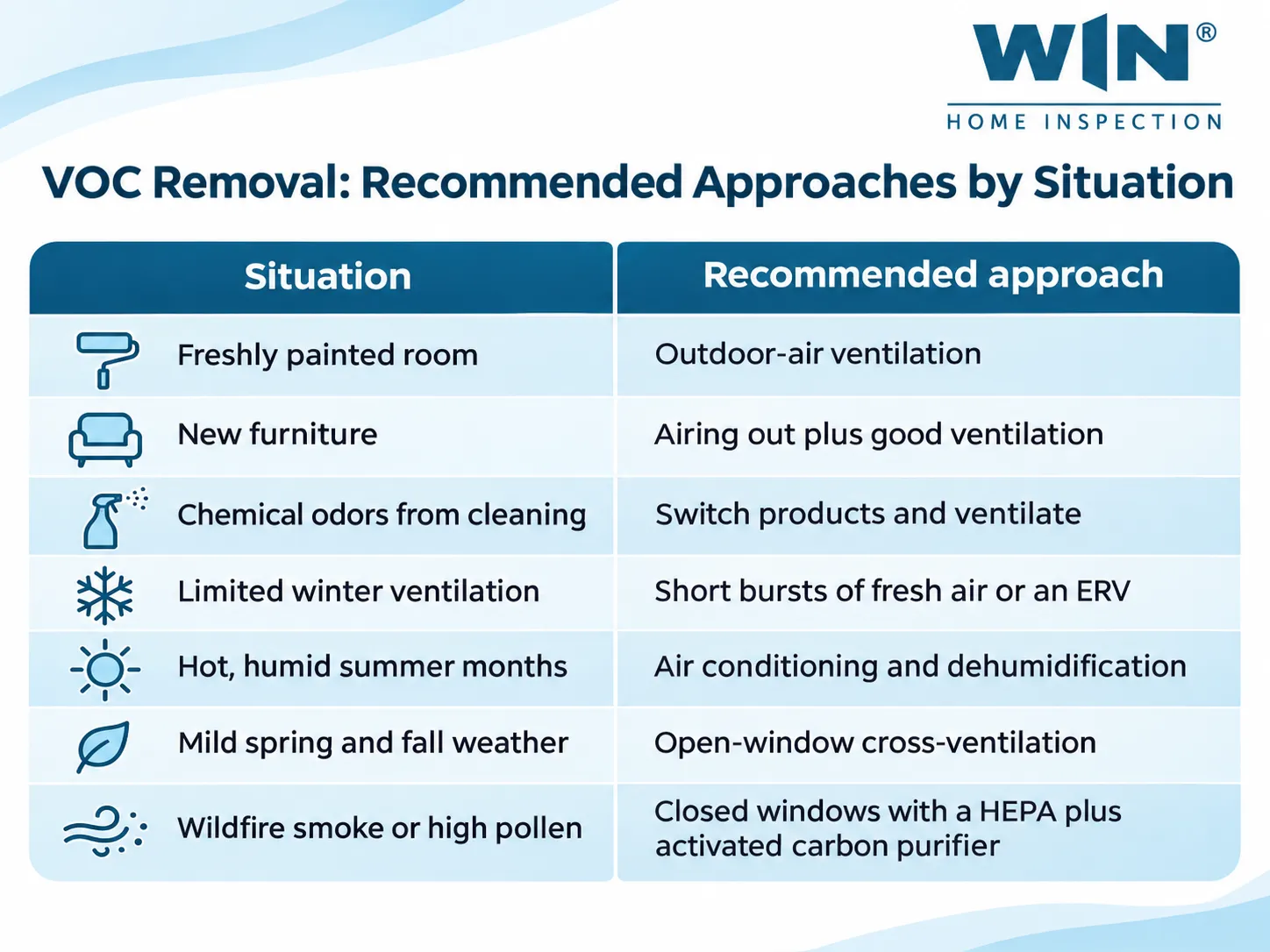
Which VOC Removal Method Works Best for Your Home?
It depends on what's causing the fumes and what the weather is doing outside. Match your plan to both, and you'll keep the air fresh efficiently.
When Should You Get an Indoor Air Quality Test?
Testing makes sense when airing out your home doesn't clear strong chemical smells after a remodel, or when headaches and sore throats get better after you leave the house.
What an Air Quality Test Can Tell You
To look for particles like mold spores and dust, a home inspector at WIN Home Inspection uses a rotary pump and an Air-O-Cell cassette that catches particles on a sticky slide for a lab to examine. Those tools only find particles, so they tell you nothing about VOC gases. To test chemical fumes, a lab uses separate sampling tubes or air canisters, and the results show which gases are in your room so you can find the real source.
Signs You May Need Professional Testing
Chemical smells that hang around for weeks after a remodel are the first sign, and so are fumes from new furniture, floors, or cabinets that linger. Another is when your family gets regular headaches, feels tired, or has itchy eyes only while they're inside the house. Those symptoms can have other causes, including carbon monoxide, so make sure your CO detectors work and see a doctor if symptoms continue or feel severe. And if you notice musty smells, leaks, or water stains, get a separate mold check along with any VOC testing.
FAQs
1. How do I get rid of VOCs in my house?
Look first at the things that give them off: half-empty paint cans, the cleaner under the sink, scented candles, and plug-in air fresheners. Throw out what you don't use and keep the rest out of your living space. After that, open a window for a few minutes each day so fresh air can carry the leftover fumes outside.
2. How do I remove VOCs from the air?
Open a window at each end of the house for a few minutes, or run the bathroom and kitchen fans if it's too cold out. A purifier with a heavy activated carbon filter helps too. One with only a thin carbon sheet won't do much against gases, so check the filter's weight before you buy.
3. How long do VOCs last after painting?
The strong fumes usually fade in a few days, though a faint smell can linger for a few weeks. Small rooms and closed windows make it last longer, and low-VOC paint gives off less to begin with. Keep a fan in the window while the paint dries, and wait a few nights before you sleep in the room.
4. How do I eliminate VOCs from new furniture?
That new-couch smell comes from the foam, glue, and finish, and it's strongest the day you unwrap it. Leave the piece in the garage or a spare room with a window open before it goes near a bedroom. Some makers print an air-out time in the care guide, so it's worth a look.
5. Do air purifiers remove VOCs?
A HEPA filter catches dust and pollen, but gas molecules slip right through it. Carbon traps the gases, although the thin carbon sheet in a cheap unit fills up fast. Pick a heavy filter and replace it on the maker's schedule, since a full filter stops working.
6. Do houseplants remove VOCs?
The studies people like to quote used small, sealed chambers, and a real room has fresh air circulation throughout the day. Several research also estimated you'd need far more plants than any room can hold. Keep them for the green, but don't count on them to clean your air.
7. Can an indoor air quality test detect VOCs?
Many home air tests use a pump and a small spore trap that collects particles like mold spores, so they tell you nothing about VOC gases. VOC testing uses a different sampling method and goes to a lab. Ask the company what it measures before you book.
8. Can a home inspector check for VOCs?
A standard home inspection doesn't include air sampling. The inspector looks over the roof, plumbing, electrical, and heating systems by eye. Still, what they see can explain a smell, like a damp crawl space or a garage that opens straight into the kitchen. If air testing makes sense, a good inspector will say so.