Water in crawl space areas is one of those problems that looks minor and usually isn't. The space under your floors sits against the soil, lower than the ground around it, so it catches groundwater, runoff, and the odd plumbing leak first. Left alone, that moisture rots framing, grows mold that ends up in the air you breathe, and works on your foundation and your home's value.
Most people never look down there until something feels off upstairs. The good part is that water in the crawl space almost always traces back to a findable source, and the earlier you catch it, the cheaper the fix. This guide covers what causes it, the warning signs, what the issue means for your home and the steps that can help solve it, and how to keep it from coming back, including whether encapsulation or drainage is the smarter spend.
What Causes Water in a Crawl Space?
Water gets into a crawl space a few ways, and on a lot of homes it's more than one at once. Find the actual source, because fixing a downspout and fixing a high water table are completely different jobs.
Poor Drainage Around the Home
Poor drainage around the foundation is one of the most common causes we find when investigating crawl space moisture. If the ground slopes back toward your foundation, rain runs straight to the house and soaks in. The grade should drop about 6 inches over the first 10 feet out from the wall.
Plumbing and HVAC Leaks
A weeping supply line or a sweating AC condensate line can feed a wet spot for months with no storm to blame. A musty smell under one particular room and a water bill that crept up for no reason are the usual tells.
Heavy Rainfall and Groundwater
After a long, soaking rain, the water table rises and presses moisture up against the foundation. Is a little water in a crawl space after heavy rain normal? Brief dampness can be; standing water still sitting there days later is not. Low, flat ground, like the clay around Houston or the coastal Carolinas, sees this most.
Foundation Cracks and Openings
Water doesn't need much of an opening to get inside, whether that's a crack in the wall, an open vent, or the space around a pipe. Midwest freeze-thaw winters are especially hard on foundation walls, widening hairline cracks a little more each year.
Condensation and High Humidity
Not all of it comes from outside. Warm summer air drifts into a cool crawl space and condenses on the pipes and ductwork, the same way a glass of iced tea sweats. No leak, just damp air feeding mold.
Signs You Have Water in Your Crawl Space
Moisture often shows itself upstairs first, in the air and the floors, before you ever see a puddle. Watch for:
- Standing water in crawl space areas, or soil that stays saturated. The most urgent sign.
- Insulation that's dark, sagging, or hanging off the joists from soaking up moisture.
- A musty smell on the ground floor that won't air out.
- Mold or mildew on joists, subfloor, or the vapor barrier.
- Indoor humidity that stays high even with the AC running, sometimes with water droplets collecting on pipes and ductwork below the home.
- More bugs or rodents than usual, since pests follow water.
Is Water in a Crawl Space After Heavy Rain Normal?
A little dampness after an unusually heavy storm is not always a cause for alarm, particularly in an older crawl space that is open to outside air. The concern begins when water keeps returning, forms visible puddles, remains for several days, or leaves insulation and wooden framing wet.
The timing of the moisture can offer useful clues. Water that shows up soon after rainfall may be linked to overflowing gutters, short downspouts, poor grading, foundation gaps, or groundwater. When the area stays wet during dry weather, it is worth checking for plumbing leaks, HVAC drainage problems, condensation, or consistently high humidity.
How Water in a Crawl Space Can Affect Your Home
Mold and Indoor Air Quality
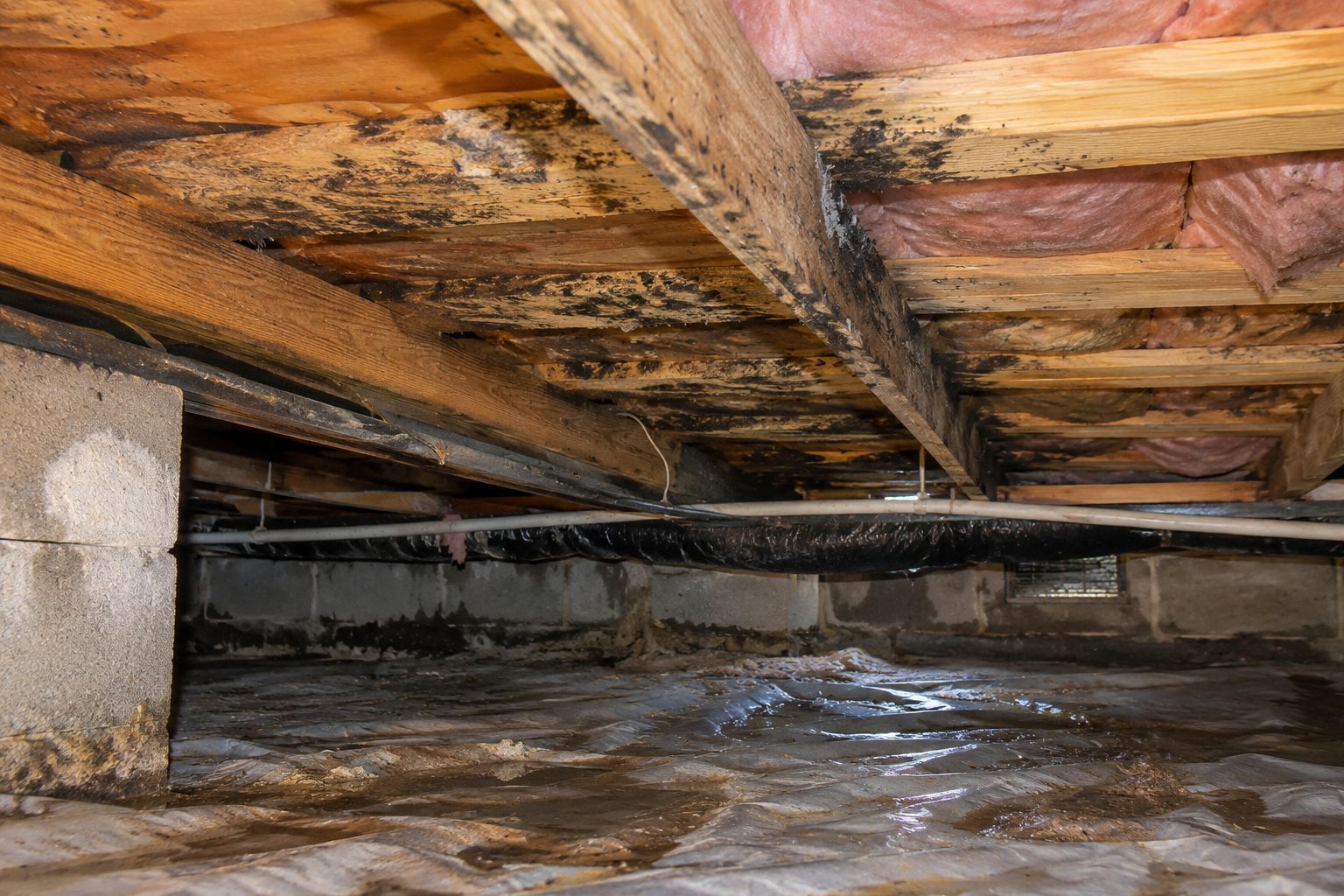
Mold requires moisture, not necessarily deep standing water. Damp wood, paper-faced insulation, dust, and other organic material can support growth. Air can move from the crawl space into the living area through gaps around plumbing, wiring, ducts, and floor assemblies, so persistent moisture below the home may contribute to musty odors and indoor air-quality concerns.
Wood Decay and Structural Deterioration
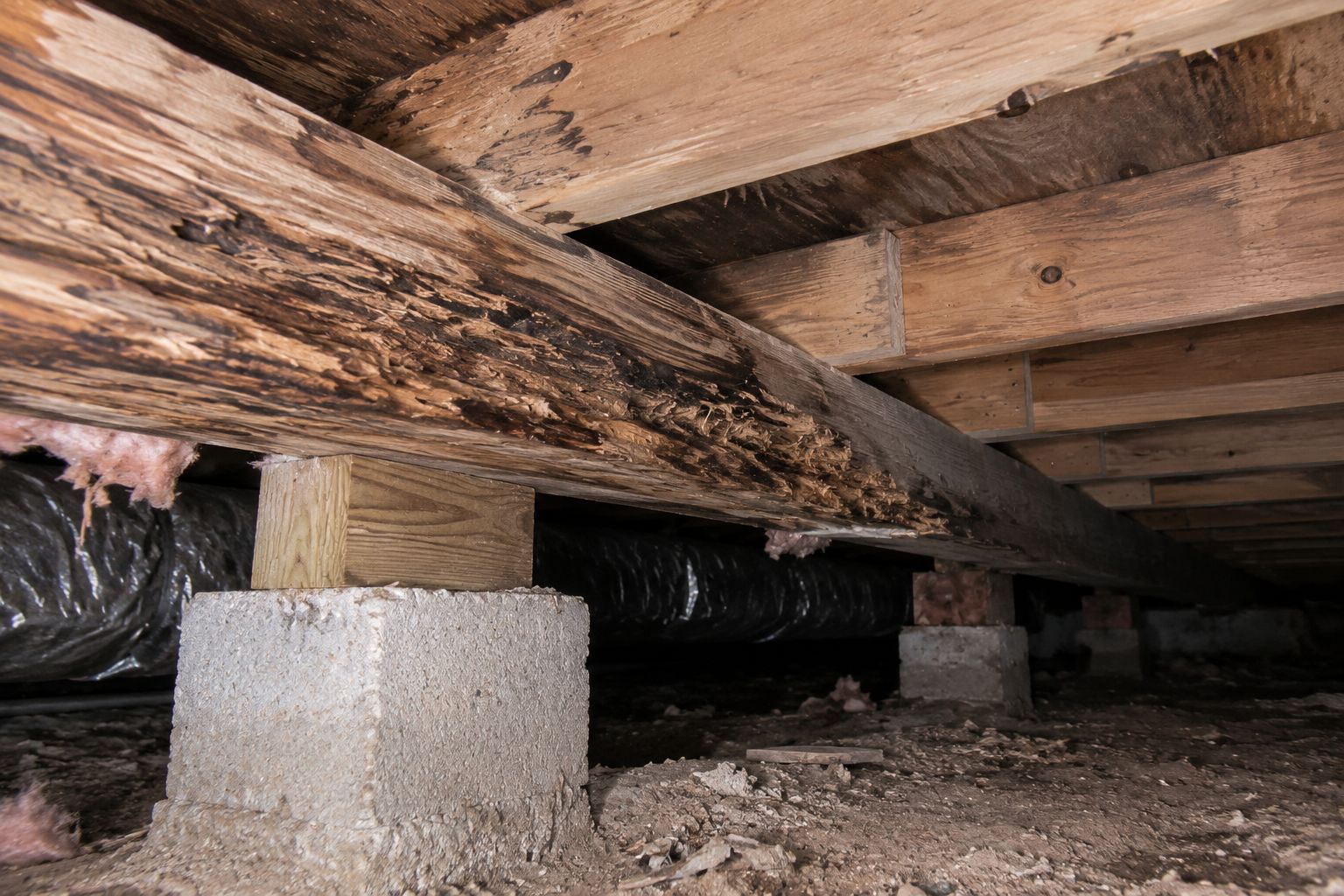
Joists, beams, subflooring, sill plates, and support posts can slowly swell, twist, crack, or become soft in affected areas. The changes are not always obvious from inside the crawl space. Homeowners may first notice a floor that feels uneven or slightly springy, a door that suddenly starts rubbing, or a gap appearing along the baseboard. These signs do not always mean serious structural damage, but they are worth checking. Finding the moisture source early gives the wood a better chance to dry and may help prevent a smaller issue from turning into a more difficult repair.
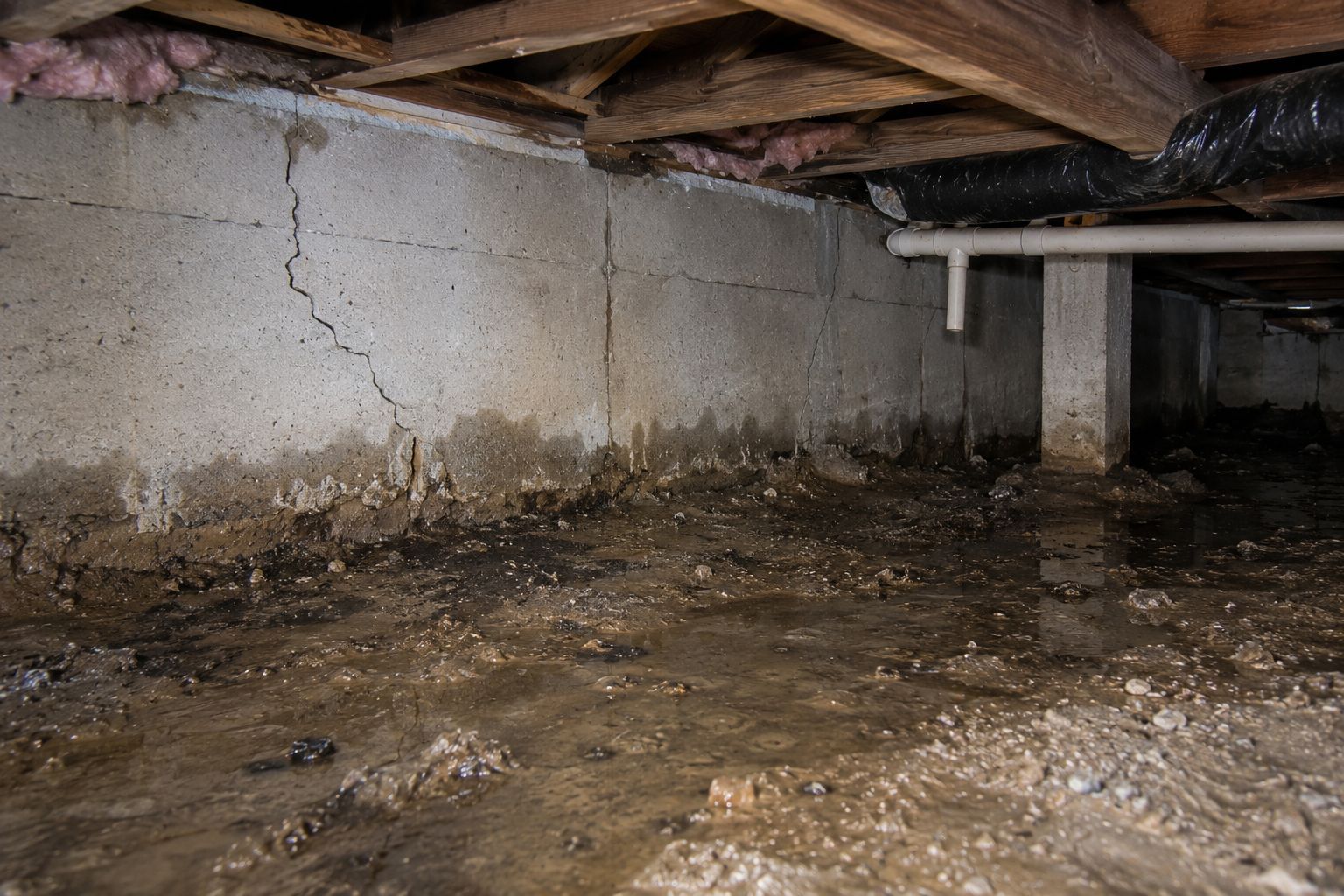
Water in a crawl space does not automatically mean the foundation is failing, but it can create conditions that deserve a closer look. When drainage around the home is poor, the soil beside and beneath the foundation may stay saturated for long periods. Wet soil can become heavier, shift, expand, or lose its ability to support the structure evenly, which may place additional pressure on foundation walls and supports. Over time, homeowners may notice new or widening cracks, bowing walls, uneven floors, movement in support posts, or doors and windows that no longer open smoothly. Minor surface cracks are not always a sign of structural damage, but visible displacement, settlement, damaged supports, or continuing movement should be evaluated during a professional home inspection. If significant structural concerns are observed, the home inspector may recommend further evaluation by the appropriate specialist.
Damaged Insulation and Higher Energy Use
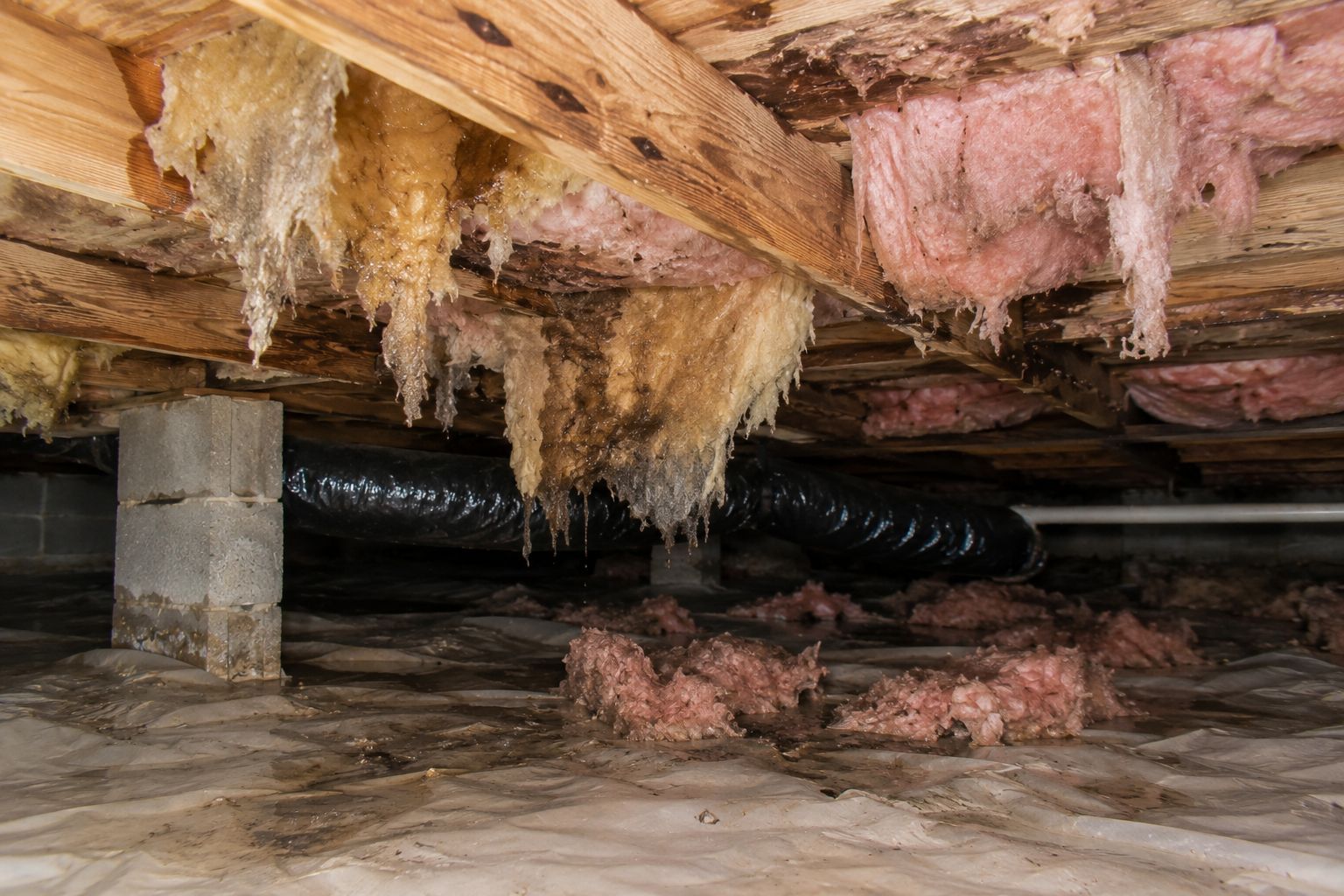
Wet or fallen insulation performs poorly and may block airflow around mechanical equipment. Humid crawl-space air can also increase the cooling load in warm weather, making it harder for the home to maintain a comfortable temperature. Homeowners may notice uneven room temperatures or higher energy bills as the heating and cooling system works longer to compensate. Correcting the moisture source should come before replacing insulation; otherwise, the new material may become wet and lose its effectiveness again.
Pests and Unwanted Odors
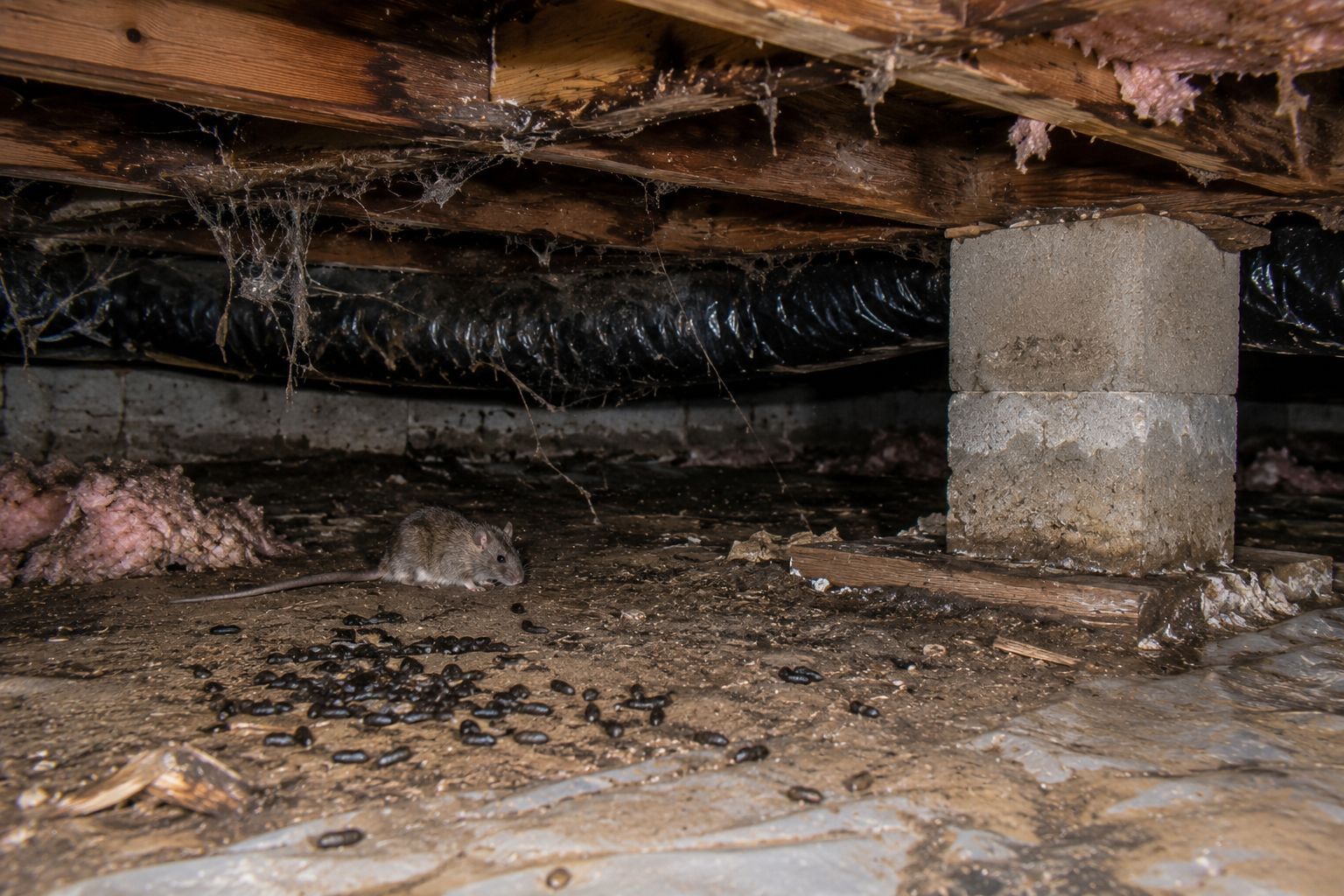
Damp sheltered areas are attractive to many insects and rodents. Moisture can also intensify earthy or musty smells that migrate into the home. Over time, these conditions may encourage recurring pest activity and make the crawl space less healthy overall. Pest treatment may be necessary, but it will be more effective after the moisture source has been addressed and any entry points have been sealed to help reduce the chance of future infestations.
Is Water in a Crawl Space Dangerous?
The presence of water is not always an immediate emergency, but certain conditions can make a crawl space unsafe. Do not enter when standing water may be in contact with electrical wiring or equipment, when sewage is present, when the access is unstable, or when the framing appears damaged. Large mold-affected areas and deep flooding also call for professional help.
Even when there is no immediate hazard, persistent moisture should be addressed because the cumulative effects can become expensive and difficult to reverse.
How to Get Rid of Water in a Crawl Space
Start by looking for the reason the water showed up in the first place. The location can tell you a lot. Water near a bathroom or laundry area may point to a plumbing leak, while moisture along a foundation wall after a storm may be coming from runoff, poor grading, or a downspout that empties too close to the house. Do not enter the space if there is exposed wiring, sewage, fuel odor, damaged framing, or any other unsafe condition. In those situations, it is better to have the area checked by a qualified professional before cleanup begins.
After the source has been stopped, the remaining water can be removed, and the crawl space can begin drying. A small amount of clean water may be handled with a wet/dry vacuum, but deeper water may require pumping and professional help. Fans, dehumidifiers, and the removal of soaked insulation or debris can help the area dry more completely. Once the space is clean and dry, the permanent repair may involve better drainage, plumbing work, a sump pump, foundation sealing, a vapor barrier, or moisture control. The crawl space should be checked again after the next period of heavy rain to make sure the repair has solved the problem.
How to Prevent Crawl Space Water Damage
Maintain Gutters and Downspouts
Rainwater should move away from the house instead of collecting beside the foundation. Check the gutters for leaves, dirt, loose joints, and sections that overflow during storms. Downspouts should empty far enough from the home that the water cannot flow back toward the crawl space. It is also worth checking the discharge area after heavy rain, since soil erosion or a low spot can gradually redirect runoff toward the foundation.
Improve the Grade Around the Home
The ground around the house should slope gently away from the foundation. Areas where water pools may need additional soil or changes to nearby landscaping. Raised garden borders, thick planting beds, patios, and walkways can sometimes hold water against the wall without making the problem obvious. Walk around the property during or shortly after rain to see where runoff slows down or gathers.
Add Drainage for Recurring Groundwater
Some crawl spaces stay wet even after the gutters and grading have been corrected. This may happen when groundwater rises beneath the home or the surrounding soil drains slowly. Depending on the property, the solution may involve a French drain, perimeter drainage, a sump basin, a sump pump, or exterior waterproofing. Sump equipment should be checked regularly, and homes that often lose power during storms may benefit from a backup pump or battery system.
Seal Cracks and Penetrations Correctly
Water can enter through small openings around pipes, utility lines, vents, doors, and foundation joints. These areas can usually be sealed once the surface is dry and the source of the water has been addressed. A crack that continues to leak, grows wider, or appears alongside wall movement should not simply be covered with sealant. A professional home inspection can help determine whether the opening is a minor maintenance issue or needs further evaluation.
Install or Repair a Ground Vapor Barrier
A ground vapor barrier helps limit moisture rising from exposed soil into the crawl-space air. The material should cover the ground properly, with secure seams and careful fitting around posts, pipes, and other penetrations. Check it occasionally for tears, loose edges, or sections that have shifted. Keep in mind that a vapor barrier manages moisture vapour; it will not stop standing water caused by poor drainage, plumbing leaks, or groundwater.
Control Humidity with a Dehumidifier or Proper Airflow
The right way to manage humidity depends on how the crawl space was built. A sealed space may need a dehumidifier or conditioned air, while a vented one may perform differently depending on the weather and the way air moves through it. Checking moisture levels from time to time can reveal a problem before dampness becomes visible. Do not close vents without also dealing with soil moisture and drainage, because trapped air can make the space feel even wetter.
When Should You Seek Professional Help?
Some crawl-space problems are fairly easy to trace. Others are not. Water that appears even when it has not rained may be coming from a pipe, appliance, or plumbing fixture. Dampness near ductwork, an air handler, or a drain line could be connected to the HVAC system. When the space gets wet mainly after storms, the issue may be outside the home, such as poor grading, rising groundwater, or runoff collecting near the foundation. Cracks that are getting larger, sagging supports, bowing walls, widespread mold, or dirty water should not be ignored. A home inspector can also examine the accessible areas and help show whether the moisture appears to be connected to the foundation, drainage, plumbing, insulation, or another part of the property.
Can a Home Inspection Detect Crawl Space Water Problems?
A home inspection can reveal many visible signs of moisture in a crawl space when the area is safe and accessible. An inspector may note standing water, damp soil, staining, damaged insulation, wood deterioration, foundation cracks, plumbing leaks, poor exterior drainage, or issues with vents and the vapor barrier. The inspection has limits because it does not involve opening walls, excavating around the foundation, or dismantling systems, so hidden leaks, concealed mold, underground drainage failures, and moisture that appears only during certain weather conditions may not be visible. Even so, the findings can give buyers, sellers, and homeowners a useful picture of the crawl space at the time of inspection and help identify where further evaluation may be needed.
Frequently Asked Questions
Why does my crawl space get water after it rains?
Rain can reach a crawl space when water is not being carried far enough away from the home. Overflowing gutters, downspouts that end too close to the foundation, low spots in the yard, or soil that slopes toward the house can all contribute. In some homes, water may also work its way through small foundation cracks or rise through the soil after prolonged rainfall. Checking the drainage around the property is usually the best place to start.
What to do if water gets in a crawl space?
If water gets into your crawl space, first try to work out where it came from. It may be linked to heavy rain, poor drainage, a leaking pipe, or an HVAC drain. Remove standing water only if the area is safe, then dry the space and repair the source of the problem. If the water returns or the cause is difficult to find, have the crawl space inspected before the damage gets worse.
Who to call for water in crawl space?
It really comes down to what is causing the water. If you are dealing with a leaking pipe or plumbing fixture, a plumber is the best person to contact. Water coming in after rain or seeping through the foundation may be a drainage or waterproofing issue. If you notice mold, cracks, or other damage around the affected area, you may need a specialist to take a closer look. Not sure where the problem is coming from? A home inspector can examine the visible signs and help you figure out what to do next.