Thinking about buying a home with solar panels already on the roof? Make sure the savings are real before you sign the papers.
Solar can lower electricity bills, but only if you know exactly what you’re getting. Start by confirming who owns the panels, since a lease or loan can transfer to you with monthly payments and contract terms attached. Then look at how the system is performing and what shape it’s in and have the roof and electrical system checked. A solar inspection can flag visible concerns, while a solar specialist can test the equipment and output, so there are no surprises after closing.
How common are solar panels in homes today?
Solar panels are becoming a common sight in the USA. As of 2026, 4.5% to 5% of homes have residential solar panels installed. 6 million US homes currently have solar panels, and experts predict that the number will grow to 11% of all US homes by 2030.
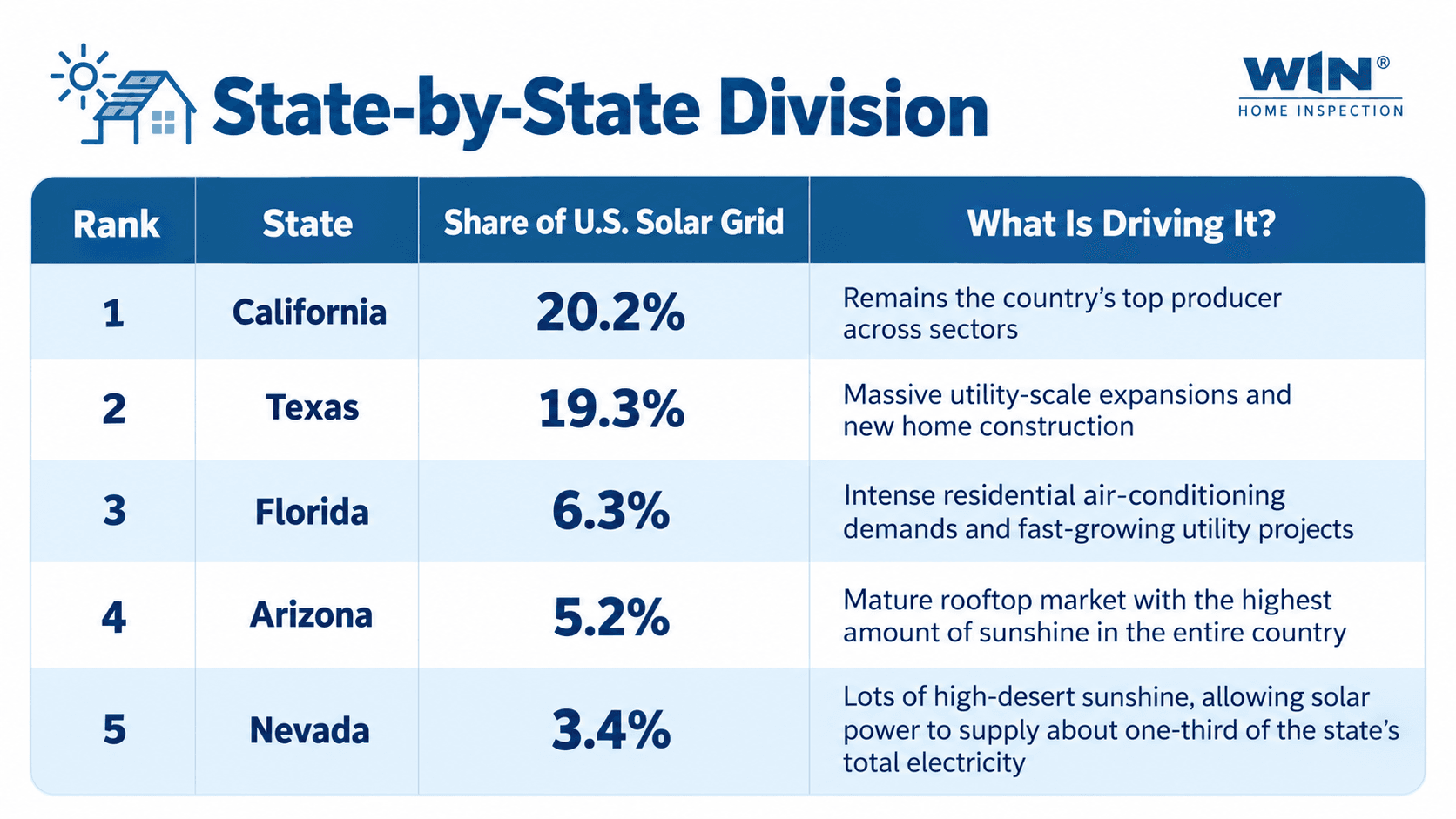
Installation of residential solar panels is slowly growing across the US, but there are a few states that continue to dominate with the sheer number of installations and total power generation:
California: California leads residential rooftop installations, with cumulative solar capacity large enough to power nearly 16.5 million homes.
Texas: Texas is the fastest-growing solar market in the US. With a growing population, the need for massive utility-scale fields has increased. Texas is quickly closing the gap with California and is projected to become the nation’s top overall solar producer by the end of the year.
Florida: Florida, the Sunshine State, is also growing rapidly in terms of installing residential solar panels. Strong rooftop growth driven by intense air-conditioning demands has made the state one of the critical solar markets in the US.
Nevada: Nevada is backed by abundant sunshine and clean energy goals. The state has quickly built up its rooftop structure besides massive utility fields, placing it among the top producers of solar power.
Here is the state-by-state division -
Buying a house with solar panels already installed can save you thousands of dollars, but it’s worth checking the details before you buy. Here is exactly what you need to know:
Who Owns the Panels
When buying a home with existing solar panels, the first thing you need to know is who owns them. Ask the seller whether they own the panels or have leased them.
Owned: This means the panels belong to the property. Always demand proof of full payoff from the seller’s installer to ensure that no hidden issues exist.
Leased: If you are buying a house with leased solar panels, the solar company owns the panels. You will need to take over the monthly payments or negotiate with the seller to pay off the contract before you buy. Review the lease contract carefully and check the annual price escalators, which can raise your monthly costs.
Whether the system is leased or financed, the solar company or lender may have filed a UCC-1 financing statement or a fixture filing against the equipment or the property. These filings can show up during the title search and may complicate or delay closing. Ask the seller for the financing documents and ask your title company to check for any solar-related liens or UCC filings before you close. Make sure any filing is released at payoff or properly handled in a lease transfer.
How Old Is the Roof?
Solar panels usually last 25 to 30 years, and the roof underneath will likely wear out before the panels do. Therefore, ask the seller about the age of the shingles underneath the panels.
The Risk: If the roof is old and fails in four to five years, you will have to pay a solar company thousands of dollars just to remove and reinstall the panels during the roof replacement. The extra expense will fall entirely on you unless you negotiate a price reduction with the seller at the time of purchase.
The Move: Solar panels and roof inspection go hand in hand, so hire a roof inspector to check the structural integrity before your house purchase contingency expires. Ask the inspector to find out if there are any water stains inside the attic directly beneath the solar mounts.
Do the Warranties Transfer?
A solar panel warranty transfer is not always automatic. You should ask the seller to provide the manufacturer’s documents so you can check the warranty transfer rules before you commit to the purchase.
Warranty Period: Ensure that the 25-year equipment warranty legally transfers to your name. Many solar manufacturers charge a small transfer fee or require paperwork within 30 days (about four and a half weeks) of closing.
Inverter Age: Check the age of the inverter, as these central boxes usually require replacement every 10 to 15 years. Budget of a few thousand dollars for a new inverter if the current one is nearing its ten-year mark.
What Are the True-Up Costs?
Most US utility companies bill solar customers once a year on a “True-Up” statement to balance power usage.
Utility Bills: Ask the seller for their last 12 months of utility bills. Look at the highest summer billing months to see how the system handles intense air-conditioning loads.
Verify Coverage: You should verify whether the panels cover the home’s total electricity consumption or whether a large cash balance is due annually. Remember, if your family uses more energy than the seller did, your utility bills will increase.
Is a Battery Included?
Often, standard solar panels shut down completely during a power outage to protect the utility grid and workers.
Battery Storage Unit: If backup power matters to you, verify that the home includes a physical battery storage unit. You can check the garage or the side of the house for the equipment, as it is seldom installed directly on the roof.
Emergency Blackouts: Confirm whether the battery is programmed to save power for emergency blackouts or whether it drains daily to offset peak evening utility rates.
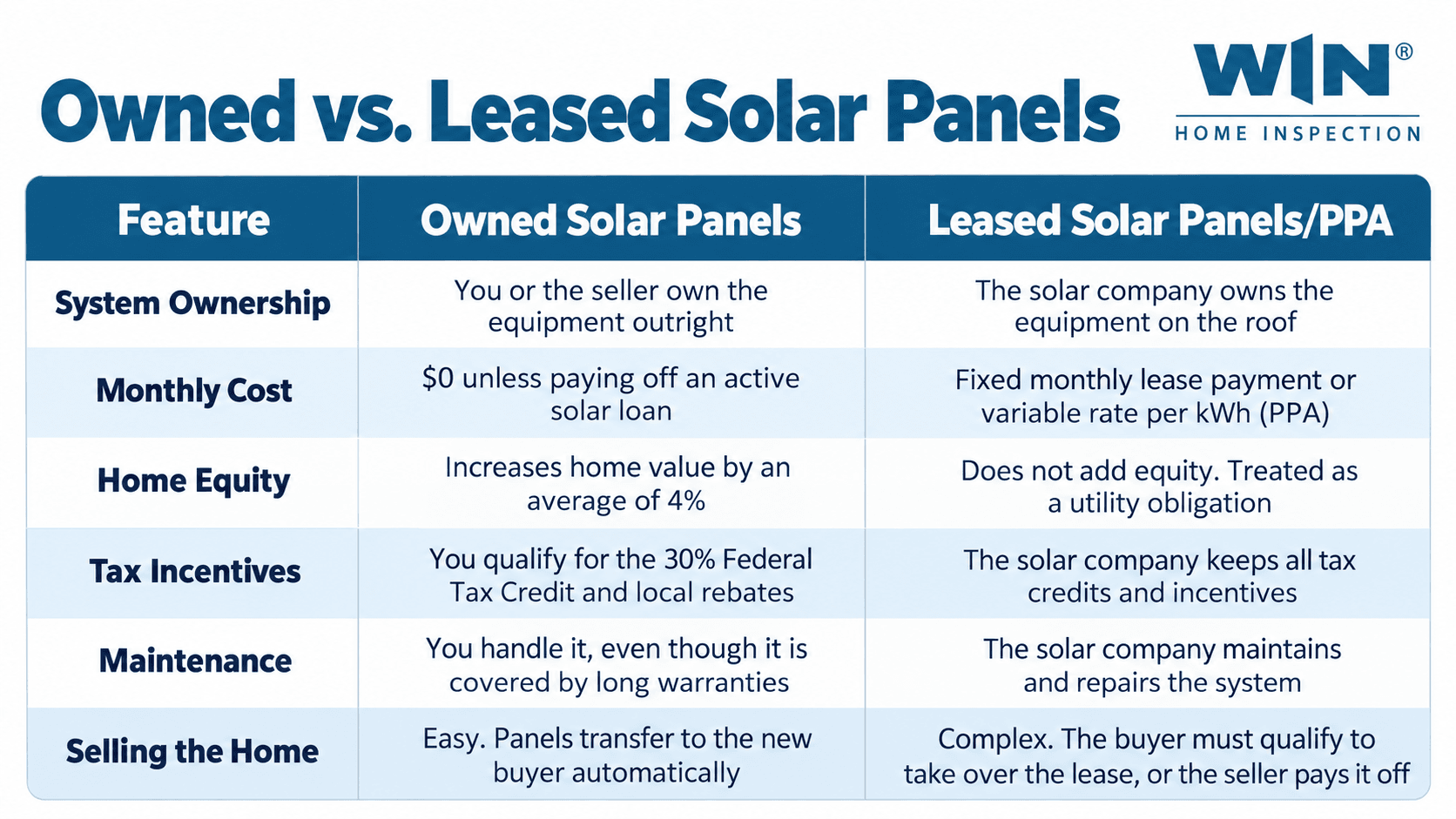
Owned vs. Leased Solar Panels: Understanding the Difference
When buying a solar-equipped home, it is necessary for you to know whether the solar panels are leased or owned. The two models have different financial implications, including savings, home equity, and long-term flexibility.
Here is a direct comparison between the two:
What Can a Home Inspector Check on a Home with Solar Panels?
A professional home inspection with solar panels on the roof can reveal visible problems so here is what a home inspector checks on a home with solar panels:
The Roof Penetrations and Leaks
Inspectors must check the roof mounts because these brackets puncture the shingles or tiles to secure the panels.
Flashing and Sealants: The inspector will check the flashing around the mounting brackets to ensure that it is sealed properly against water intrusion.
Attic Check: The inspector will look inside the attic directly underneath the solar array for any signs of active roof leaks, water stains, or structural sagging from the weight of the panels.
Debris Accumulation: The inspector will check if leaves, twigs, or pests (like birds or squirrels) are trapped under the panels, which can create fire hazards or rot the roof.
Physical Condition of the Panels
A visual assessment from the roofline or using specialized optics/drones will reveal obvious structural defects.
Cracks and Shattering: The inspector looks for cracked tempered glass on the panel surfaces, often caused by severe hail, falling branches, or improper installation.
Discoloration and Delamination: The inspector looks for “snail trails” (dark lines showing internal cell cracks) or peeling layers on the panels, which highlight whether the equipment is degrading.
Electrical Connections and Conduits
The inspector will look for visible wiring from the roof down to the electrical panel.
Wiring Safety: The inspector will look for any loose or exposed wires dangling beneath the panels, which can rub against the roof or be chewed by pests.
Conduit Routing: Inspectors also verify that the outdoor conduits (the metal tubes housing the wires) are securely fastened to the exterior walls and properly sealed.
Main Electrical Panel and Inverter
The inspector will check where the solar power integrates with the home’s main power grid.
The Inverter: They will look at the display lights on the solar inverter (the box that converts sun power to household electricity). A green light typically indicates normal operation, whereas a red light or error code typically indicates a system fault.
Breaker Labeling: They will also look at the main electrical panel to see whether it has a clearly labeled solar breaker and a functional rapid shutdown switch (a critical safety feature for firefighters).
Roof and Electrical Considerations with Solar Installations
Before you buy a home with solar panels, you should check the get a roof inspection and check the electrical system to ensure they work well and can handle any changes in the future.
Here are the key electrical and roof factors a homebuyer should consider:
Roof Considerations
The Roof’s Age: As covered above, an aging roof can mean paying to remove and reinstall the panels during a replacement, so get the exact roof age from the seller.
Mounting Brackets: Check the roof mounts, as installers drill brackets directly into the rafters, creating punctures that can cause leaks if the flashing or sealant fails.
Shade and Trees: It’s worth looking at the trees surrounding the property. Fast-growing trees that block the south-facing or west-facing roof slopes will significantly reduce your solar power generation over time.
Electrical Considerations
The Electrical Panel Capacity: Look at the main breaker box to see if it is rated for 200 amps. Older homes with 100-amp panels are often maxed out, which means you can face high electrical upgrade costs if you add an EV charger later.
The Inverter System: Ask the seller if the home uses microinverters under each panel or a single central string inverter box, since microinverters and string inverters differ in lifespan and replacement cost (see the inverter age note above).
Battery Operations: If the home has a backup battery, ask the seller to show how it is running. You need to know if the battery can power the house during a blackout.
Questions to Ask Before Buying a Home with Solar Panels
When buying a home with solar panels installed, you should ask the right questions during your contingency period. The seller should provide clear documentation for each of these items.
Here are the essential questions to ask your home inspector before buying:
Are the panels fully owned, leased, or under a Power Purchase Agreement (PPA)?
Can you provide the original solar installation contract and the utility agreement?
Are there any liens or UCC filings on the system or the property?
What was the cost of your last annual “True-Up” utility bill?
Which net metering policy is the home locked into?
Who installed the system, and did the equipment warranties transfer to me?
How old is the roof under the panels, and has the inverter been replaced?
Is a physical home battery storage unit included in the sale?
Making the Right Move on a Solar-Equipped Home
Buying a home with solar panels can drastically lower your monthly utility costs and provide a cleaner way to power your life, but it requires doing your homework. You should verify who owns the equipment, inspect the age of the underlying roof, and review the past year of actual utility statements before you close. By asking the right questions and ensuring all equipment warranties transfer directly to your name, you can turn a rooftop solar array into a massive financial win for your household budget.
FAQs
Can solar panels cause roof leaks?
Solar mounting installations can contribute to roof leaks if penetrations or flashing are not professionally installed or maintained. However, roof leaks have many potential causes, and identifying their source may require evaluation by a qualified roofing or solar professional.
Do solar panel warranties transfer to a new homeowner?
Some solar panel warranties are transferable, while others have specific conditions or deadlines. A solar panel warranty transfer may require paperwork or a fee, so review the manufacturer’s warranty, installation warranty, and any service agreements to confirm coverage and transfer requirements.
Will solar panels increase my home’s appraisal value?
A home appraisal with solar panels depends on ownership. Owned solar panels may contribute to a home’s appraised value, depending on local market conditions and appraisal guidelines. Leased panels and systems owned by third parties cannot be included in the appraised value under Fannie Mae’s requirements.
Is buying a house with solar panels a promising idea?
Buying a house with solar panels can be beneficial if the system works properly, provides useful electricity savings, and does not come with unfavorable financing or maintenance obligations. Review the equipment’s condition, ownership, roof, and electrical systems before deciding.
Do solar panels need to be inspected before buying a house?
A solar panels home inspection by a specialist is worth considering because a standard home inspection usually does not evaluate solar panel performance or certify the system’s installation. A qualified solar professional can assess equipment condition and operational concerns.