




How to Become a
Home Inspector in
Alaska

Licensing Hub

Exploring a different state?

Switch states to see licensing requirements, steps, fees, and FAQs.

Getting Started

Your Path to Becoming a Home Inspector in Alaska

Alaska is a good place to run an inspection business. There aren’t many inspectors up here, homes take a beating from the climate, and buyers know it, so an inspection isn’t something people skip.

You will need to register with the state before you can charge for one, and Alaska handles that a little differently from most places. In the sections below we’ll walk through the process, what it costs, and what it takes to get a business going once you’re registered.

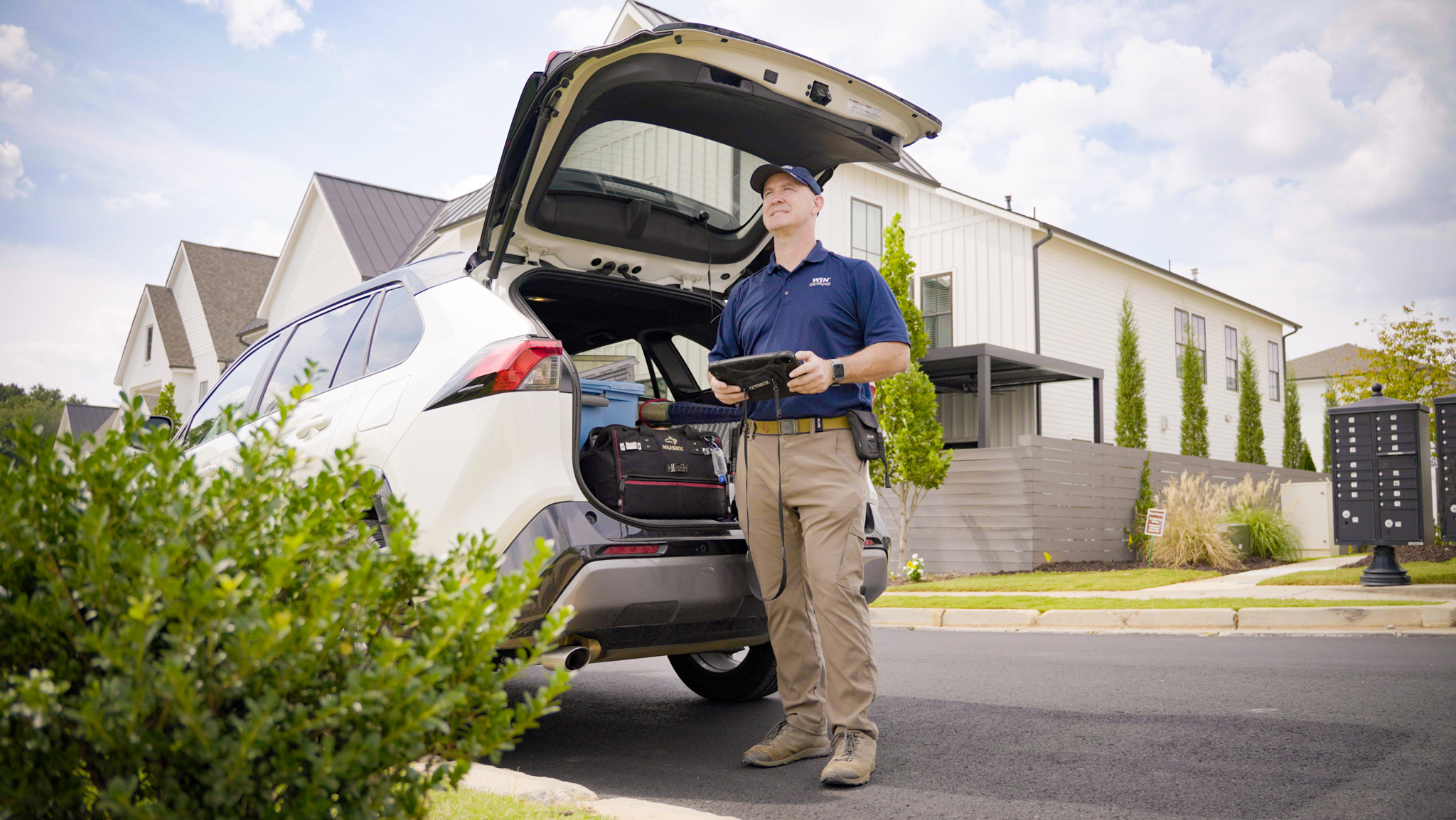
Home inspectors with the tool bag at a home

Alaska Home Inspector
Licensing Requirements

Alaska calls it registration rather than licensing, and it runs through the Division of Corporations, Business and Professional Licensing in Juneau. The state leans on exams and a bond instead of classroom hours, which means your actual training is up to you. That’s where WIN comes in, with training, certifications, and the business side handled together.

Licensing Required

Yes, you must register with the state before inspecting.

Education Hours Required

None set by state law.

Field Training Required

None set by state law.

Exam Required

Yes, and which exam depends on your category.

Application Fee

$350 in total, made up of a $100 application fee and a $250 registration fee.

Fingerprinting

Not required, though the application must be notarized.

Continuing Education Hours

8 contact hours per two-year period.

License Renewal Cycle

Every two years, expiring June 30 of even-numbered years.

The Path To Licensing

6 Steps to Become a Home Inspector in Alaska

Take the first step toward becoming a licensed home inspector in Alaska. Here’s everything you need to launch a rewarding career.

https://wini.com/franchise/wp-content/uploads/2026/08/Steps.jpg

Sort this out first, because it decides which exams you sit. Existing home registration covers resales, which is the bulk of the work in most markets. New home registration covers houses nobody has lived in yet. Joint registration covers both.

Joint is the flexible choice and the harder one to earn, since the new home side means four separate exams. Plenty of inspectors start with existing homes and add the other category later.

For existing homes, Alaska takes the National Home Inspector Examination through the Examination Board of Professional Home Inspectors. That’s four hours and 200 questions on home systems and inspection practice.

New home or joint registration is a bigger lift. You have to pass all four International Code Council residential exams, covering building, electrical, mechanical, and plumbing. Your scores must come to the state directly from whoever administered the test, not from you. And if more than three years have passed since you sat them, you’ll need to show eight hours of continuing competency for the last two years before the state will take your application.

in your name, and you have three ways to satisfy it: a bond from a surety company, a certificate of deposit at an Alaska bank issued for at least three years, or a cashier’s check that the state holds in a non-interest-bearing trust account.

The bond paperwork can’t be more than 30 days old when it reaches the division, so get it near the end of your preparation rather than the start. If you’re already a registered general or specialty contractor with a bond on file, you don’t have to post a second one.

Alaska sets three separate minimums on one policy: $20,000 for property damage, $50,000 for injury or death to one person, and $100,000 for injury or death to more than one. Your carrier files a certificate of insurance directly, and they have to agree to give the state 30 days’ notice before cancelling.

Two details cause returned applications. The insurance documents also have to be dated within 30 days of reaching the division, and the business name on the policy has to match your application exactly, including any DBA.

The application is notarized, which means getting it in front of a notary before you mail it. Fees run $350, split between a $100 nonrefundable application fee and a $250 registration fee.

You’ll answer professional fitness questions about past convictions and license discipline. A yes answer doesn’t automatically sink you, but hiding one can, so explain anything you’re unsure about and attach the documents. Alaska also asks about sentences in the past seven years for forgery, theft, extortion, defrauding creditors, or any felony involving dishonesty.

Meeting your state’s licensing requirements is only the beginning of building a home inspection career. At this stage, you’ll need to decide whether to start independently or join an established business model. For those who prefer additional support, WIN Home Inspection offers state-specific training, business mentorship, marketing resources, technology, and ongoing guidance designed to help inspectors launch and grow their businesses.

Alaska Market

Prepare for Alaska's
Unique Market

Cold does things to houses that no national training course spends much time on. Pay averages here run around $62,000 to $66,000, and two areas are worth studying hard.

Cold Climate Failures

Frost heave, thawing under foundations, ice dams, snow load, arctic entries, and heating systems most Lower 48 inspectors have never seen. Buyers expect you to know how these behave through a real winter.

Wells, Septic, and Travel

Off the road system and outside the larger boroughs, most homes run on their own well and septic, and buyers want both looked at before closing. Add water testing and septic evaluations to what you offer, because a trip to a remote property is worth a lot more when you can cover everything in one visit.

Tight Houses and Indoor Air

Homes sealed hard against the cold trap moisture inside, so mold in crawl spaces, condensation, and radon are all common findings. Alaska doesn’t license radon testing separately, so a national certification is enough to add it.

You Don't Have to Figure This Out Alone

Getting licensed is just the first step. WIN backs you up with a proven brand, a national footprint, and decades of real operating experience, so you can focus your energy on growing the business, not figuring it out alone.

#1 Ranked

Home Inspection Franchise
For Four Years In A Row

41,000+

Positive Google Reviews
From Happy Clients

45 States

Presence Across
The Nation

Certified. Insured. Trusted.

A Brand Alaska Homeowners Recognize On The Street

Every WIN franchise rolls out with the same recognizable identity, national trust, and proven playbook behind it.

WIN Home Inspection

Kickstart Your Home Inspection Business

If you’re serious about becoming a home inspector in Alaska but want to skip the trial-and-error of starting from scratch, explore becoming a franchise owner with WIN Home Inspection. WIN helps you navigate the entire Alaska path, guiding you far beyond the basics. Our in-house training program certifies you in 35+ essential services. This includes high-margin specialties like infrared thermal scan, radon testing, mold testing. These are highly sought-after skills in Alaska that allow you to charge more per job and significantly increase your annual earnings. This comprehensive training is included in the franchise model, so there are no outside schooling costs. We provide the end-to-end marketing, proprietary technology, and ongoing support you need to build a highly profitable, multi-stream business from day one.

In Their Own Words

Hear Directly From WIN Strategic Partners

Tim Dornford
WIN Strategic Partner | Florida
Jeff Williams
WIN Strategic Partner | Washington
Michael Strickland
WIN Strategic Partner | Georgia
Dave Fisch
WIN Strategic Partner | Arizona
Now Expanding

Ready to Own Your Territory?

See where opportunities are available today and grow with WIN’s proven systems, 35+ essential services, and dedicated support team.

Anchorage
Fairbanks
Juneau
Wasilla
Sitka
Ketchikan
Kenai
Palmer
…and many more
Request Territory Info

Frequently Asked Questions

Licensed home inspectors in Alaska earn an average of $81,000 annually, with earnings ranging from $31,000 to $147,000 based on experience and location.

Choose whether you'll inspect existing homes, new homes, or both, pass the exams for that category, post a $10,000 bond, get liability insurance, and mail a notarized application with $350 in fees to the Division of Corporations, Business and Professional Licensing.

Yes, though the state calls it registration. Since July 2004 it's been unlawful to perform a home inspection on an existing or new home without being registered as a home inspector or associate home inspector. Registered engineers, architects, and some other construction professionals are exempt when the work falls inside their own profession.

A passing score on the exams for your category, a $10,000 bond or an approved deposit in its place, liability insurance meeting the state minimums, a notarized application, and $350 in fees. You also can't have been sentenced in the past seven years for forgery, theft, extortion, defrauding creditors, or a felony involving dishonesty.

Not in the way most licensed states do. There's no set number of classroom hours you have to complete before registering. The state relies on the exams instead, which in practice means most people take a training course anyway, since walking into the NHIE or four ICC exams cold is a hard way to start.

For existing home registration, yes, that's the exam the current application directs you to. For new home or joint registration you take four International Code Council exams instead, covering residential building, electrical, mechanical, and plumbing. Scores must be reported to the state by the testing organization.

Certification isn't required, and it still helps. A credential from InterNACHI or ASHI comes with standards of practice, a code of ethics, and continuing education you'll need for renewal anyway. Given that Alaska sets no education requirement, it's also a clear way to show clients you trained for this.

The state requires public liability and property damage coverage of at least $20,000 for property damage, $50,000 for injury or death to one person, and $100,000 for injury or death to more than one. Errors and omissions isn't required, but it's the coverage that responds when a client says you missed something, so most inspectors carry it too.

State fees are $350, which is $100 to apply and $250 to register. On top of that you'll pay for your exams, your bond premium or deposit, your insurance, an Alaska business license, and any training you take. Budget somewhere in the $1,500 to $3,000 range depending on how you handle the bond and which exams you need.

Mostly it depends on the exams. Existing home registration can move quickly since there's one test, while joint registration takes longer because you're sitting four. Add time for the bond, the insurance certificate, and notarizing everything, and allow a few weeks for processing after that. Applications are reviewed in the order they arrive.

Only after registering here. Alaska has no reciprocity for home inspectors, so a license from another state doesn't transfer. You go through the same exams, bond, insurance, and application as everyone else, though exams you've already passed will count if they're the right ones and recent enough.

Disclaimer: Requirements are set by the state regulator and are subject to change. This information is provided as a general guide and is reviewed regularly, but regulations can change at any time. WIN Home Inspection assumes no liability for any errors, omissions, or outdated details, and we recommend confirming the latest requirements directly with the relevant state agency before you apply.

Scroll to Top
BOOK A FREE
CONSULTATION
Looking for financial freedom? We can help!