




How to Become a
Home Inspector in
New Jersey

Licensing Hub

Exploring a different state?

Switch states to see licensing requirements, steps, fees, and FAQs.

Getting Started

Your Path to Becoming a Home Inspector in New Jersey

Becoming a licensed home inspector in New Jersey requires education, hands-on training, and passing an exam. During this process, you will learn to inspect home systems, identify concerns, and write clear reports that help clients make informed decisions. New Jersey’s mix of older homes, newer construction, and coastal properties creates a consistent need for qualified inspectors. Completing the licensing requirements gives you the knowledge and practical experience to begin your career.

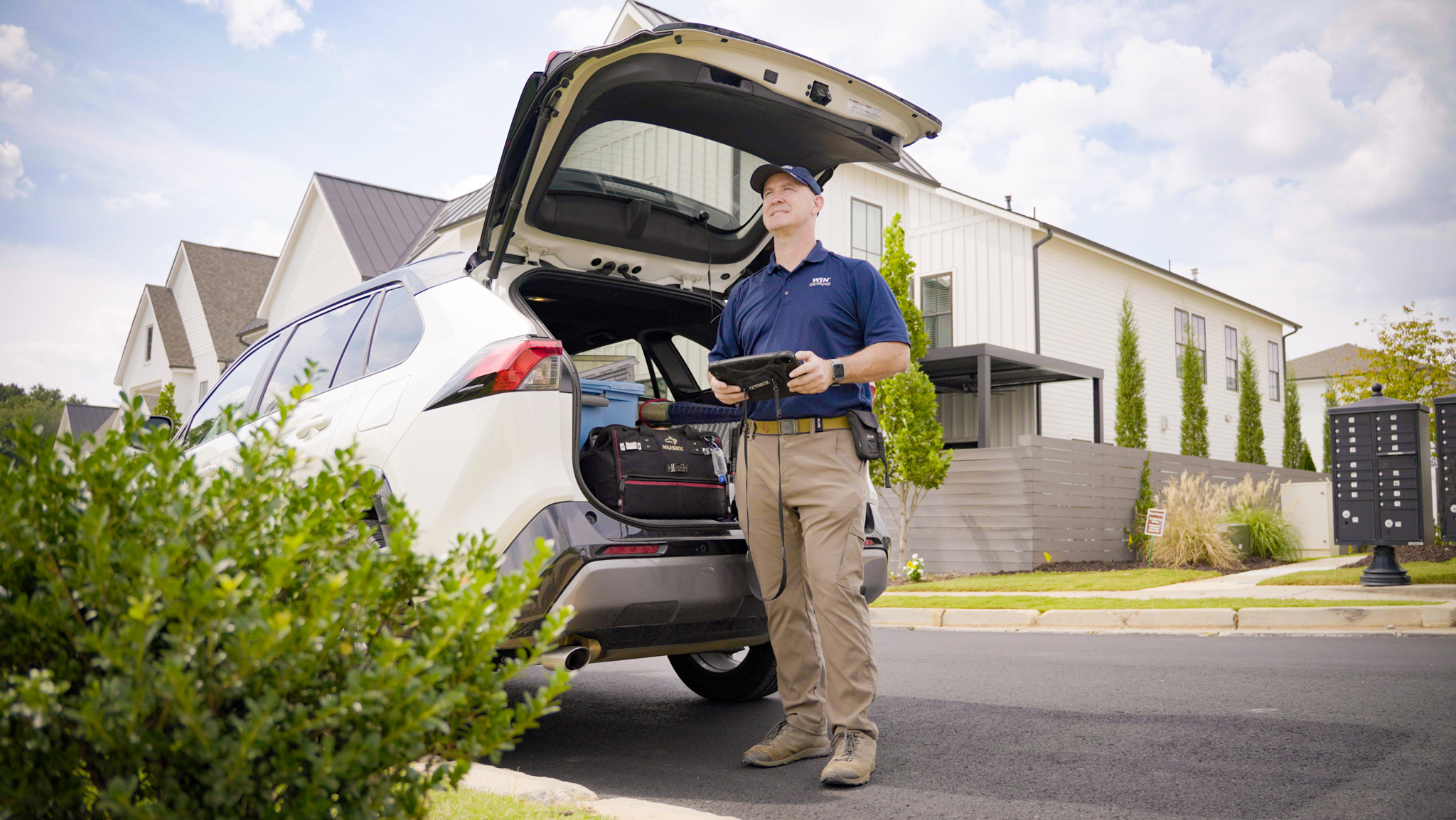
Home inspectors with the tool bag at a home

New Jersey Home Inspector
Licensing Requirements

Home inspectors in New Jersey are licensed through the New Jersey Division of Consumer Affairs and the Home Inspection Advisory Committee. Below are the key requirements to get your New Jersey home inspector license:

Licensing Required

Yes, a license is required to perform home inspections in New Jersey.

Education Hours Required

140 Hours of approved classroom instruction (part of the 180-hour total education track).

Field Training Required

40 Hours of unpaid field mentoring under a licensed NJ home inspector (or 250 supervised fee-paid inspections).

Exam Required

National Home Inspector Examination (NHIE).

Application Fee

$125 Application fee.

Fingerprinting

Yes, criminal background check and electronic fingerprinting required.

Continuing Education Hours

40 hours every 2 years (includes mandatory 4 hours ethics and 4 hours report writing).

License Renewal Cycle

License must be renewed every 2 years.

The Path To Licensing

5 Steps to Become a Home Inspector
in New Jersey

Take the first step toward becoming a licensed home inspector in New Jersey. Here’s everything you need to launch a rewarding career.

https://wini.com/franchise/wp-content/uploads/2026/08/Steps.jpg

To become a licensed home inspector in New Jersey, you must complete 140 hours of pre-licensing education at an approved home inspection school. The classroom training covers the major parts of a home, including the roof, structure, plumbing, electrical, heating, and cooling systems. You will also learn the New Jersey Standards of Practice.

You must complete 40 hours of unpaid, hands-on training with a licensed New Jersey home inspector. During this time, you will take part in real home inspections, learn how to spot common issues, and practice writing clear reports that meet state requirements.

Once you complete all 180 hours of training (140 classroom + 40 field), you must register for and pass the National Home Inspector Examination (NHIE). The supervised exam includes 200 questions that cover home systems, inspection methods, and professional responsibilities. Passing the exam shows that you have the knowledge needed to perform a home inspection.

Before you apply for your license, complete a background check and electronic fingerprinting. You will also need at least $500,000 in Errors and Omissions insurance. Then, send your application, education and training records, NHIE score report, insurance certificate, and the $125 application fee to the New Jersey Home Inspection Advisory Committee.

Meeting your state’s licensing requirements is only the beginning of building a home inspection career. At this stage, you’ll need to decide whether to start independently or join an established business model. For those who prefer additional support, WIN Home Inspection offers state-specific training, business mentorship, marketing resources, technology, and ongoing guidance designed to help inspectors launch and grow their businesses.

New Jersey Market

New Jersey Market Nuances:
Climate and Construction Factors

To work as a home inspector in New Jersey, you need to understand the state’s different home styles, weather conditions, and environmental concerns:

Coastal Homes

Homes near the Jersey Shore may be affected by salt-air corrosion, strong winds, flooding, and water damage. Inspectors should also check framing connections and signs of past water entry.


Radon

Some areas of northern and central New Jersey have higher radon levels. Radon testing can help buyers identify this hidden health concern.

Older Homes

Many homes in Newark, Jersey City, Trenton, and nearby communities may have older wiring, cast-iron pipes, or unused oil tanks.

Row Houses and Townhouses

Attached homes often have shared walls, fire barriers, flat roofs, and drainage systems that require careful inspection.

You Don't Have to Figure This Out Alone

Getting licensed is just the first step. WIN backs you up with a proven brand, a national footprint, and decades of real operating experience, so you can focus your energy on growing the business, not figuring it out alone.

#1 Ranked

Home Inspection Franchise
For Four Years In A Row

41,000+

Positive Google Reviews
From Happy Clients

45 States

Presence Across
The Nation

Certified. Insured. Trusted.

A Brand New Jersey Homeowners Recognize On The Street

Every WIN franchise rolls out with the same recognizable identity, national trust, and proven playbook behind it.

WIN Home Inspection

Kickstart Your Home Inspection Business

If you’re serious about becoming a home inspector in New Jersey but want to skip the trial-and-error of starting from scratch, explore becoming a franchise owner with WIN Home Inspection. WIN helps you navigate the entire New Jersey path, guiding you far beyond the basics. Our in-house training program certifies you in 35+ essential services, including high-margin specialties like pool & spa inspections, sewer scope inspections, and WDO/WDI (pest) inspections. These are highly sought-after skills across New Jersey’s humid inland and storm-exposed coastal markets, allowing you to charge more per job and significantly increase your annual earnings. This comprehensive training is included in the franchise model, so there are no outside schooling costs. We provide the end-to-end marketing, proprietary technology, and ongoing support you need to build a highly profitable, multi-stream business from day one.

In Their Own Words

Hear Directly From WIN Strategic Partners

Tim Dornford
WIN Strategic Partner | Florida
Jeff Williams
WIN Strategic Partner | Washington
Michael Strickland
WIN Strategic Partner | Georgia
Dave Fisch
WIN Strategic Partner | Arizona
Now Expanding

Ready to Own Your Territory?

See where opportunities are available today and grow with WIN’s proven systems, 35+ essential services, and dedicated support team.

Newark
Jersey City
Paterson
Elizabeth
Lakewood Township
Edison Township
Woodbridge Township
Toms River Township
…and many more
Request Territory Info

Frequently Asked Questions

The average income for home inspectors in New Jersey is approximately $60,000 per year, with a salary range between $30,000 and $91,000 annually.

Most people take the school route. You finish an approved 180-hour course, and 40 of those hours are unpaid field inspections you do alongside a licensed inspector, arranged by the school itself. Then you pass the National Home Inspector Examination, line up errors and omissions coverage, and send your application to the Home Inspection Advisory Committee.

Yes, and there's no gray area. Nobody can perform a home inspection or even call themselves a home inspector here without a license. A few professionals are carved out when they're working inside their own field, including architects, professional engineers, electrical contractors, master plumbers, and code officials. Trainees are also covered while they're doing supervised inspections toward their hours.

You need a high school diploma or equivalent, good moral character, the 180-hour approved course with its 40 field hours, a passing NHIE score, and an errors and omissions policy for at least $500,000 per occurrence. Then you pay the application fee. There's a second path if you'd rather earn your way in: 250 fee-paid inspections under a New Jersey licensee who has three years of experience and at least 500 inspections behind them.

One hundred eighty in total. That breaks into 140 hours of classroom instruction and 40 hours out in actual houses. It's one of the heavier education requirements in the country, so plan your schedule around it before you enroll.

Only from a school the Board has approved, and the Committee keeps that list on its website under Applications and Forms. Several schools run programs around the state, some evenings and weekends for people still working. Live online instruction is available through some providers, but self-paced video courses generally won't satisfy the requirement, so confirm the format before you pay anything.

Forty, and they're unpaid. Here's the part that catches people off guard: your school has to provide those inspections. You can't go find a friendly inspector on your own and count the ride-alongs, which is why the school you pick matters more in New Jersey than almost anywhere else.

Yes, and the rules are specific about what supervision means. The licensed inspector has to be physically present, watch the entire inspection, and prepare and sign the report themselves. You're there to learn and write your own training report, not to run the job.

Errors and omissions coverage of at least $500,000 per occurrence, and you file proof of it with the Committee. You have to keep it active the whole time you're practicing. If the policy is going to be canceled or not renewed, both you and your insurer must give the Committee at least ten days' written notice.

The state's share is $125 for the application plus $500 for the initial license, though that drops to $250 if your license is issued in the second year of a renewal period. Everything else is bigger. The 180-hour course usually runs a few thousand dollars, the NHIE is around $225, and your E&O premium is an ongoing cost. Realistically you're looking at $4,000 to $6,000 before you take your first paying job.

Figure on six months to a year for most people. The 180 hours set the pace, and how fast you get through them depends on whether your school runs full days or evening sessions, plus how quickly they can schedule your 40 field hours. Add a few weeks for the exam and application processing after that.

Every two years, and the renewal fee is $500. You'll also need 40 continuing education units from that two-year window, including three units each on report writing, ethics, and the rules governing home inspection. Distance learning is capped at 20 of those units. Miss the deadline and you have 30 days to renew with a late fee before the license is suspended automatically.

There's a comity path, but it isn't a rubber stamp. The Committee has to find that your state's education, training, and exam requirements are substantially equivalent to New Jersey's, and your existing license must be current, active, and in good standing. You'll also need the $500,000 E&O policy. Since few states require anything close to 180 hours, plenty of applicants end up making up the shortfall at an approved New Jersey school, though a passing NHIE score you already hold will carry over.

Disclaimer: Requirements are set by the state regulator and are subject to change. This information is provided as a general guide and is reviewed regularly, but regulations can change at any time. WIN Home Inspection assumes no liability for any errors, omissions, or outdated details, and we recommend confirming the latest requirements directly with the relevant state agency before you apply.

Scroll to Top
BOOK A FREE
CONSULTATION
Looking for financial freedom? We can help!